Skip to content

Fabric Beds

If you keep coming back to upholstered beds when you're browsing, there's usually a straightforward reason. A fabric headboard is comfortable to l...

If you keep coming back to upholstered beds when you're browsing, there's usually a straightforward reason. A fabric headboard is comfortable to lean against. The upholstered frame looks warmer in a bedroom than a wooden slat or a metal rail. And at a scale where the bed is the biggest piece of furniture in the room, having something soft and considered behind your head tends to make the whole room feel more settled. The question isn't usually whether to go fabric. It's which fabric bed to go for.
The category is broad. Within fabric beds you'll find plain woven finishes and velvet, smooth headboards and deep-buttoned ones, standard headboard heights and statement 70-inch designs, and frames with and without under-bed storage. All of them are upholstered fabric frames, and they all sit within the wider beds collection. The decision about which one suits your room comes down to a few specific questions, most of which are covered below. Finance is available on many of our fabric beds, subject to status.
We deliver nationally across the UK, with most frames arriving within 7 to 14 days. Our Manchester showroom carries a selection if you'd like to see headboard heights and fabrics in person before buying. Get in touch at any stage if you'd like any guidance.

What's in this collection

The main variables across the collection are headboard style, headboard height, and whether the frame includes storage. On headboard style, the broad split is between smooth upholstered panels and buttoned designs. Smooth headboards keep things simple and suit a wider range of bedroom aesthetics. Buttoned headboards, including the deep-diamond Chesterfield style, bring more texture and visual detail, and work particularly well on taller frames where the pattern has room to read properly. If you know you want a buttoned headboard, the buttoned beds collection covers that in more detail.

On fabric finish, the key choice is between plain woven fabrics and velvet. Velvet looks and feels noticeably richer, but it's more demanding to maintain and shows marks and pet hair more readily than a flat-weave fabric. If velvet is where you're leaning, it's worth reading through the velvet beds page first, which covers the honest trade-offs in full. Plain fabric is the more practical day-to-day choice and still looks good across a wide range of room styles.

Headboard height: the decision most people underestimate

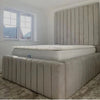
The headboard is the most visible part of a fabric bed, and its height changes the character of the room more than almost any other single decision. A standard headboard sits at a modest height behind the pillows and lets the bed exist quietly in the room. A 70-inch headboard, by contrast, is roughly as tall as most people standing up. It becomes the focal point of the bedroom whether you intend it to or not, and in a room with high ceilings and space to carry it, the effect is genuinely impressive.

The practical question is whether the room can take it. A tall headboard in a room with a low ceiling, a sloping roof, or a window directly behind the bed can feel awkward rather than imposing. It's worth measuring the wall height at the point where the head of the bed will sit before you commit to a 70-inch frame. In a room that can carry it, a high headboard fabric bed makes a master bedroom feel properly finished in a way that a modest headboard simply doesn't.

There's also a functional case for a tall headboard if you sit up in bed to read or watch television. A well-padded headboard at the right height gives you something comfortable to rest against across the whole of your back, not just your lower back. A headboard that only reaches your shoulder blades when you're sitting up is comfortable for lying down but less useful for anything else.

Storage in a fabric bed

Some fabric bed frames include under-bed storage, and in a bedroom where wardrobe space is under pressure, it's worth taking seriously rather than treating it as a secondary consideration. The main storage format you'll find in this collection is the ottoman lift, where the mattress platform raises on a gas-assisted mechanism to reveal a large, open storage area beneath. It suits bulkier items that don't have anywhere else to go: spare bedding, seasonal clothing, suitcases. The cavity is significantly larger than a couple of under-bed drawers.

If you're drawn to ottoman storage specifically, the ottoman beds collection brings those frames together in one place and covers the practical considerations around how the lift mechanism works and what to think about in terms of room layout. The short version: check which way the lift opens (foot-end or side) before you buy, because it determines how the bed needs to be positioned in the room.

Spreading the Cost

Finance is available on many of our fabric beds, subject to status. For a frame that's likely to be in the room for several years, spreading the cost is a sensible option, particularly if you're buying a mattress at the same time. Details are on the website, and we're happy to talk through what's available before you order.

Why buy from Shawcross

We're a Manchester-based furniture retailer with a physical showroom. Fabric beds are one of the categories where a visit makes a real difference. Headboard height at scale, the feel of the fabric, and the overall proportion of the frame in a room are all things that product photography communicates poorly. If you're deciding between two frames or uncertain about whether a 70-inch headboard will work in your room, seeing the options in person tends to settle it quickly.

We deliver nationally across the UK, and we're happy to help at any point before you order, whether you have questions about frame types, fabric options, or how a specific bed will fit in your room.


Fabric Bed FAQs

What does "fabric bed" mean, and what are the main options within that?

Fabric bed is a broad term for any upholstered bed frame where the headboard and often the base are covered in a textile material. It's a category rather than a description of a single material, which is why fabric beds can look so different from one another. The main variations are fabric type, headboard style, and headboard height.

On fabric type, the meaningful distinction for most buyers is between plain woven fabrics and velvet. Plain woven fabrics are the more practical option: they're easier to clean, don't show marks as readily, and hold up well in a bedroom that gets regular daily use. Velvet is richer in look and feel but attracts dust and pet hair, flattens with heavy use over time, and needs more attention to stay looking its best. On headboard style, the split is between smooth upholstered panels and buttoned designs, most commonly deep-diamond Chesterfield buttoning or softer bubble-button patterns. On headboard height, frames range from modest proportions that sit quietly behind the pillows to statement 70-inch designs that become the focal point of the room.

How do I choose between a high headboard and a standard one?

Start with the room rather than the bed. The ceiling height at the wall where the headboard will sit is the first thing to check. A 70-inch headboard on a standard base puts the top of the frame at roughly 180cm from the floor. In a room with standard ceiling height that's fine, but in a room with a low ceiling, an alcove above the bed, or a window behind it, a very tall headboard can feel cramped or simply won't work.

If the room can comfortably carry a high headboard, the next question is what you want the bedroom to feel like. A tall headboard makes the bed the undisputed focal point and gives the room a more dressed, considered quality. In a master bedroom where the aesthetic matters, that's often exactly the point. In a guest room or a child's room where the bed is functional rather than decorative, a more modest headboard is usually the right call.

The functional case for height is worth mentioning too. If you regularly sit up in bed to read, a taller, well-padded headboard provides support along your full back rather than just your lower back. It's a small thing, but if you spend any significant time sitting up in bed it makes a genuine difference.

Are fabric beds easy to keep clean?

It depends on the fabric. Plain woven fabric upholstery is reasonably forgiving. A vacuum with a soft brush attachment takes care of dust and surface debris, and most marks can be spot-cleaned with a damp cloth and a mild upholstery cleaner, working gently from the outside of the mark inward. In a family bedroom where the headboard occasionally gets bumped or touched, plain fabric handles it without making every contact a cleaning event.

Velvet is a different matter. It shows fingerprints, flattens where it's regularly pressed against, and attracts pet hair with impressive efficiency. The cleaning approach for velvet is lighter: regular vacuuming and blotting rather than rubbing for any marks, then gently brushing the pile back once it's dry. It's not unmanageable, but it asks more of you consistently. In a household with pets, or a bedroom used by children, velvet requires a level of ongoing attention that plain fabric doesn't. Neither is wrong, but it's worth being honest with yourself about which household you're running before you choose.

Can I get a fabric bed with storage?

Yes. A number of fabric beds in this collection include an ottoman storage base, where the mattress platform lifts on a gas mechanism to reveal under-bed storage. This is the most practical form of storage available in an upholstered frame and suits rooms where wardrobe space is limited. The storage area is open and unobstructed, which makes it well suited to bulkier items such as spare duvets, seasonal clothes, or travel bags.

The main thing to check before buying an ottoman frame is which direction the platform lifts. Some open from the foot of the bed, others from the side. The direction determines how the bed needs to be positioned in the room, and in a bedroom where one side sits close to a wall, it's worth confirming the lift direction before you order.

What size fabric bed should I choose?

The right size depends on the room dimensions and who's sleeping in the bed. UK standard sizes run from single (90cm wide) through small double, double, king, and super king (180cm). Each size has its own page in this collection with guidance on room dimensions, clearance requirements, and who each size suits. If size is your primary decision, those pages are the better starting point than this one.

The short version for couples: a double is the standard minimum, but a king is meaningfully more comfortable for two people if the room allows it. For a single adult in a spare room or child's bedroom, a single or small double is usually the right fit.

How does delivery work, and can I see fabric beds in person first?

We deliver nationally across the UK. Once your order is placed you'll receive a confirmation, and we'll be in touch closer to the time to arrange a delivery date that suits you. Fabric bed frames are delivered in components and assembled in the room, so narrow hallways and tight staircases are less of a concern than they would be with a fully assembled piece. Delivery is typically within 7 to 14 days. If there's anything about your property worth flagging, let us know when you place the order.

If you'd like to see frames in person first, our Manchester showroom carries a selection and you're welcome to visit without any obligation. Headboard height and fabric texture are both genuinely hard to judge from photographs, and for a bed that's going to be in your room for years it's worth taking the time. Give us a call beforehand to check whether a specific frame is currently on the showroom floor.