What's in this collection
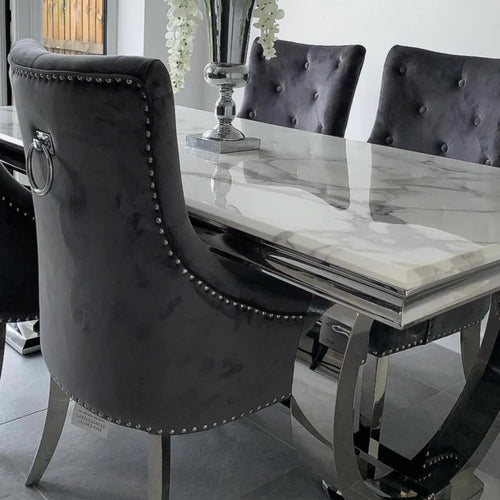
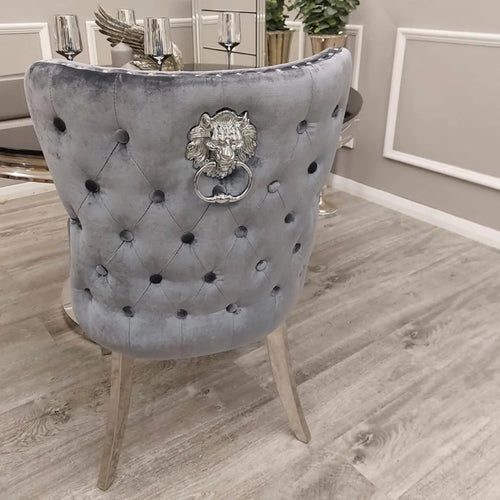
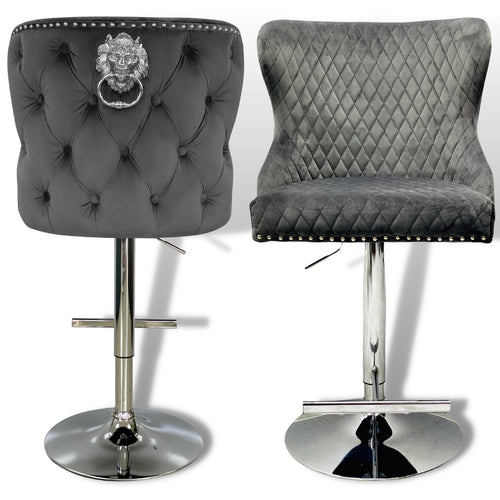
Our bar stools are upholstered backed stools with a seat and back in fabric or velvet, on a metal frame with leg heights suited to standard counter and bar heights. Styles include velvet bar stools with rich upholstered seats and backs in deep and mid-tone colours, and knocker bar stools with the decorative metal ring hardware on the back that gives the stool its distinctive character. Frame finishes span gold and chrome among others, and the choice of frame finish is as significant to the overall look as the upholstery, particularly in an open-plan room where the stools are visible from a wider angle than dining chairs typically are.
Getting the height right
This is the section that matters most, and it is worth reading carefully before you look at any specific stool.
Bar stool height is measured from the floor to the top of the seat. The right seat height depends on the height of the surface the stool is being used at, specifically the height from the floor to the underside of the counter, island, or bar top. The comfortable gap between the seat surface and the underside of the counter is around 25 to 30cm, which is enough for thighs to sit comfortably beneath the surface without feeling cramped. Apply that to your counter height and the right stool seat height follows.
There are two standard configurations most households fall into. A standard kitchen worktop or breakfast bar typically sits at around 90cm from the floor. For that height, a counter stool with a seat height of around 63 to 68cm is the right range: it gives the 25 to 30cm gap and puts most adults at a comfortable height relative to the surface. A taller kitchen island or home bar counter typically sits at around 105 to 110cm. For that height, a bar stool with a seat height of around 73 to 78cm is the right range.
Measuring your counter height before you order is not optional: it is the step that determines whether the stool you buy will actually work at your specific counter. Counter heights vary more between properties and kitchen fits than most people expect, and a stool that is marketed as a counter height stool may or may not suit your specific counter depending on where it was manufactured and what standard it was designed around. Measure from the floor to the underside of your counter surface, subtract 25 to 30cm, and use the resulting figure as the seat height range to look for.
If you're not sure whether your counter is at a standard height or you'd like to check a specific stool's seat height against your measurements before ordering, get in touch and we'll give you a straight answer before you commit.
With a back or without
Backed stools and backless stools serve the same purpose but they suit different situations and different households, and the distinction is worth understanding before you decide.
A backless stool is compact. It tucks fully under the counter when not in use, taking up no visible floor space and giving the kitchen a cleaner look when the stools are not being sat on. It suits a household where the stools are used for quick meals, morning coffee, or casual seating rather than extended sitting, and where the tidiness of the tucked-away stool is a practical priority. The limitation is comfort: a backless stool offers nothing to lean against, and for longer periods of sitting, a full meal, a long conversation over coffee, anything beyond a relatively short stay, backless stools become uncomfortable in a way that a backed stool doesn't.
A backed stool provides support for the back in a way that a backless equivalent simply cannot, and for a household that uses the island or breakfast bar as a proper eating and socialising space, the comfort difference over a full meal is significant. The trade-off is that a backed stool doesn't tuck fully under a counter: the back extends above the counter surface when the stool is pushed in, which means it remains visible in the kitchen even when not in use. In an open-plan room where the stools are on show from the living and dining areas as much as from the kitchen, that visibility matters, and a backed stool with a well-chosen upholstery and frame finish is a piece that contributes to the room's character rather than just tucking away out of sight.
All the stools in our current collection are backed designs, which reflects where most households in our experience end up: the comfort and the look of a properly upholstered backed stool, visible in the room and contributing to it, is the choice most people make when they're furnishing a kitchen-diner properly rather than provisionally.
Materials and styles
The material considerations for bar stools in a kitchen setting are different from those for dining chairs, and the most significant difference is proximity to cooking. A stool at a kitchen island or breakfast bar is often within reach of steam, cooking smells, and the general activity of a working kitchen in a way that a dining chair is not. Upholstery in a kitchen-diner needs to hold up to that environment as well as to the contact it takes from being sat on.
Velvet bar stools are a strong choice in the right household. Velvet's depth and warmth makes a real difference to how the kitchen-diner feels as a room, and in an open-plan space where the stools are visible from the dining area and the living space, a well-chosen velvet stool contributes to the overall quality of the interior rather than just filling a functional role. The honest note is that velvet in a kitchen setting is more demanding than fabric: the proximity to cooking and the regular contact from kitchen use means the pile is exposed to more than it would be at a dining table, and the maintenance commitment is higher. For a household where the stools see light use and someone will give them consistent attention, velvet works well. For a very busy kitchen where the stools are in constant use and easy maintenance is the priority, a fabric option is the more honest choice.
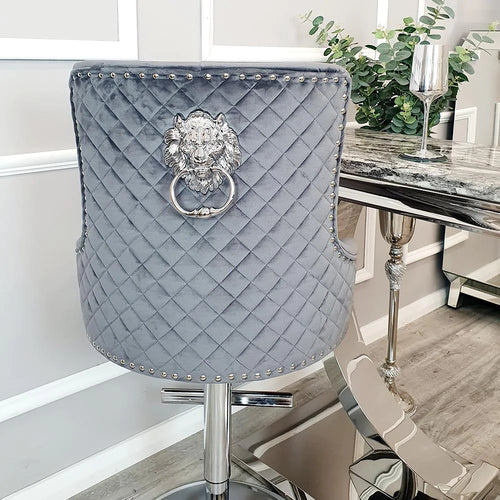
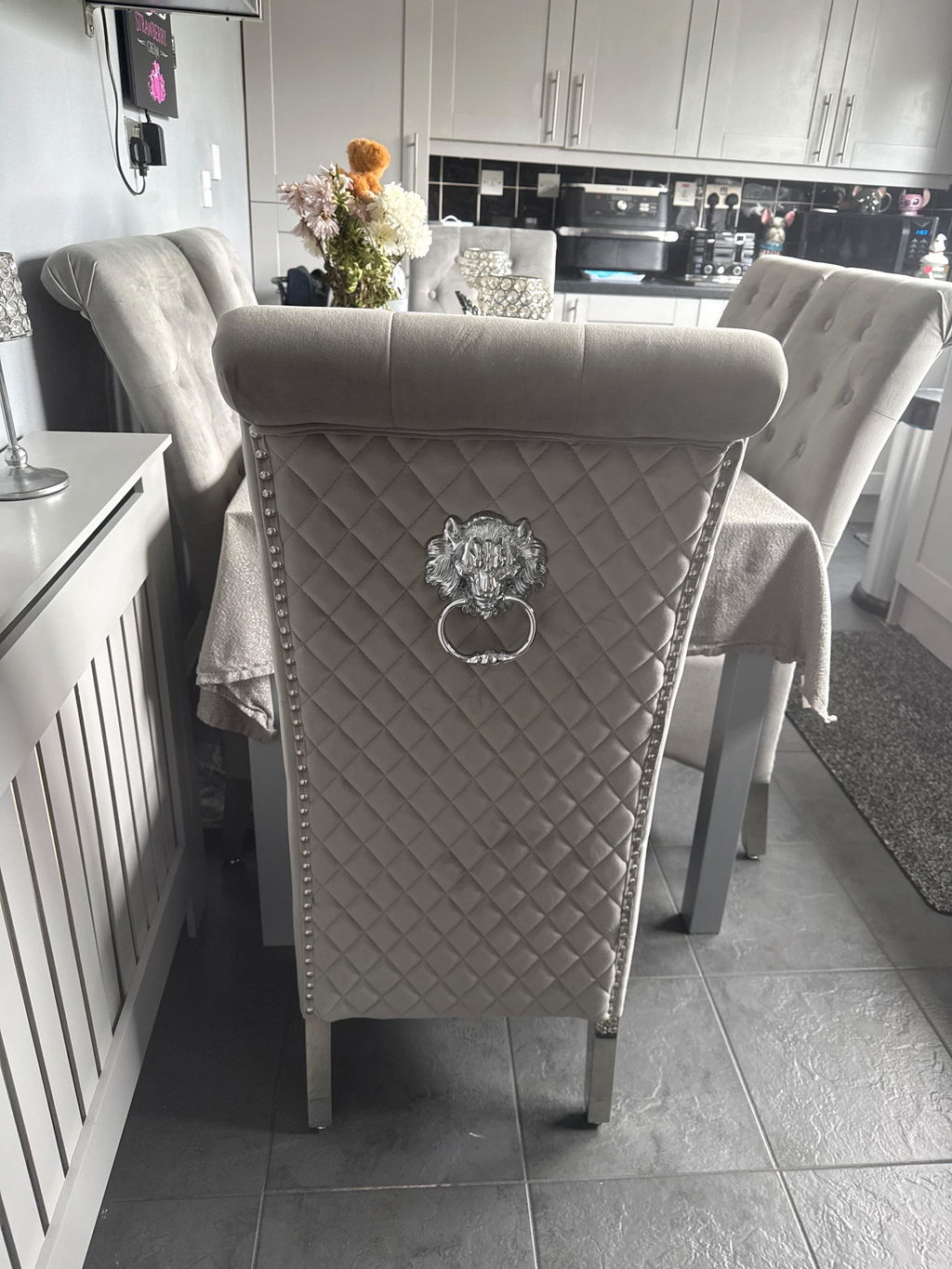
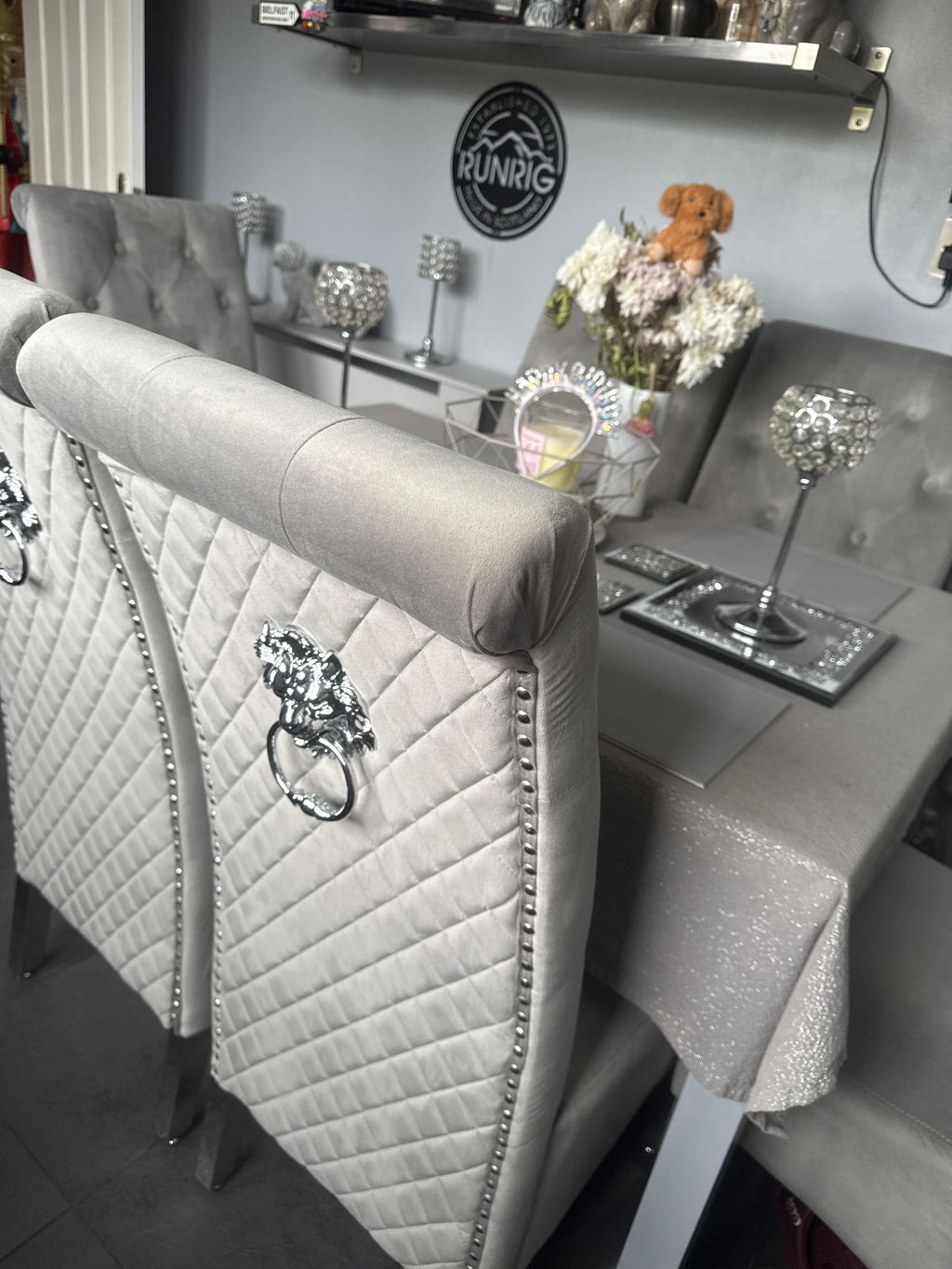
Knocker bar stools bring the decorative hardware detail of the knocker design into the kitchen-diner context. The metal ring on the back is the element that gives the stool its character, and in an open-plan room where knocker dining chairs are also in use at the dining table, the combination of knocker stools and knocker chairs creates a consistent design language across the space that is one of the more considered open-plan dining room combinations available.
Coordinating bar stools with your dining chairs
In an open-plan kitchen-diner, the bar stools and the dining chairs are often visible from the same point in the room, and whether they coordinate with each other is a question that affects the overall feel of the space rather than just the individual pieces.
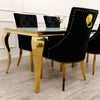
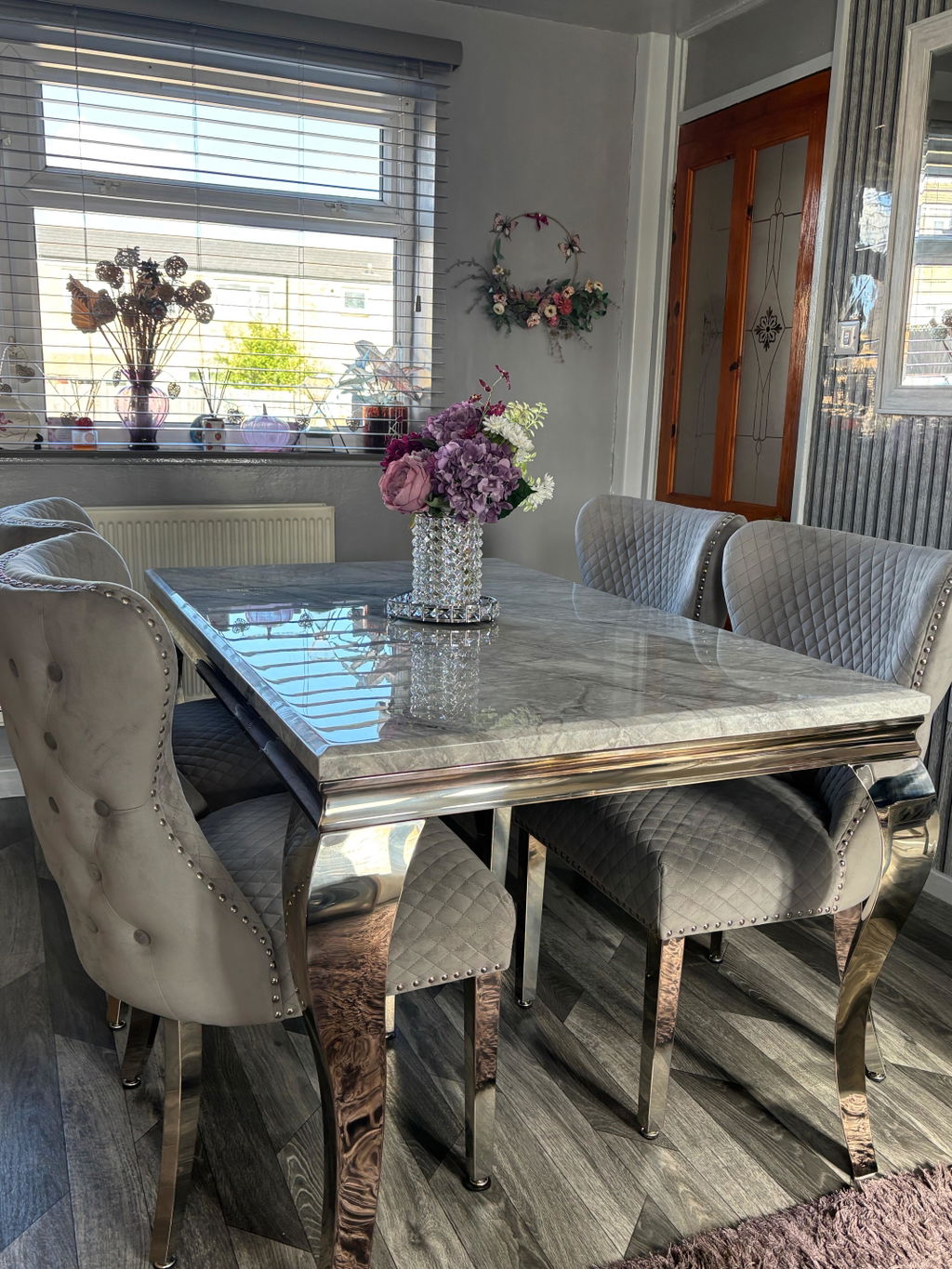
Matching the stools and chairs exactly, using the same range, the same fabric, and the same frame finish across both, creates the most coherent result and is the most straightforward approach for a household that wants the open-plan space to feel like a considered whole. Knocker stools alongside knocker dining chairs in the same upholstery and frame finish is the most natural version of this: the design detail is consistent across both pieces and the open-plan room reads as having been furnished with intention.
A deliberate contrast, different fabric or colour but the same frame finish across both, is an alternative that works well in rooms where the brief has more variety to it. Matching the frame finish while varying the upholstery ties the two pieces together through the metallic element without requiring the fabric to be identical, and in a room with a more eclectic or layered approach that can be a more interesting result than an exact match.
What tends to work less well is a combination that has happened by accident rather than by design: stools and chairs in frame finishes or upholstery materials that sit in tension with each other rather than complementing each other, chosen independently without considering how they read in the same room. If you're furnishing both the dining area and the kitchen seating in an open-plan space and you'd like a view on which combinations work before you commit to both, we're happy to advise.
Spreading the Cost
Finance is available on many of our bar stools, subject to status. A set of quality upholstered bar stools is a meaningful purchase, particularly when bought alongside dining chairs for an open-plan space, and spreading the cost can make the right combination more accessible. We're happy to talk through the options at any point.
Why buy from Shawcross
We're based in Manchester and our showroom is open if you'd like to see bar stools in person before buying. Height is the most useful thing to check in person: sitting at the right height at a counter feels immediately right, and sitting at the wrong height is immediately uncomfortable, and that assessment takes about ten seconds in the showroom compared to the uncertainty of ordering from a product page. The upholstery quality, the frame finish, and how the stool reads alongside dining chairs you're considering for the same room are all things a visit also makes clear.
We deliver nationally across the UK, and you can contact us at any stage for guidance on height, style, coordination with your dining chairs, or any other question before you order.