Skip to content
Home  → Sofas  → Traditional Sofas

Traditional Sofas

There's a particular kind of living room that a traditional sofa suits perfectly. A bay window. A fireplace with a cast iron insert. Coving aroun...


There's a particular kind of living room that a traditional sofa suits perfectly. A bay window. A fireplace with a cast iron insert. Coving around the ceiling and a wooden floor that came with the house. In that room, a low-profile sofa with track arms and a minimal profile can look like it arrived from a different building entirely. A sofa with height, rolled arms, and a bit of decorative weight belongs there in a way that's hard to explain but easy to see. The room pulls together. It looks like it was meant to look that way.


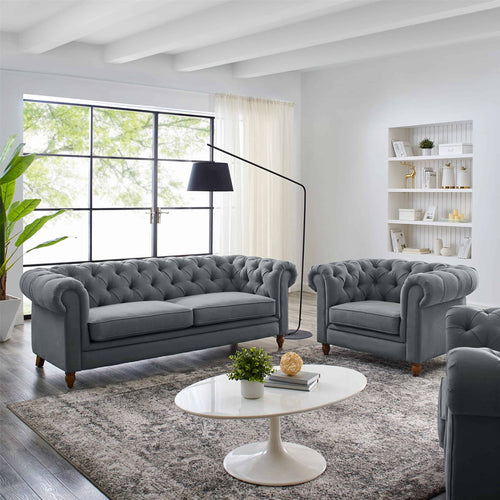
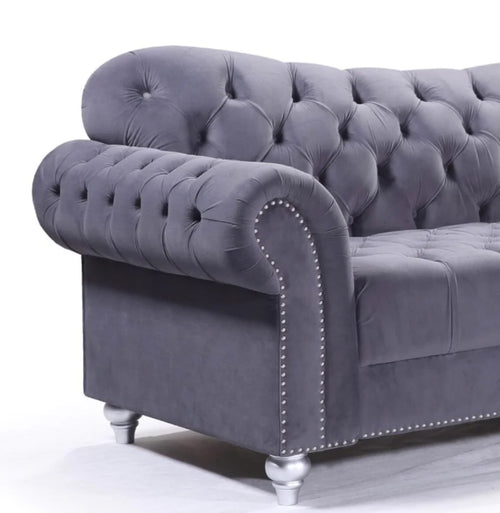
Traditional sofas are defined by their upright posture and the details that sit around it: rounded or scrolled arms rather than straight ones, a higher back with a more formal seat position, and often fabric or velvet upholstery in a rich, considered colour. Button tufting, nailhead trim and turned or carved feet are common features, though not every traditional sofa carries all of them. The broad sofas collection lets you compare styles across all design directions, including traditional and contemporary options alongside each other.


Finance is available on many of our sofas, subject to status. We deliver nationally across the UK, with sofas typically arriving within 28 days. If you'd like to see traditional styles in person before deciding, our Manchester showroom is open to visit.

This collection is empty

View all products

What's in this collection

Traditional sofas cover a design family rather than a single look, and the sofas in this collection reflect that range. The common thread is a more formal, upright silhouette with decorative detail that would look at home in a period property or a room furnished with classic pieces.

Configurations include 2-seaters and 3-seaters suited to reception rooms and more formal living spaces, as well as larger formats for households with more floor area. Upholstery leans toward fabric and velvet, both of which suit the warmth and richness that a traditional aesthetic calls for. Where the Chesterfield design is your primary interest, that style has its own dedicated page in the Chesterfield sofas collection, which covers button-tufted high-back designs in velvet, fabric and leather.

What makes a sofa "traditional" in practice

The word traditional gets used loosely in furniture, so it is worth being specific about what it actually means when applied to a sofa design, and how you decide whether it suits your room.

The most visible characteristic is arm height. A traditional sofa typically has arms that sit at or near the height of the back, rather than dropping away from it as they do on a lower, more modern design. The arm is usually rounded or scrolled at the end rather than cut straight across. This gives the sofa a more enclosed, embracing shape that reads as formal and considered.

Back height matters too. Traditional sofas tend to sit taller than their modern equivalents, with a back that provides more support to the shoulders and head. The seat position is also typically more upright, which suits a sofa used for sitting rather than sprawling, and makes it easier to get in and out of than a very deep, low design.

Decorative details are where the range opens up considerably. A fully ornamented traditional sofa might have button tufting across the back and seat, nailhead trim along the arms and base, turned wooden feet with a dark finish, and upholstery in a deep jewel colour. A more restrained traditional sofa might simply have the arm shape and back profile of the style, in a plain neutral fabric, with clean feet and no surface ornamentation at all. Both are genuinely traditional in design. The right choice depends on the room and how much visual weight you want the sofa to carry.

When a traditional sofa is the right choice

A traditional sofa tends to work best when the room has features that share its design language. High ceilings, large windows with deep sills, original cornicing, a fireplace with a period surround, decorative floor tiles in the hallway: all of these create an environment where a traditional sofa feels natural rather than placed.

In a period terraced house with original features, a traditional sofa is often simply the right choice. It reads correctly in the room without effort. In an older property that has been heavily modernised throughout, the same sofa can look incongruous depending on how far the modernisation has gone, and a more contemporary design might actually sit better.

That said, a traditional sofa used deliberately as a contrast piece in a contemporary room can work very well, and this is a popular approach. A well-made sofa in a classic velvet with button tufting can ground a very minimal, modern room and give it a warmth and character it would otherwise lack. The key is that it needs to be a deliberate choice, where the sofa is clearly a considered statement rather than a leftover from a different decorating era. If you are considering this approach, visiting our Manchester showroom to see traditional and modern styles together in person is the most useful way to test whether the contrast works the way you have it in mind.

Choosing the right fabric for a traditional sofa

The material choice matters considerably more on a traditional sofa than it does on a modern design, because traditional styles tend to amplify whatever upholstery they are dressed in.

Velvet is the natural partner for a traditional sofa and it is the most common choice for a reason. The richness of velvet suits the formal, decorative quality of a rolled arm and tufted back in a way that a flat fabric weave simply does not. The honest trade-off is maintenance: velvet shows marks, flattens with regular use in high-contact areas, and needs more consistent attention to keep looking its best. In a household where the sofa is used heavily, that is worth knowing before choosing it. The velvet sofas page covers that material in full detail including the care considerations.

A plain woven fabric in a deep, warm tone, charcoal, warm grey, forest green, navy, can carry a traditional design just as well and is considerably easier to maintain. It will not have the visual richness of velvet but it will age more gracefully in a busy household. Plain fabric is also a safer choice if you are uncertain about redecorating: a strongly coloured velvet sofa can become difficult to work around if the room's colour scheme changes, where a neutral fabric remains adaptable.

Spreading the cost

Finance is available on many of the sofas in this collection, subject to status. A well-chosen traditional sofa, bought at the right quality level, will serve a room for a very long time: the design does not date in the way a trend-led piece might, and a classic upholstered style tends to wear better the longer it settles in. Spreading the cost over an agreed period means you can invest in the quality that makes that longevity possible. Ask us for details when you get in touch or check the finance options before placing your order.

Why buy from Shawcross

We are based in Manchester with a showroom where you can see sofas in person before buying. For a traditional sofa in particular, a visit is worthwhile. The scale of a high-backed, fully upholstered sofa is genuinely difficult to judge from photographs, and the quality of the upholstery, whether velvet or fabric, looks and feels considerably different in natural light than on a screen. If you have questions about which style suits your room or want guidance on fabric versus velvet for your household, we know the stock well and are happy to help.

We deliver nationally across the UK and are available to talk through sizing, room fit and access before you order.


Traditional Sofa FAQs

What makes a sofa 'traditional' in style?

Traditional sofas are defined by their design heritage. The most recognisable features are higher backs, rolled or scroll arms, structured seat cushioning, and upholstery detailing like deep buttoning or show wood frames. They tend to have a more formal, upright profile than contemporary designs and a visual weight that comes from the proportions and the detailing rather than the size alone. Traditional styles include Chesterfield, Cabriole, and other classically-inspired designs that draw on period furniture heritage. What they share is a character and permanence that more minimal contemporary sofas deliberately step away from.

Does a traditional sofa only work in a period home?

Not at all, though it works differently depending on the room. In a period property it tends to feel like a natural continuation of the room's character. In a contemporary home it works best as a deliberate contrast, something with visual weight and personality in a room that might otherwise feel too uniform. A high-backed traditional sofa in a bold fabric or velvet can be a very effective choice in a modern room. The key is being intentional about it. If you're unsure whether a traditional sofa will sit well with what you already own, it's worth getting in touch and talking it through, or coming to the Manchester showroom to see the options in person before you decide.

Is a traditional sofa comfortable for everyday family use?

Yes, though it's worth being honest about what kind of comfortable. Traditional sofas tend to have a more upright sit than contemporary deep-cushion designs. The seat depth is typically shallower, and the back is higher, which gives the sofa its distinctive profile but also shapes how you use it day to day. For some households this is perfectly comfortable for long periods. For others who want a fully horizontal, feet-up evening sofa, a more contemporary design might serve better. If you can, try one in person before committing.

For a family household, upholstery choice is the other practical consideration. Fabric tends to be the most forgiving for heavy daily use. Velvet looks wonderful but shows marks more readily and flattens with consistent use in the same spots. Leather and faux leather are the easiest to keep clean.

What upholstery works best on a traditional sofa?

It depends on the room and how the sofa will be used. Leather is the most historically authentic choice for many traditional styles and tends to suit both period properties and contemporary rooms that want real character. It's also practical: spills wipe off easily and genuine leather develops a patina over time that adds to the appeal.

Velvet brings richness and warmth and can look particularly striking on a traditional frame, especially in deeper or more saturated colours. It's more demanding to maintain in a busy household though. It marks more readily than fabric, flattens with heavy use in the same spots, and needs more care to stay looking its best.

Fabric, cotton and chenille options sit between the two in practical terms. They're more relaxed in feel than leather, more forgiving than velvet for daily family use, and can look very well on a traditional frame, particularly in textured weaves that have a period-appropriate quality without the maintenance demands.

How do I care for a fabric or velvet traditional sofa?

For fabric and chenille, a soft brush or low-suction vacuum attachment handles routine dust and debris, and prompt attention to spills with a lightly damp cloth deals with most everyday marks. Avoid soaking the fabric.

Velvet needs a little more attention. Brush it regularly in the direction of the pile to keep it looking even, and deal with marks promptly before they set. Avoid pressing hard on velvet when cleaning as this can flatten the pile permanently. Both fabric and velvet benefit from being kept out of prolonged direct sunlight, which fades colour over time.

Do you deliver traditional sofas across the UK, and can I see them in person?

Yes, delivery is free across the UK within 28 days of ordering. We'll contact you a week in advance to agree a convenient day and time. If you'd like to see the sofas before buying, our Manchester showroom is open and well worth the visit, particularly for a traditional sofa where upholstery texture and colour in real light make a significant difference to the decision. Get in touch if you'd like to arrange a visit or have questions before you order.
How to measure your room and doorways for a new sofa

Learn how to measure your room, doorways and stairs for a new sofa from Shawcross, with simple steps, access tips and a printable checklist.

Read More