Skip to content

Console Tables

The hallway after school pickup. Bags on the floor, coats draped over the banister, keys somewhere that isn't where keys are supposed to be. A cons...
The hallway after school pickup. Bags on the floor, coats draped over the banister, keys somewhere that isn't where keys are supposed to be. A console table doesn't fix the chaos entirely, but it gives it a surface and, perhaps more usefully, it gives the hallway a reason to look like a considered space rather than a place things pass through on the way somewhere else. It's often the first piece of furniture a visitor sees. Worth thinking about.
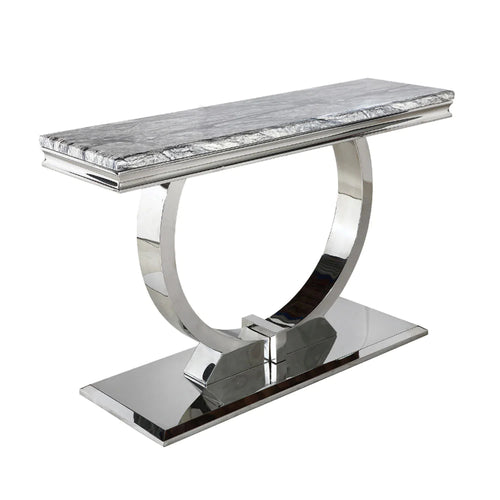
Console tables are narrow, wall-hugging pieces that sit comfortably in a hallway, behind a sofa in a living room, or against a wall in a dining room. The collection covers four material families: marble, glass, mirrored and modern, each with a different character and a different kind of space it suits best. Whether you're looking for something to anchor a bare hallway wall, a piece to sit below a mirror, or a surface to dress up a corner of the living room, there's an option across the four that will work.
Finance is available on many of our console tables, subject to status. We deliver nationally across the UK, and if you'd like to see pieces in person before you buy, our Manchester showroom is open for visits. Get in touch at any point if you'd like a steer on what will suit your space.

What's in this collection

The four material families each bring a different quality to the spaces they go into.

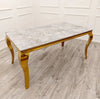
Marble console tables are the most popular option in the collection. The stone top carries a quality and presence that holds its own in a hallway without needing much else around it. Natural variation in the veining means each piece is slightly different, which suits a position where the table is seen in isolation rather than alongside other matching furniture.

Mirrored console tables work particularly well in darker hallways. The reflective surface bounces light and makes a narrow space feel noticeably larger and brighter. They suit homes with a glamorous or maximalist aesthetic, and they make a strong first impression at an entrance.

Glass console tables take the lightest visual approach of the four. A glass top keeps the eye moving rather than stopping, which is useful in tighter spaces or rooms that are already visually busy. They suit contemporary and minimal interiors particularly well.

Modern console tables cover clean-lined contemporary designs with solid tops and stronger architectural bases. They're the most versatile choice across different room types and suit schemes where you want the piece to support the room without drawing attention to itself.

Where console tables go and what they do

Hallways are the most common placement, and the one where a console table makes the most practical difference. It gives you a surface for keys, post, and the things that get put down on the way in. A drawer or shelf underneath, where the design includes one, adds useful storage for a space that tends to accumulate more than it should.

In a living room, a console table typically goes behind a sofa or against a wall that's otherwise bare. It can carry a lamp, a few items of display, or just make a wall feel finished without the bulk of a sideboard or cabinet. It pairs naturally with lamp tables as part of a broader living room scheme, and it's worth thinking about both together if you're furnishing a room from scratch.

In a dining room, a console table against a wall can hold a lamp, display items, or provide a surface for drinks and serving when you're entertaining. It's a piece that earns its place in a dining room without needing to do the heavy lifting that a dining table or sideboard does.

Each placement has slightly different requirements. A hallway console table needs to be narrow enough to leave comfortable passing space. A living room piece needs to sit at the right height relative to the sofa back. A dining room piece needs to suit the overall scheme without competing with the table. These distinctions are worth thinking through before you buy.

Choosing the right size and fit

Depth is the most critical measurement for a hallway. Most console tables are designed with this in mind and sit at a relatively shallow depth, but check the specific piece against your available floor space. You want to be able to walk past it comfortably with coats on, carrying bags, without it feeling like an obstacle. In a narrow hallway, every centimetre matters.

Width is largely determined by the wall you're placing the table against. Allow a gap on either side rather than pushing the table right to the edges of the wall, and consider how the width sits relative to anything above the table, such as a mirror or artwork. A table that's significantly narrower than the mirror above it can look unintentional.

Height is more consistent across the category than width or depth, but it's still worth checking. A living room console table needs to sit at or just above sofa-back height if it's going behind a sofa. In a hallway, there's more flexibility, though a table that's too low loses some of its practical usefulness as a drop zone.

If you want to go through dimensions before ordering, get in touch. We can help you work out what will suit the space.

Spreading the Cost

Finance is available on many of our console tables, subject to status. It's a practical way to spread the cost if you'd rather not pay for everything upfront, and it means the budget doesn't have to be the thing that determines the choice.

Details of the finance options available are on the website. If you'd like to talk through how it works before you order, get in touch and we'll walk you through it.

Why buy from Shawcross

We're a Manchester-based furniture retailer with a physical showroom where you can see furniture before buying. For a piece like a console table, where proportion matters a great deal and the difference between a table that looks right and one that doesn't is often only a few centimetres, seeing it in person is genuinely worthwhile.

We deliver nationally across the UK. Our team is happy to help at any stage, whether you need help measuring up, want to compare materials, or just want a second opinion on what will work in your hallway or living room.


Console Table FAQs

Where can a console table go in the home?

The most common placement is a hallway, which is where a console table tends to make the most immediate practical difference. It gives you a surface for keys and post, and it makes the entrance to a home feel considered rather than bare.

Beyond the hallway, console tables work well in living rooms, typically behind a sofa or against a wall that needs furnishing without the bulk of a larger piece. They can hold a lamp, frame a mirror, or simply make a wall feel finished. In a dining room, a console table against a wall is a useful surface for display or for drinks and serving when you're entertaining.

The shape of a console table, narrow and wall-hugging, means it earns its place in spaces where a wider, deeper piece would feel intrusive. That makes it one of the more versatile pieces of accent furniture, because most homes have at least one wall that needs something on it without needing something large.

What size console table do I need for a hallway?

Depth is the most important measurement. You need to be able to walk past the table comfortably, carrying bags, with a coat on, without the table feeling like it's narrowing the corridor. Measure the clear width of your hallway and think about what's a comfortable amount to give up to the table.

Width should suit the wall you're placing it against. Leave some space on either side rather than running the table right to the edges, and think about how the width relates to anything above it, such as a mirror or artwork. A table much narrower than the mirror above it tends to look unresolved.

Height is fairly consistent across the category, but check the specific piece if you have anything else in the hallway that needs to relate to it in scale. If you'd like to talk through measurements before ordering, get in touch and we can help you work it out.

Which material works best in a hallway?

That depends largely on how the hallway is used and how much light it gets.

Marble is a practical choice and probably the most popular for hallways. It's easy to wipe down, holds up to everyday contact, and has a quality that makes a first impression without requiring a lot else around it. The main thing to watch is acidic liquids, but in a hallway that's rarely an issue.

Mirrored is a particularly good option for darker or narrower hallways. The reflective surface bounces light and makes the space feel larger and brighter, which can make a real difference in a poorly-lit entrance. It requires more regular wiping to keep it looking its best.

Glass brings a similar lightness to mirrored, without the reflective quality. It suits contemporary hallways and works well in spaces where you don't want the table to add visual weight.

Modern solid-top tables are the most low-maintenance option and suit hallways where practicality is the main priority. They handle everyday contact without much fuss and work across a wide range of schemes.

Can a console table work in a living room or dining room?

Yes to both, and it's a placement that's often overlooked. In a living room, a console table typically sits behind a sofa or against a wall that would otherwise be empty. It can carry a lamp, display objects, or simply make the space feel more complete. The key is getting the height right: a table intended to sit behind a sofa should clear the sofa back comfortably without towering above it.

In a dining room, a console table against a wall provides a useful surface for display, for a lamp, or for serving and drinks when you're entertaining. It's a piece that adds to the room without competing with the dining table in the centre of the space.

If you're using a console table in a living room and thinking about a full accent furniture scheme, it's worth considering lamp tables alongside it. The two pieces often work together well and choosing them with the same material language in mind gives the room a more settled, considered look.

What do people typically put on a console table?

In a hallway: keys, post, a lamp, a small bowl or tray for the things that get put down at the door. Some people add a mirror above it, which makes the table and the wall work together as a proper entrance feature rather than just a surface.

In a living room: a lamp is the most common choice, sometimes a small plant, framed photographs, or a few display objects. The restraint tends to look better than covering the surface entirely. A console table that's been overdressed can start to look cluttered, particularly in a narrower space.

In a dining room: a lamp, candles, display pieces, or practical items for entertaining. Some people use it as a buffet surface when they have people over.

The principle is broadly the same across all three rooms: a console table works best when it's dressed with purpose rather than used as an overflow surface.

How does delivery work, and can I see console tables in person first?

We deliver nationally across the UK. Once your order is placed you'll receive a confirmation, and we'll be in touch closer to the time to arrange a delivery date that suits you. For console tables and other accent furniture, delivery is typically within 7 to 14 days. If there's anything about your property worth knowing in advance, such as a narrow hallway or restricted parking, let us know when you order so the delivery team can prepare.

If you'd prefer to see console tables in person before you commit, our Manchester showroom is open and you're welcome to come in without any obligation. For a piece where proportion and fit matter as much as they do with a console table, seeing it in person is often worth the trip. If you'd like to confirm whether a specific piece is currently on the showroom floor before travelling, just give us a call.