What's in our acoustic wall panels collection
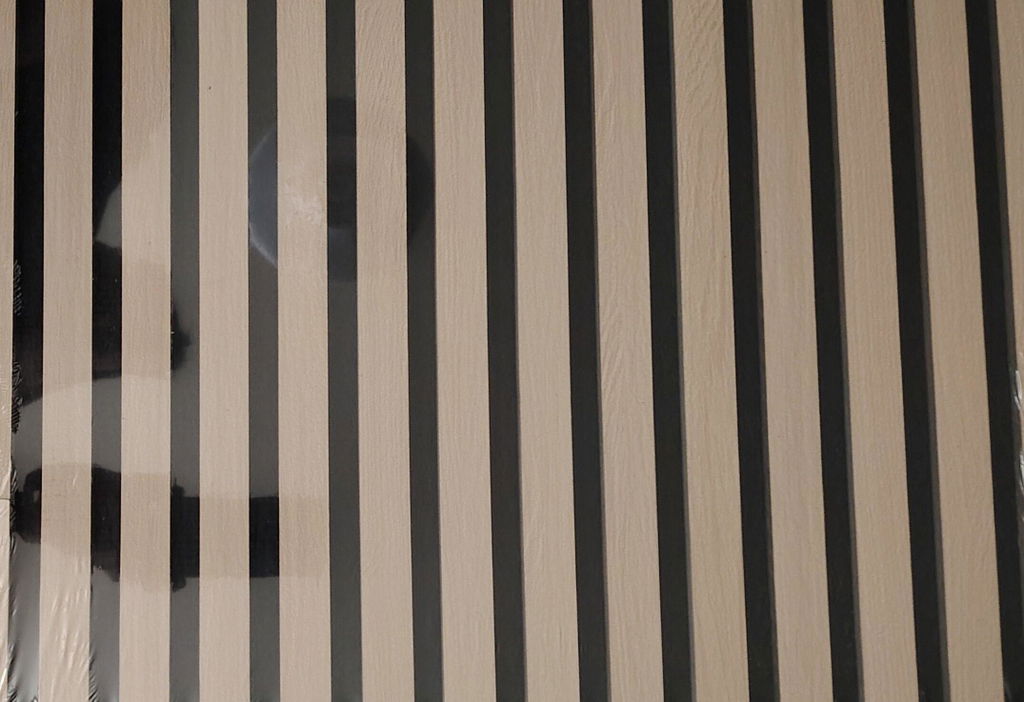
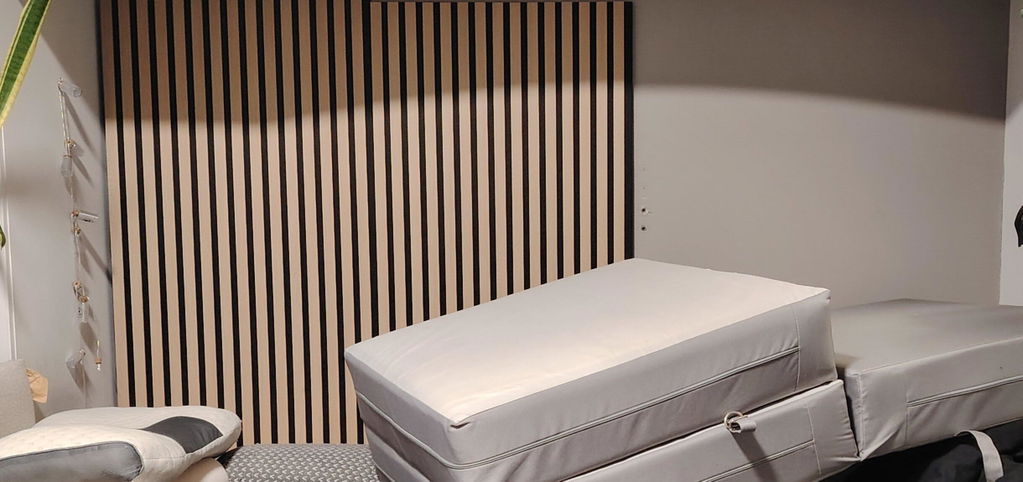
The standard acoustic panel is the starting point for most projects. It's a 2400mm by 600mm panel with MDF slats mounted on an acoustic felt backing, and it comes in natural oak as well as darker oak tones. For most feature walls and media walls, natural oak is the most popular choice because it brings genuine warmth without overpowering the room.
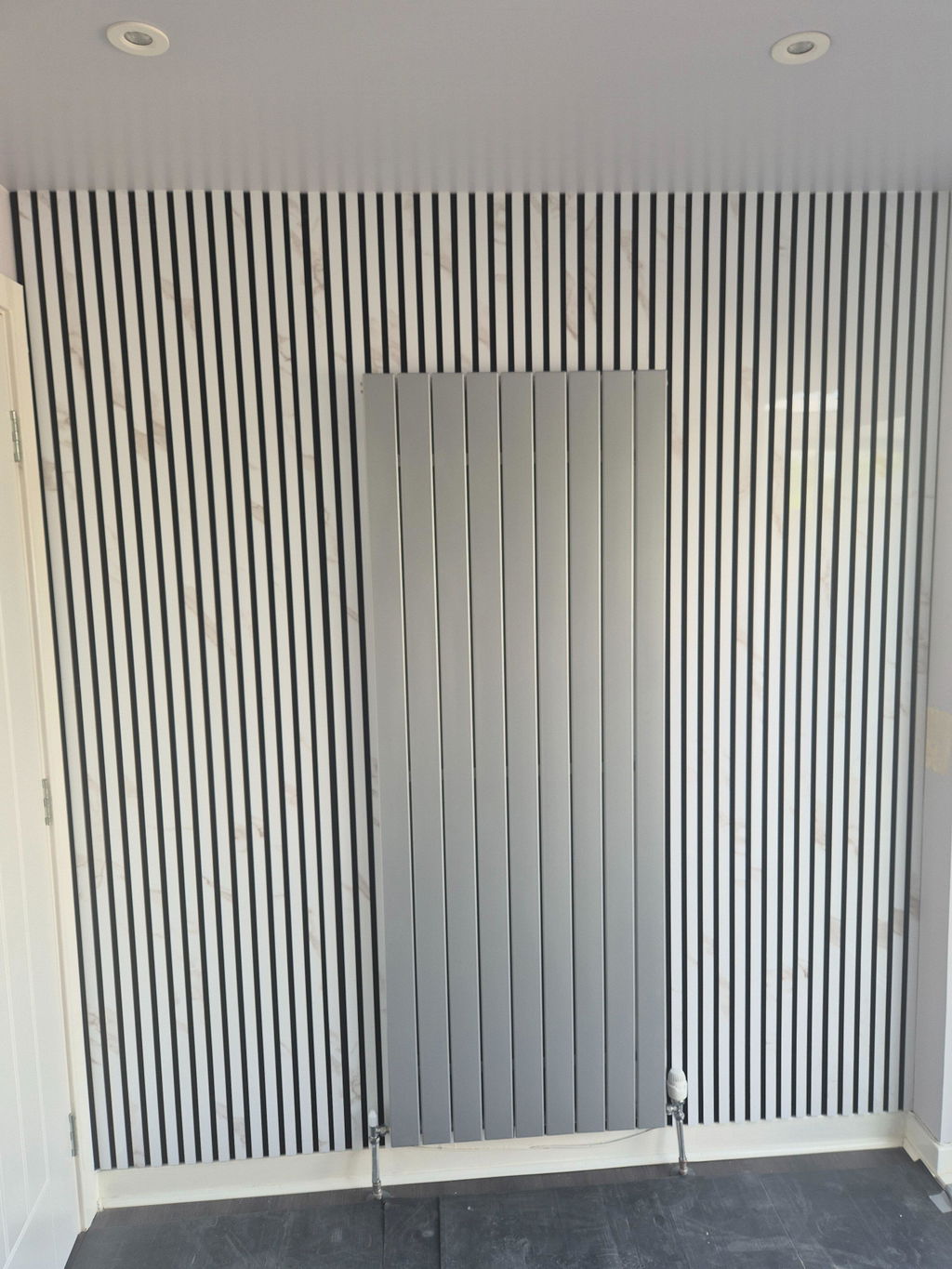
Beyond the standard range, there's considerably more variety than people tend to expect. Our coloured panels extend the palette into greys, blacks, whites, and mirror-effect finishes for rooms where a wood tone isn't the right fit. A dark grey or jet black panel behind a TV creates a very different effect from oak, and it's one of the most popular choices for dedicated media walls. Fluted panels offer a different profile altogether: a smooth, ridged surface rather than the open slatted look, which gives a subtler texture that suits certain spaces better. And premium plus panels are a step up in specification for projects where the finish quality needs to be as high as possible.
Format matters too. Standard 600mm-wide panels work well for the majority of walls. Extra wide panels are 640mm across with wider slats, which reduces the number of joins on a bigger wall and gives a bolder, more architectural look. Three-sided panels have a finished edge on three sides rather than one, so they're the right choice wherever an edge will be visible: a corner, a return, or the end of a run where the panel doesn't meet another. Paintable panels are unfinished and designed to take any paint colour you choose, which is worth considering if you have a very specific scheme in mind.
How acoustic wall panels actually work
The acoustic part is the felt backing, not the slats. The felt is a dense, recycled PET material bonded to the back of the panel. When sound hits the wall, it passes through the gaps between the slats and is absorbed by the felt rather than bouncing back into the room. That's what reduces echo and makes the space feel quieter and more comfortable.
It's worth being clear about what that means in practice. These panels are sound-absorbing, not soundproof. They won't stop noise travelling through a wall to the next room or from a flat upstairs. What they will do is noticeably reduce the echo and hard quality of a room, particularly one with hard flooring, minimal soft furnishing, or an open-plan layout where sound carries. In a living room with laminate or tile flooring, the difference after panelling even one wall is something you'll hear immediately. The room just feels warmer and more settled.
For a home cinema or media room, that acoustic improvement is genuinely functional rather than cosmetic. Reducing echo tightens up how dialogue and music sound through a speaker setup. It's not a substitute for dedicated acoustic treatment, but it's a meaningful step up from bare walls, and it happens to look good at the same time.
Fitting acoustic wall panels at home
Most people fit these panels themselves, and the process is more straightforward than it might look. Panels fix to the wall using adhesive, panel pins, or a combination of both. They can be cut to size with a standard fine-tooth saw, a jigsaw, or a multi-tool. You don't need specialist tools, trade experience, or anyone to help you hold things in place.
The part that matters most is the first panel. If the first one goes on straight and level, every panel after it follows naturally and the whole wall comes together cleanly. If it's slightly off, the error compounds across every subsequent panel and you end up with a visible lean at the far edge. It's worth spending the extra time checking and rechecking with a spirit level before you commit to fixing the first one. After that, each panel simply butts up against the last.
For sockets and light switches, the approach is to measure the position carefully, mark the cutout on the back of the panel, and remove the section before fitting. Cutting from the back avoids chipping the face. The same applies when cutting panels to length for fitting under windows or around beams. A neat cutout around a socket or switch makes a noticeable difference to the finished result, so it's a step worth taking your time on. If you're not sure about coverage, measurements, or how many panels you'll need, send us your wall dimensions and we'll work it out for you.
Spreading the cost of acoustic wall panels
A single panel is a straightforward purchase, but a full feature wall or a whole-room project adds up once you're buying eight, ten, or more panels. Finance is available on many orders, subject to status, so you can spread the cost over monthly payments rather than covering it all upfront.
If that's something you'd like to explore, get in touch and we'll talk you through what's available for your project.
Why buy acoustic wall panels from Shawcross
We deliver nationally across the UK, with most wall panel orders dispatched within a few working days. Panels are securely packaged for transit. If you'd like to see the panels before you order, our showroom in Manchester is open and you're welcome to come in. It's the best way to see how different finishes look in natural light, check the quality of the slats and backing, and get a proper sense of which option suits your room.
If you need help with anything, whether that's working out coverage, choosing between finishes, or figuring out how to handle a tricky corner, we're happy to help at any stage. Call, email, or send us a message and you'll get a straight answer.