Skip to content
Home  → Dining Chairs  → Ivory Dining Chairs

Ivory Dining Chairs

Ivory occupies a specific position on the pale chair spectrum that is worth understanding before you decide between it and its closer relatives. It...
Ivory occupies a specific position on the pale chair spectrum that is worth understanding before you decide between it and its closer relatives. It is not white: it has warmth to it, a slight yellow or golden undertone that gives it a softness that pure white lacks. It is not cream either, though the two are close enough that they are sometimes used interchangeably in product descriptions when they shouldn't be. Cream has a cooler quality that suits contemporary interiors. Ivory is warmer, and that warmth is precisely what makes it the right choice for certain rooms and the less natural choice for others. In a dining room with traditional character, warm furnishings, and a table finish with some depth and warmth to it, ivory chairs have a quality of belonging that cooler pale options don't achieve in the same way. The room looks complete rather than just furnished.
Our ivory dining chairs sit within our wider dining chairs collection and are available in a range of fabrics, frame finishes, and back styles, sold individually and in sets. They can be paired with a dining table of your own choosing or bought as part of a matched combination through our dining sets collection if you'd prefer the table and chairs resolved together.
Finance is available on many of our dining chairs, subject to status. We deliver nationally across the UK, and our Manchester showroom is open if you'd like to see ivory dining chairs in person before you order. The warm undertone of ivory is one of the things most worth seeing in real light before you commit: the difference between ivory and cream reads clearly in person and is much harder to assess from a screen.

What's in this collection

Ivory dining chairs in this collection are available in fabric and velvet upholstery with frame and leg finishes spanning gold and other warm metal options as well as more traditional leg designs. The ivory tone varies slightly between specific chairs and across materials: an ivory velvet has a different character from an ivory woven fabric, and the warmth of the undertone is more or less pronounced depending on the specific piece. Seeing the chair in person is the most reliable way to confirm that the tone is what you're expecting and that it sits well alongside the table and room you're furnishing.

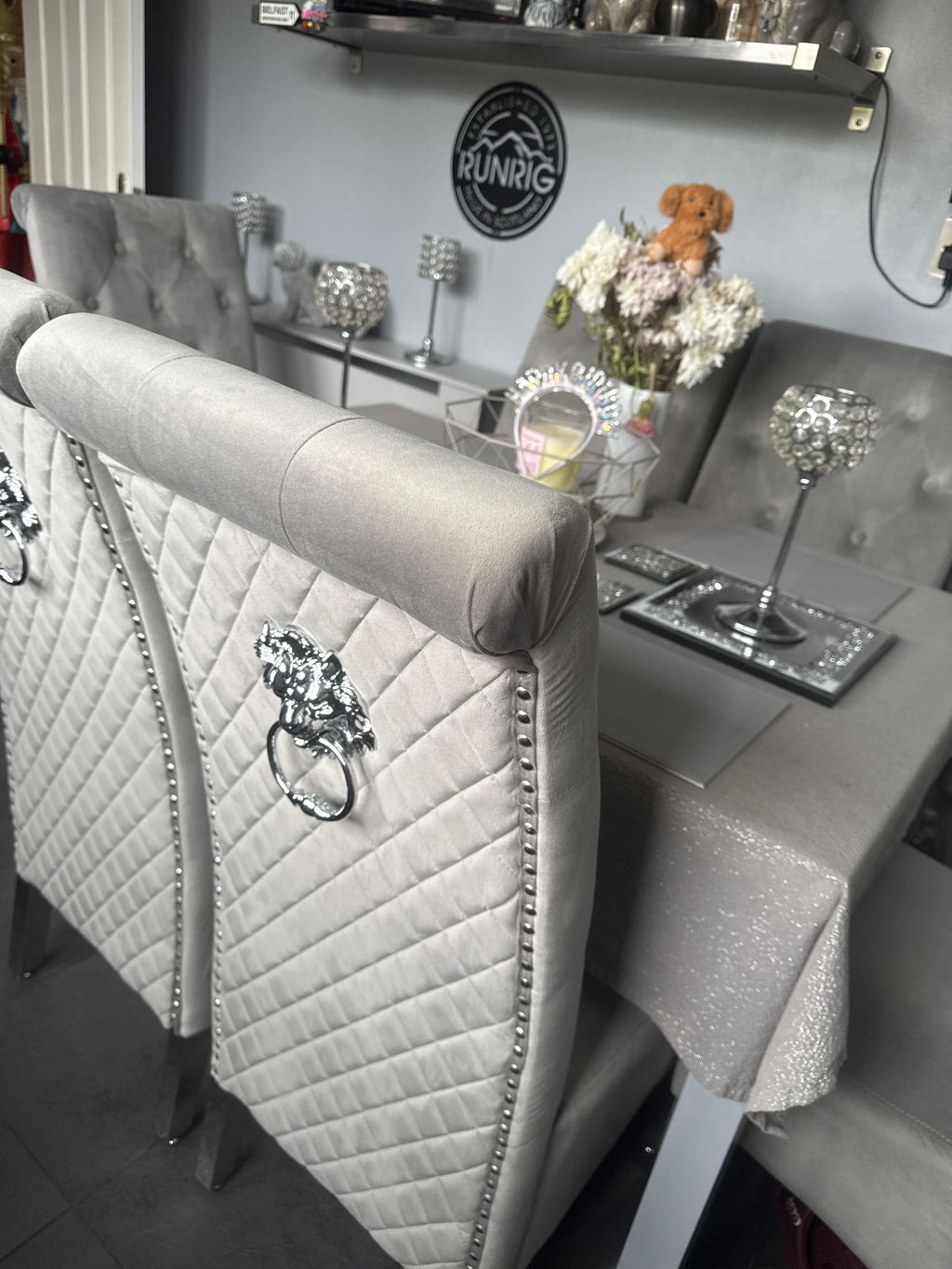
Back styles available in ivory include plain upholstered backs and button back designs with the tufted quilted detail across the back. An ivory button back chair is a specific combination with a classical formality that suits a traditional dining room particularly well: the warmth of the ivory and the considered detail of the tufting together give the chair a quality that is more than the sum of its parts. Plain-backed ivory chairs are the more versatile option and suit a broader range of room types and table pairings.

What ivory does in a room

Ivory introduces warmth without introducing colour, which is a specific and useful quality in a dining room where the palette has some warmth to it but the chairs are not intended to be the colour element of the space. Where cream achieves lightness with a slightly cool quality and grey dining chairs achieve versatility with a neutral quality, ivory achieves lightness and warmth simultaneously, and that combination suits rooms that are running on warm tones throughout.

In a traditional dining room with warm wall colours, a richly finished table, and period detail in the architecture, ivory chairs read as part of a coherent whole rather than a colour decision dropped into a finished room. The warmth of the chairs is consistent with the warmth of the surroundings, and the pale tone prevents the room from feeling heavy or dark even when the other elements have depth. This is the setting where ivory earns its place most clearly.

In a contemporary room with a cool palette, white walls, glass or chrome table finishes, and a generally unfussy approach, ivory can sit slightly at odds with the surroundings. The warmth of the undertone creates a subtle tension with the coolness of everything around it, and the room tends to look more resolved with cream dining chairs, where the cooler tone is consistent with the room's palette. The distinction between the two is not dramatic but it is real, and in a room where the tones have been chosen carefully it is visible.

The transitional interior, a home that mixes contemporary and traditional elements without fully committing to either, is where ivory sits most naturally as a versatile choice. In a room with some warmth, whether from a wood floor, a warm wall tone, or a table finish with depth to it, ivory chairs fit without requiring the whole room to be traditional in character. A gold-framed ivory chair in a room with warm elements is a combination that reads as considered and complete in a wide range of settings that are neither fully contemporary nor fully classical.

Maintenance and family suitability

The maintenance picture for ivory upholstery follows the same logic as for any pale chair, and it is worth being honest about before you commit. Pale upholstery shows marks more visibly than mid-tones, and ivory is no exception. Spills, grease from food, marks from hands, and general contact over time are all more apparent on a pale warm surface than on grey, navy, or any deeper colour.

The practical case for ivory is the same as for any pale fabric chair: prompt attention to spills is the most effective habit, a tightly woven fabric holds up better than a looser or more textured weave, and a stain-resistant treatment gives additional protection that is worth considering specifically for a pale upholstery. The warm undertone of ivory has one modest practical advantage over a cooler white or near-white: it is slightly more forgiving of the yellowing that pale upholstery can develop over time from body contact and general use, because the undertone is already in that direction. It does not prevent yellowing, but it makes it less immediately visible on ivory than it would be on a cooler white fabric.

For households with young children eating at the table every evening, ivory upholstery requires the same honest assessment as cream: the question is whether the household will keep up with the maintenance the pale colour asks for, or whether a mid-tone grey or a wipe-clean option is the more practical answer. A leather dining chair in ivory or cream is worth considering for a household that wants the pale look without the fabric maintenance: the wipe-clean surface of leather in a pale tone is considerably more manageable for daily family use than a fabric or velvet equivalent.

Ivory velvet is the most demanding combination in the pale chair range. Velvet marks from pile disturbance as well as from spills, and on a warm pale surface those marks are highly visible. For a dining room used primarily for considered meals and entertaining, ivory velvet chairs can look genuinely impressive and maintain their look with reasonable care. For a table used every day by a busy family, they will show their use quickly. The velvet dining chairs page covers the velvet-specific maintenance picture in full.

What ivory dining chairs work best with

Ivory chairs work most naturally alongside table finishes and room palettes that share their warmth rather than sitting in tension with it.

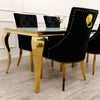
Gold dining tables are the most natural pairing for ivory chairs, and a gold-framed table alongside ivory upholstery with a gold chair frame is a combination with a coherent warmth throughout. Both the table frame and the chair frame share the same metallic warmth, and the ivory upholstery provides the lightness that prevents the combination from feeling heavy. This is one of the most complete and considered dining room combinations for a room with a traditional or transitional brief.

Marble dining tables in a warm-toned marble, beige, caramel, or cream-veined surfaces, alongside ivory chairs is a combination where the warmth of the marble and the warmth of the upholstery are consistent with each other in a way that a cooler marble surface alongside ivory sometimes isn't. A white marble with very cool grey veining can sit slightly at odds with ivory chairs: the cool quality of the marble and the warm quality of the ivory create a subtle tension. A warmer marble tone, or a marble-effect ceramic in a warm stone finish, gives the combination a more natural relationship.

Louis dining tables and Denver dining tables both suit ivory chairs well. The traditional character of the Louis and the transitional character of the Denver both have warmth to them that the ivory upholstery is consistent with, and in a room furnished around either of those tables, ivory chairs sit naturally as the seating component rather than creating a contrast with the table's character.

Chrome dining tables alongside ivory chairs require more thought. The clean contemporary quality of chrome and the warm traditional quality of ivory can work if the room's palette provides a thread connecting the two, but it is a combination where the tension between the two elements is more likely to be visible than with a warmer table finish. If the table you have is chrome-framed and ivory chairs are the colour you want, seeing the specific combination in person before you order is the most reliable way to assess whether it works in the context of your room.

Spreading the Cost

Finance is available on many of our dining chairs, subject to status. A set of ivory dining chairs in a quality fabric or velvet is a meaningful purchase, and spreading the cost can make the right set more accessible. We're happy to talk through the options at any point.

Why buy from Shawcross

We're based in Manchester and our showroom is open if you'd like to see ivory dining chairs in person before buying. The warm undertone of ivory is one of the things most consistently misread on a screen: the difference between ivory and cream, and between a warm and a cooler version of ivory, is something that real light makes immediately apparent and that product photography rarely conveys accurately. Seeing the chairs in real light alongside the table you're considering is the most reliable way to confirm both that the tone is right for the room and that the fabric quality meets expectations.

We deliver nationally across the UK, and you can contact us at any stage for guidance on whether ivory or cream is the right choice for your specific room, how ivory sits alongside the table you have in mind, or which fabric and frame combination is right for your household before you order.


Ivory Dining Chair FAQs

What's the difference between ivory and cream dining chairs?

Ivory is warmer than cream. It has a slight yellow or golden undertone that gives it a softer and more traditional quality, and it reads as more at home in a classical dining room or alongside furniture with warmth in its finish. In a room with warm wall colours, a gold-framed table, or traditional furniture throughout, ivory tends to sit more naturally than cream because the warmth of the chair and the warmth of the surrounding pieces are consistent with each other.

Cream is cooler. It reads as a paler, brighter tone with a quality that sits more naturally in contemporary and transitional interiors: rooms with pale walls, chrome or glass table finishes, and a palette that runs on cool or neutral tones. Alongside a glass or chrome table, or a marble-effect ceramic surface in a cool grey, cream tends to feel consistent with the surroundings where ivory might feel slightly at odds.

The practical way to settle the question is to think about the warmth of the other elements in your room. If the palette is predominantly warm, ivory will sit more naturally. If the palette is predominantly cool and contemporary, cream is likely the better choice. In real light the difference between the two tones is considerably clearer than it is on a screen, and seeing both in the showroom alongside the table you're considering settles the comparison quickly.

Are ivory dining chairs practical in a family dining room?

They can be, with the right fabric. Ivory faux leather is the most practical option for a busy household: it wipes clean easily, holds its appearance well over time, and is more forgiving of everyday spills than fabric or velvet. Ivory fabric chairs are warmer and softer but need prompt attention to marks and spills. Ivory velvet is the most demanding and suits rooms where the dining chairs are used more carefully rather than every day by young children. If you want a direct recommendation based on your household, get in touch. You can also explore upholstery options across our full [dining chairs collection].

What table finishes work best with ivory dining chairs?

Ivory chairs pair particularly well with warm marble table tops, natural wood and oak finishes, and dark wood bases where the lighter chair upholstery creates a clean contrast. They are slightly less versatile than cream with very cool or grey-toned table finishes, where the warm undertone of ivory can feel mismatched. For coordinated table and chair options, our [dining sets] page is a good place to start.

Traditional and transitional interiors suit ivory most naturally. A dining room with architectural character, warm wall colours, period detail in the furnishings, or a table with classical proportions and a warm finish gives ivory chairs a context where the warmth of the upholstery is consistent with everything around it. In those rooms ivory reads as part of a coherent and considered whole. Transitional interiors, homes that mix contemporary and traditional elements without fully committing to either, also suit ivory well provided the room has warmth somewhere in its palette. A wood floor, a warm wall tone, or a table finish with depth and warmth are all elements that allow ivory chairs to sit naturally in a broadly modern room without the room needing to be fully traditional in character. Very contemporary or minimal interiors, rooms with white walls, cool palette throughout, and furniture chosen for its unfussiness and clean lines, tend to suit cream dining chairs more naturally than ivory. The coolness of the room and the warmth of the ivory can sit in subtle tension in those settings, and cream's cooler tone is more consistent with the room's overall approach.

Warm table finishes suit ivory most naturally. Gold-framed tables with a marble-effect, stone-effect, or warm ceramic top are the most cohesive pairings: the warmth of the gold frame and the warmth of the ivory upholstery are consistent with each other, and the result is a dining room combination with a quality of considered completeness.

Marble tables in warm-toned surfaces, beige, caramel, or cream-veined marble, sit naturally alongside ivory chairs because the warmth of the marble and the warmth of the upholstery share a tonal register. Cooler marble surfaces in stark white or grey can create a subtle tension with ivory's warm undertone, and in those combinations cream chairs or a warmer marble finish are worth considering as alternatives.

Traditional and transitional range tables, those with some warmth and character in their design rather than a purely clean contemporary aesthetic, suit ivory chairs well as part of a coherent whole. The combination of a warmly finished table and ivory upholstery is one of the most natural pairings in the collection for a dining room with traditional or mixed character.

What style of interior suits ivory dining chairs?

Traditional and transitional interiors suit ivory most naturally. A dining room with architectural character, warm wall colours, period detail in the furnishings, or a table with classical proportions and a warm finish gives ivory chairs a context where the warmth of the upholstery is consistent with everything around it. In those rooms ivory reads as part of a coherent and considered whole.

Transitional interiors, homes that mix contemporary and traditional elements without fully committing to either, also suit ivory well provided the room has warmth somewhere in its palette. A wood floor, a warm wall tone, or a table finish with depth and warmth are all elements that allow ivory chairs to sit naturally in a broadly modern room without the room needing to be fully traditional in character.

Very contemporary or minimal interiors, rooms with white walls, cool palette throughout, and furniture chosen for its unfussiness and clean lines, tend to suit cream dining chairs more naturally than ivory. The coolness of the room and the warmth of the ivory can sit in subtle tension in those settings, and cream's cooler tone is more consistent with the room's overall approach.

How does delivery work, and can I see ivory dining chairs in person first?

We deliver nationally across the UK. Once your order is placed you'll receive a confirmation, and we'll be in touch closer to the time to arrange a delivery date that suits you. Delivery for dining chairs is typically within 7 to 14 days. If there's anything about your property worth knowing in advance, such as a narrow hallway or restricted parking, let us know when you order so the delivery team can prepare.

If you'd prefer to see ivory dining chairs in person before you commit, our Manchester showroom is open and you're welcome to come in without any obligation. Ivory is more than usually worth seeing in person: the warm undertone, the specific tone of a particular chair, and how it reads alongside the table you're considering are all things that real light makes clear quickly and that a screen consistently misrepresents. If you'd like to confirm whether a specific chair is currently on the showroom floor before travelling, just give us a call.