What's in this collection
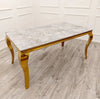
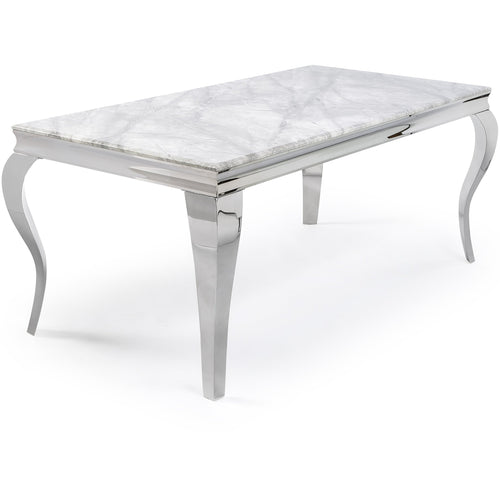
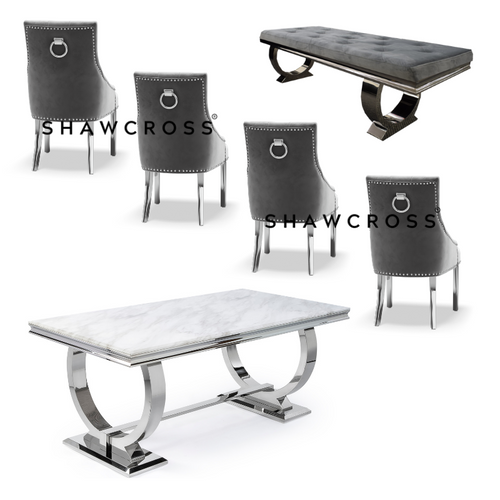
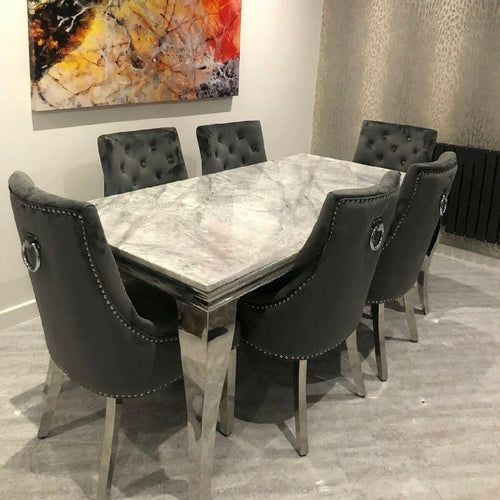
Marble dining tables in this collection include both real marble tops and marble-effect ceramic surfaces. The distinction between the two is significant and covered in detail in the next section: they share an aesthetic family but are fundamentally different materials with different properties and different demands on the household.
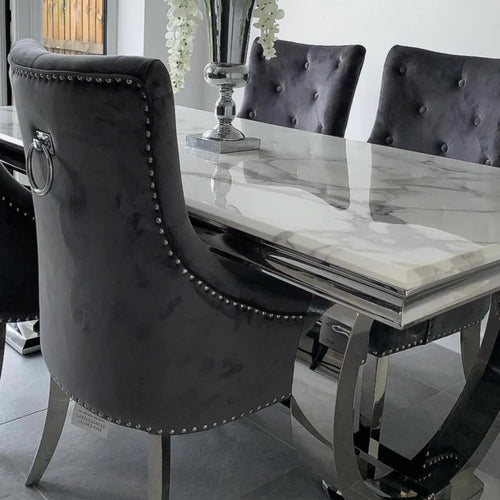
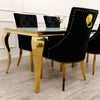
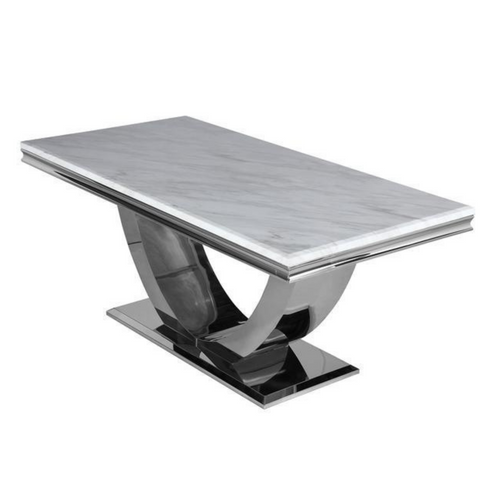
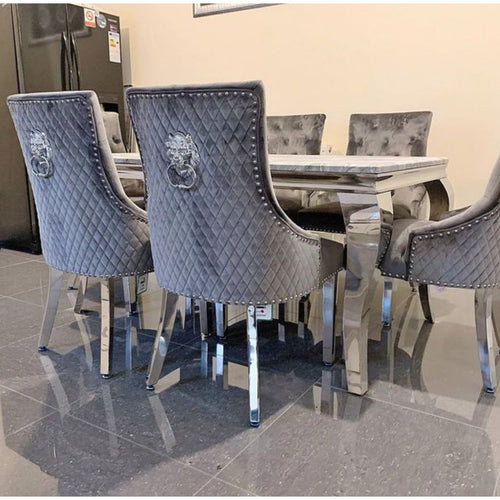
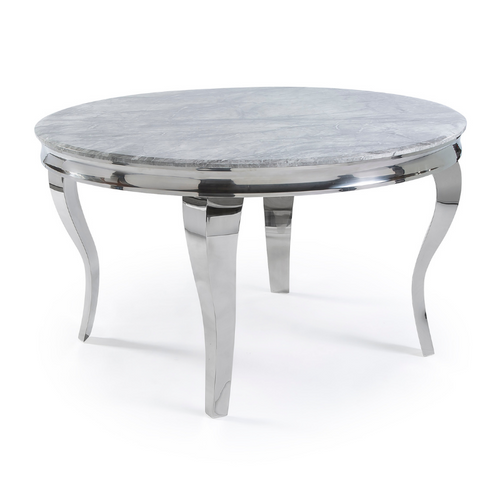
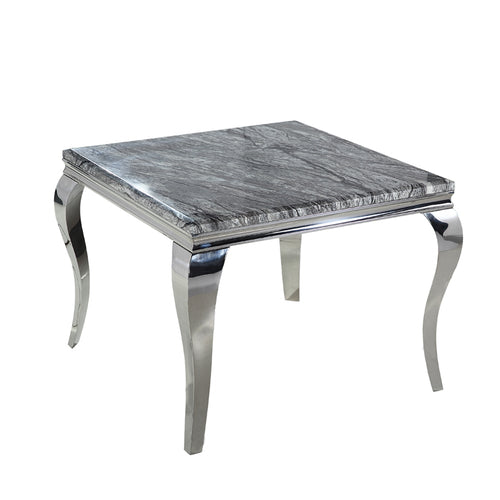
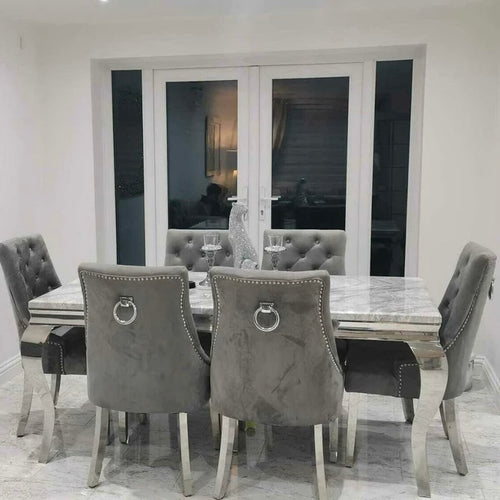
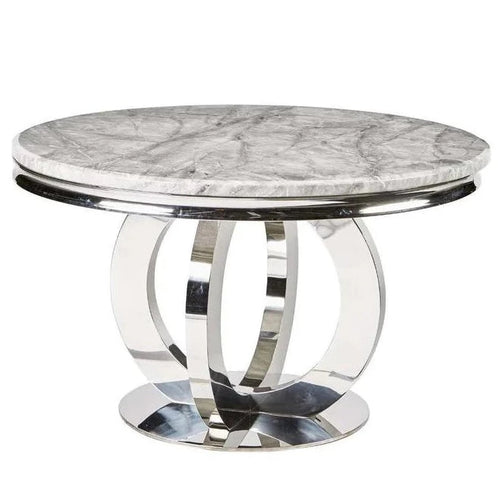
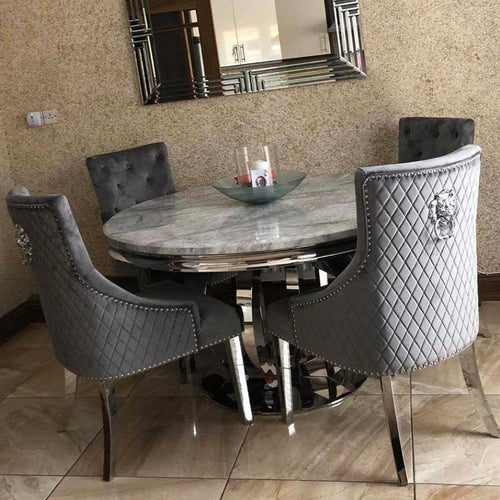
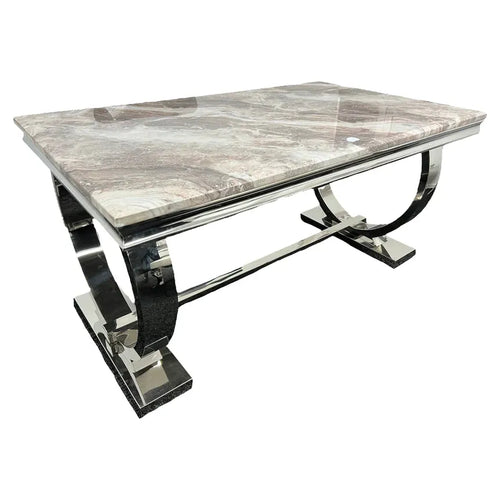
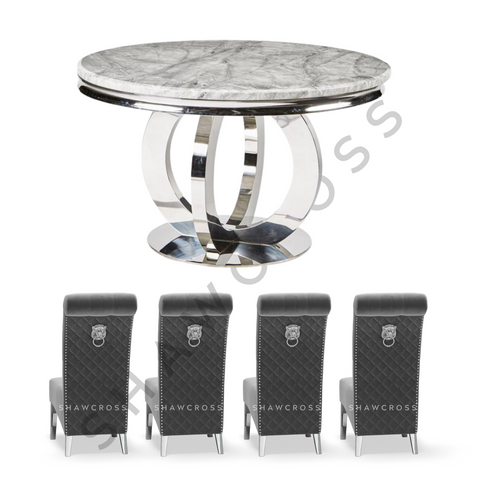
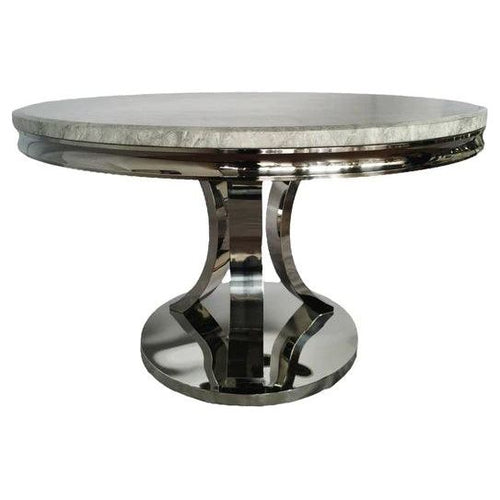
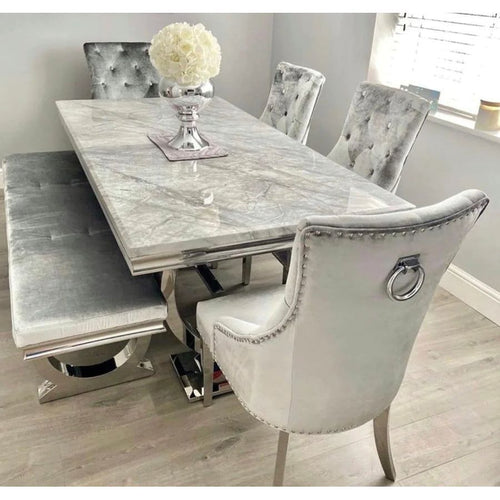
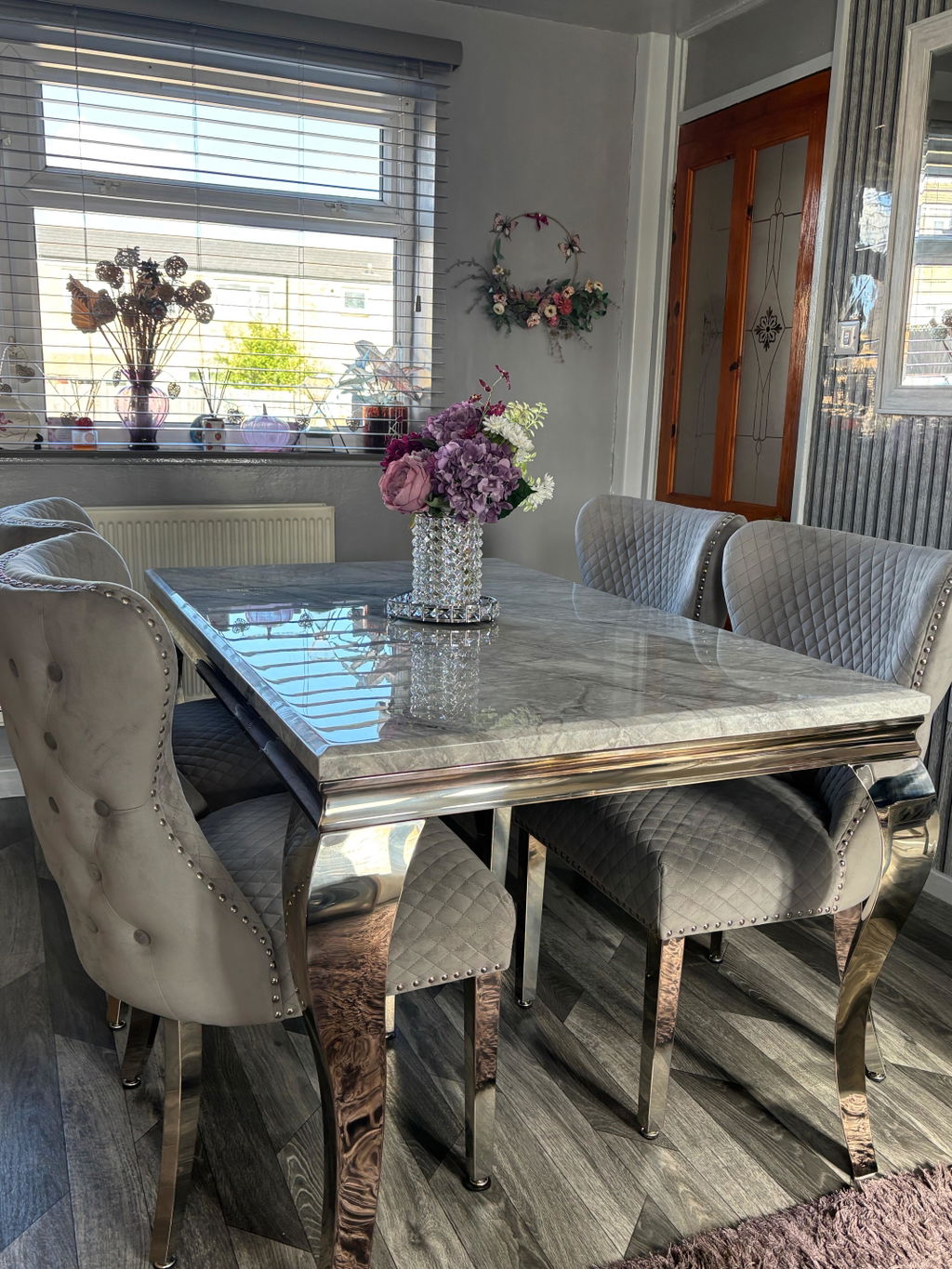
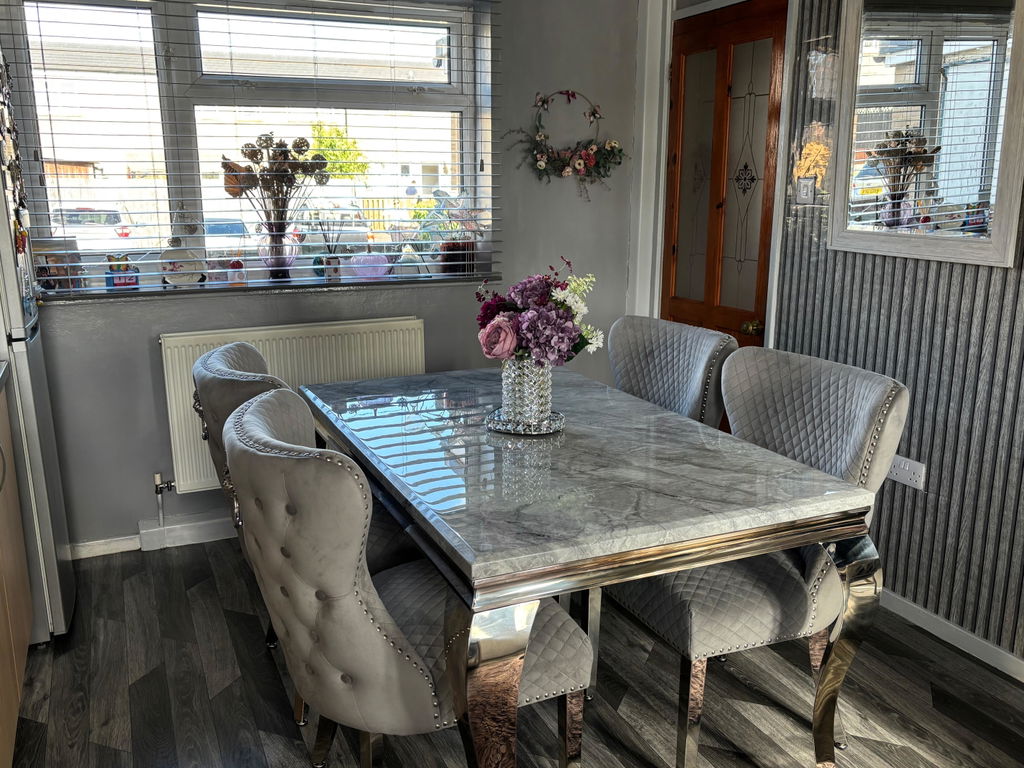
Base and leg styles vary across the collection, from contemporary metal frames in gold, chrome, and darker finishes through to more sculptural pedestal designs. The frame finish has a considerable effect on the overall character of the table: a gold-framed marble table reads differently from a chrome one, and both read differently from a dark or black metal base. All combinations are worth considering in the context of the wider room rather than just the table in isolation.
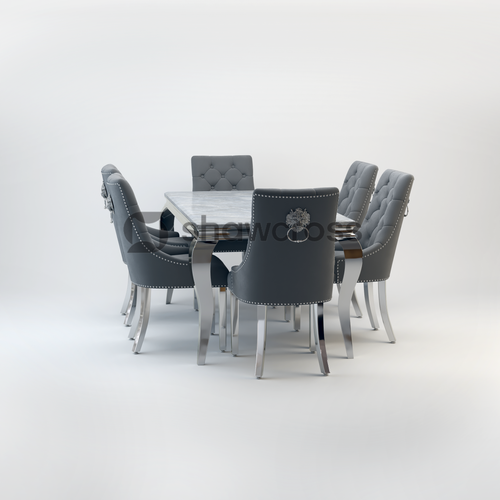
Tables are available in fixed and extending configurations, in rectangular, round, and square shapes. The right size and shape depends on the room and the household, covered in the sizing section below and in detail on the individual size and shape pages.
Real marble versus marble-effect ceramic
This is the decision most people buying a marble dining table need to make, and it's worth being specific about what distinguishes the two rather than treating it as a straightforward better-or-worse comparison.
Real marble is a natural metamorphic rock. Each slab is quarried from the ground and is unique: the veining, the colour variation, and the surface character are products of the geological conditions under which the stone formed, and no two pieces are identical. That uniqueness is part of what makes real marble so compelling as a table surface. The depth and movement in a genuine marble top, particularly in good light, has a quality that is entirely its own. It's also a material with a long history in furniture and architecture, and the cultural weight of that contributes something to how it feels to choose it.
The practical reality of real marble is that it's porous in its natural state. Without sealing, the surface absorbs liquids, and the acidic ones in particular, wine, fruit juice, coffee, tomato-based sauces, will stain it if they sit long enough. Even with proper sealing the surface isn't impervious: sealing reduces porosity and buys you time to deal with a spill, but it doesn't eliminate the vulnerability entirely. Heat is also a concern: thermal shock from a very hot dish placed directly on a marble surface can cause surface damage or cracking. These aren't reasons to avoid real marble, but they are the honest terms on which you're entering the arrangement.
Marble-effect ceramic is a manufactured surface engineered to replicate the appearance of marble. Modern production techniques have made this very convincing: the veining, tonal variation, and surface texture in good quality ceramic marble-effect are designed to read as marble at normal viewing distances, and in many rooms the difference isn't immediately apparent. What the ceramic version delivers in exchange for the uniqueness of the natural material is the practical performance of ceramic: non-porous, heat-resistant, requiring no sealing, and wiping clean easily after meals. The full properties of ceramic as a surface material are covered in more detail on our ceramic dining tables page.
The honest summary is this: if the material itself genuinely matters to you, and the quality and character of a natural marble surface is part of what you're buying, real marble is worth the care it requires. If the look of marble is the goal and the practical demands of the natural material don't suit your household, marble-effect ceramic gives you the aesthetic with considerably less ongoing commitment. Neither is a wrong choice. The mistake is choosing real marble without understanding what it asks of you, or ruling it out without understanding how good the ceramic alternative has become.
How marble tones and veinings work in a room
Marble is not one look. The range of tones and veining patterns available across real marble and marble-effect surfaces is wide enough that two tables described as marble can look entirely different from each other, and the right choice depends on the room they're going into as much as on personal preference.
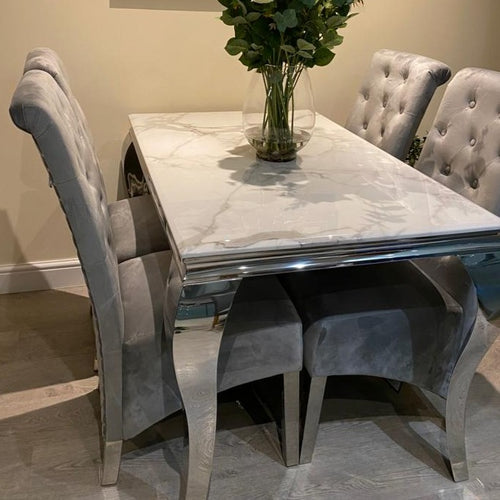
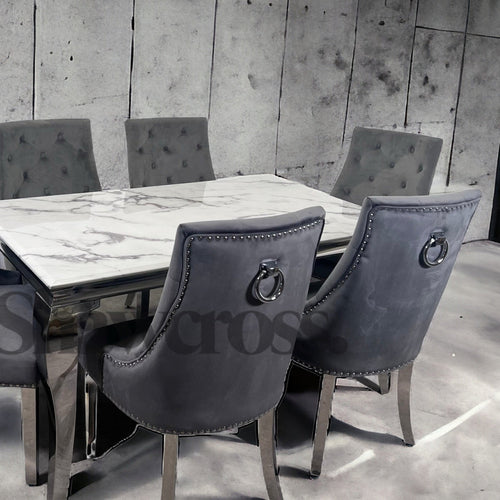
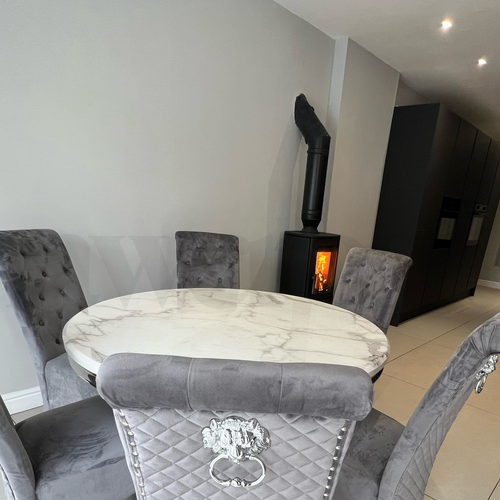
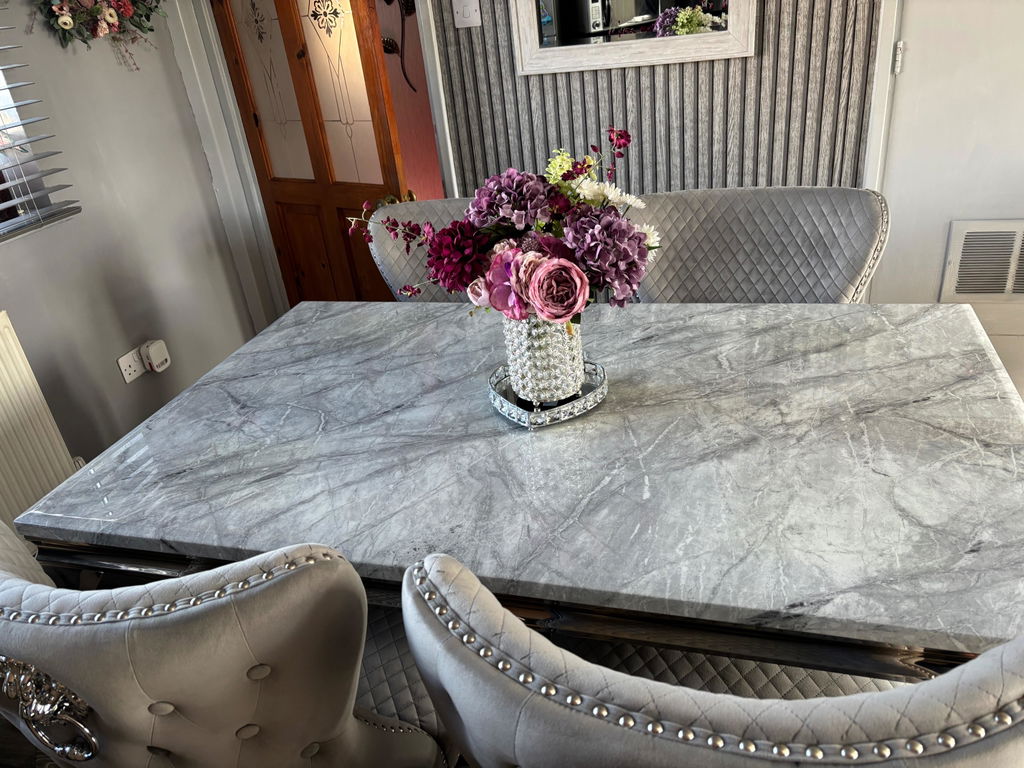
White and light grey marble is the most widely recognised version of the material, and it works in the broadest range of rooms. A white or pale grey marble top is compatible with contemporary interiors, transitional rooms, and more classical settings equally. The surface reads as clean and considered without making a strong chromatic statement, which means the room around it can do more of the work without the table dominating. Very pale marble with subtle veining is also the most forgiving in rooms where the palette hasn't been fully committed to a single direction. If you're unsure about the room and you want a marble surface that will work regardless of what the walls and soft furnishings do, pale is the safest starting point.
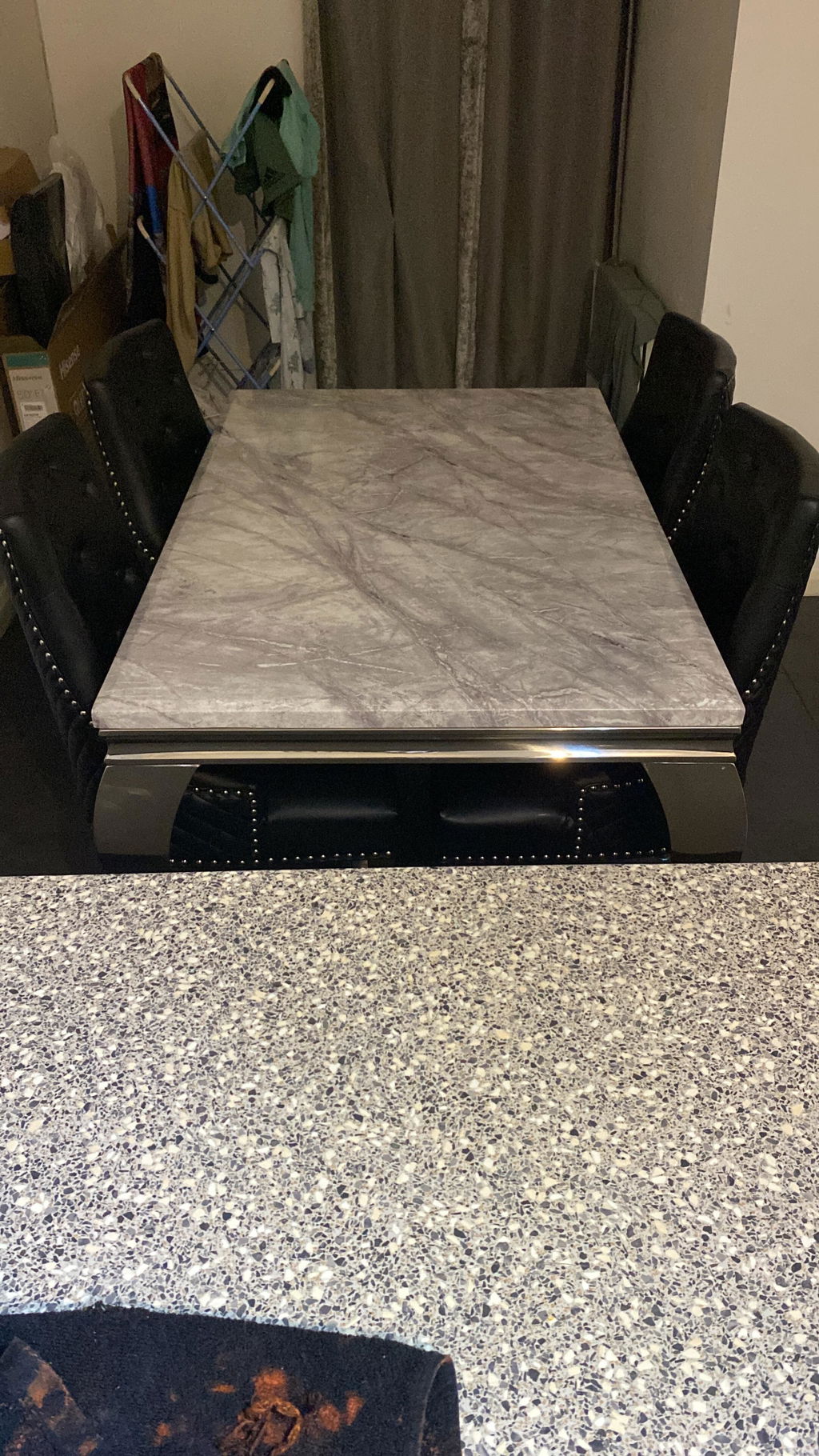
Darker marble, grey with heavy black veining or near-black surfaces with white or gold veining, is a different proposition. These surfaces make a statement: they work best in rooms with strong palettes and committed design choices, and they need to be the centrepiece rather than one element among many. A dramatic grey marble table in a room with deep wall colour, bold soft furnishings, and considered lighting is a genuinely impressive combination. The same table in a room that's still being figured out can look like the room is trying to do too much.
Warm-toned marble, beige, cream, and caramel surfaces with warm veining, suits interiors that are running on warmth and organic materials: natural textiles, warm wood tones, earthy palettes. These surfaces pair naturally with gold frames, and the combination of warm marble and gold metalwork is one of the most cohesive looks available in the collection. Warm marble in a cool grey or white contemporary room can feel slightly inconsistent; in a room with warmth throughout, it feels entirely right.
The veining character matters as much as the base tone. Fine, subtle veining reads as refined and quiet. Bold, dramatic veining, large-scale patterns that sweep across the surface, makes more of an impact and asks more of the room around it. Either can be right depending on the interior, but it's worth being specific about which you're choosing and why rather than just picking a marble colour without considering the veining pattern.
This is the most important reason to see marble dining tables in person before you buy. Photography, even good photography, doesn't reliably capture how a specific marble surface reads in natural light or what its scale of veining actually looks like across a full table.
Caring for a marble dining table
The care requirements for a real marble dining table are specific enough to cover precisely rather than in general terms.
Sealing. Real marble should be sealed before use and resealed periodically thereafter. The purpose of sealing is to reduce the porosity of the surface, giving you more time to deal with spills before they are absorbed into the stone. A good impregnating sealer penetrates the surface rather than sitting on top of it, and when correctly applied it significantly reduces the risk of staining without changing the appearance of the marble. How often to reseal depends on the specific stone and how heavily the table is used, but once a year is a reasonable starting point for a dining table in regular use. The test is simple: drop a little water onto the surface. If it beads and sits, the seal is intact. If it is absorbed quickly, the surface needs resealing.
Acidic spills. Marble reacts to acid. Wine, citrus juice, vinegar, tomato sauce, and many other common dining table substances are acidic, and if they sit on an unsealed or under-sealed marble surface they will etch it. Etching is not staining: it's a chemical reaction that dulls the surface, removing the polish rather than colouring the stone. A sealed surface gives you time, but prompt attention to spills is still the right habit at a marble table. Wipe up acidic spills quickly, rinse the area with water, and dry it off.
Heat. Real marble can be damaged by thermal shock from a very hot dish placed directly on the surface. The temperature differential between the hot base of a pot and the cool marble can cause cracking or surface damage. Use a trivet or heat mat under hot dishes, every time, as a consistent habit rather than something to remember occasionally.
Cleaning. For routine cleaning, a soft damp cloth and a pH-neutral cleaner is correct. Avoid acidic cleaners, bleach-based products, and anything abrasive. Standard household surface cleaners are often acidic and should not be used on real marble. Dry the surface after cleaning rather than leaving water to sit, and wipe in the direction of the veining where possible.
For marble-effect ceramic, none of the above applies. The ceramic surface is non-porous, requires no sealing, is not reactive to acids, and is heat-resistant. Cleaning with a damp cloth and standard surface cleaner is all it needs.
Sizes in our marble dining tables
Marble dining tables are available across a range of sizes. The most common choice for a family household is a 1.6m dining table, which seats six comfortably and suits a standard to large dining room with proper clearance on all sides. A 1.8m dining table steps up to a piece that seats six to eight and needs a room with enough length to hold it properly, and at this size marble makes a particularly strong impression as a room centrepiece. Smaller sizes suit compact rooms and households with fewer regular seats at the table.
One practical note specific to marble: the tops are heavy. Real marble and marble-effect ceramic are both significantly heavier than glass or most wood-effect surfaces, and at larger sizes the table is a genuinely substantial piece of furniture. This affects delivery and placement planning, covered in the FAQ below.
As with any dining table, allow around 90cm of clearance on all four sides when planning against your room dimensions. If you'd like to check a specific size against your room before ordering, get in touch and we'll work through it with you.
Spreading the Cost
Finance is available on many of our dining tables, subject to status. Marble dining tables sit at a higher price point than many other options in the collection, and spreading the cost can make the right table more accessible without compromising on what you actually want. We're happy to talk through the options at any point.
Why buy from Shawcross
We're based in Manchester and our showroom is open if you'd like to see marble dining tables in person before buying. Of all the surfaces in the collection, marble is the one where a showroom visit makes the most difference to the decision. The tonal variation in a real marble surface, the scale and character of the veining, and the difference between a real marble top and a marble-effect ceramic one are all things that product photography consistently struggles to convey. Seeing both in natural light, alongside the base options, and in the context of chairs you're considering, tends to settle the question quickly and confidently.
We deliver nationally across the UK, and you can contact us at any stage for guidance on care, sealing, sizing, or which specific surface will work best in your room.