Skip to content
Home  → Dining Tables  → Chrome Dining Tables

Chrome Dining Tables

  There's a specific point in a kitchen or dining room refurbishment where chrome starts making obvious sense. The units are in, the worktops are d...
 
There's a specific point in a kitchen or dining room refurbishment where chrome starts making obvious sense. The units are in, the worktops are down, the appliances are fitted, and the room has committed to a clean, contemporary look. Into that room, a dining table with a warm wood base or a heavily traditional frame looks like it arrived from somewhere else. A chrome-framed table fits because it shares the finish language of everything around it: precise, clean, and unambiguously modern. The decision about chrome tends to be made by the room before it's made by the person furnishing it, which is part of why it's such a clear choice when the room is right for it.
What takes a little more thought is the top material. Chrome in this collection refers to the base and legs, the structural frame of the table, and the surface that sits above it can vary considerably. Glass, ceramic, stone-effect, and marble-effect tops are all available with chrome frames, and the choice between them has a bigger effect on how the table works in daily family life than the frame finish does. Our chrome dining tables sit within our wider dining tables collection and are available in a range of sizes and configurations. Tables here are sold as standalone pieces to pair with dining chairs of your own choosing. If you'd prefer a matched table and chair combination, our chrome dining sets collection covers that and also addresses family suitability of the full set in more detail.
Finance is available on many of our dining tables, subject to status. We deliver nationally across the UK, and our Manchester showroom is open if you'd like to see chrome dining tables in person before you order. Chrome finishes are worth seeing in real light before you commit, because the tone and reflectivity of the frame reads quite differently in person than in product photography.

This collection is empty

View all products

What's in this collection

Chrome dining tables use chrome for the structural elements of the table: the legs, base, or frame that supports the top surface. The chrome is the constant; the top material and the structural design around it vary across the collection.

Top materials include toughened glass, ceramic and stone-effect surfaces, and marble-effect finishes. Each brings a different character to the combination and different practical properties in daily use, covered in detail in the section below. Base designs range from four-leg configurations, where slender chrome legs sit at the corners of the table, to more architectural frames and pedestal bases, where the structural form of the base is a more prominent design feature. A pedestal base in chrome has a different visual effect from four legs: more minimal, more deliberate, and particularly effective under a glass top where the base is fully visible through the surface.

Tables are available in fixed and extending configurations, across rectangular, round, and square shapes. The right size and shape depends on the room, and the size and shape pages cover those decisions in detail.

What chrome does for a dining table

Chrome is a reflective metal finish, and what it does in a room is amplify the feeling of cleanness and precision. A chrome-framed dining table in a modern kitchen-diner contributes to the overall sense that the room has been designed rather than assembled, which is why it suits rooms that have already committed to a contemporary look. The frame carries the same quality of finish as chrome appliances, chrome taps, and chrome fittings elsewhere in the room, and that consistency of finish is what makes the table feel like it belongs rather than was added as an afterthought.

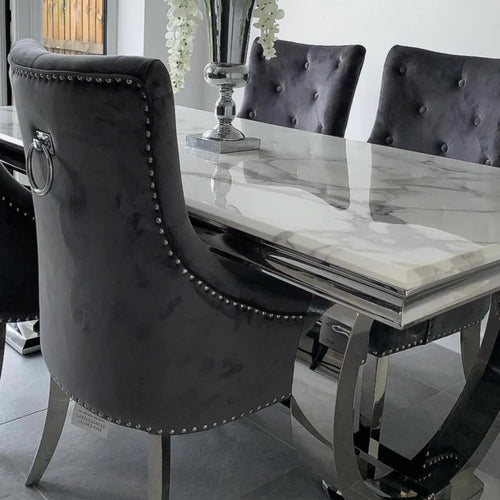
The top material is where the character of the table shifts most significantly. A chrome frame with a glass top is the most minimal and contemporary combination: both materials are clean and reflective, and the overall effect is light and precise in a way that suits open-plan spaces and rooms where keeping the space visually uncluttered is a priority. The glass reveals the base fully, which means the chrome frame becomes as much a visible design element as the surface itself.

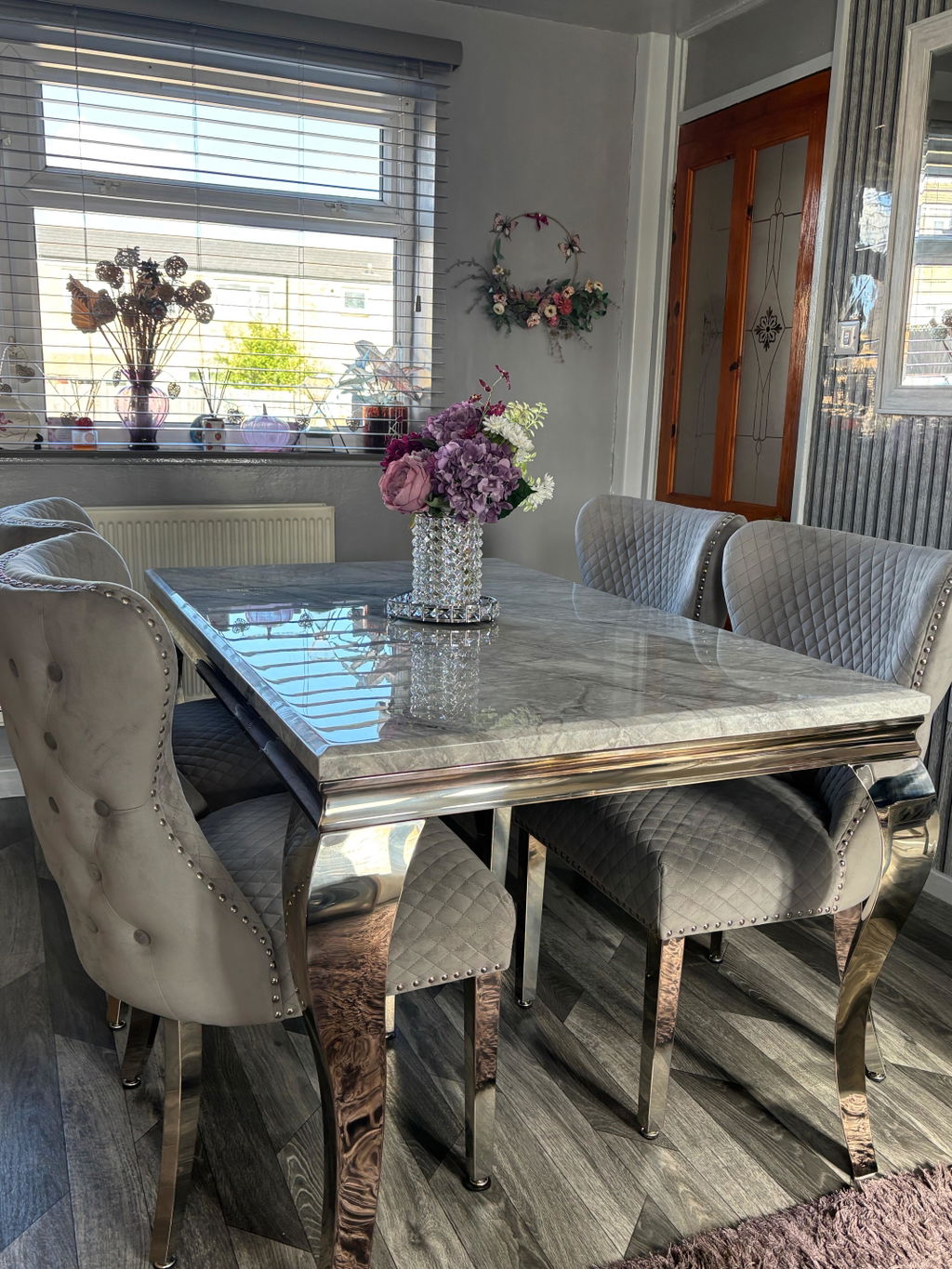
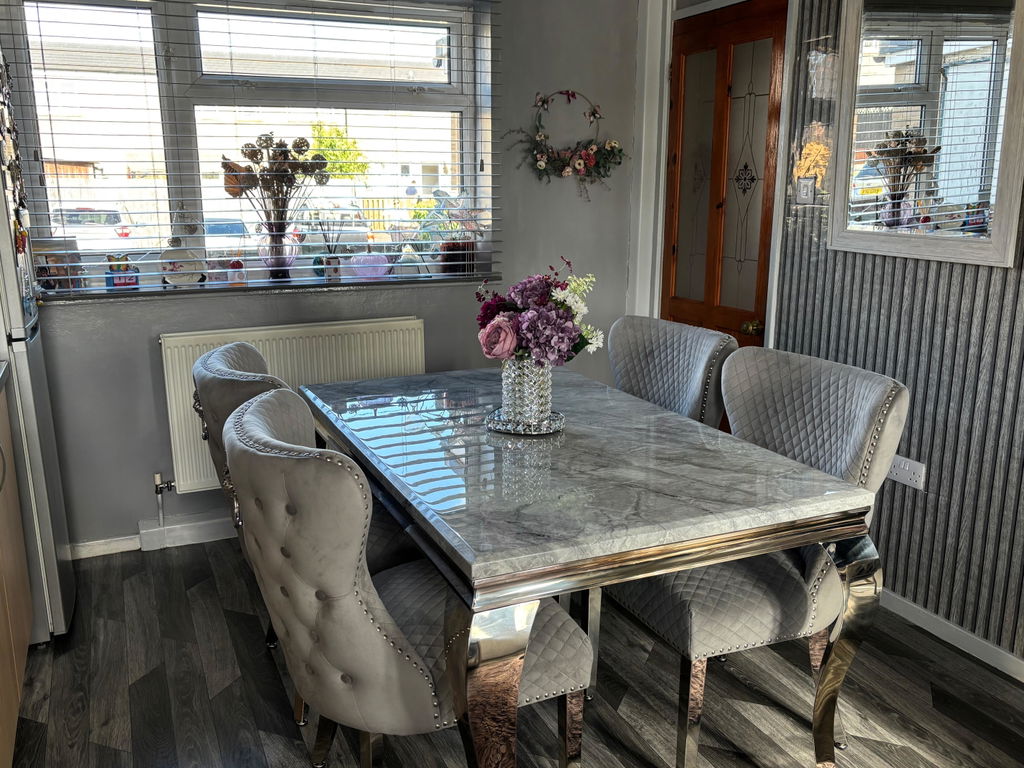
A chrome frame with a ceramic top is a different balance. The ceramic surface brings more visual weight to the table, and the chrome frame becomes more of a supporting element rather than the primary feature. This combination is often the more practical choice for a family kitchen-diner: the ceramic surface handles heat, spills, and daily use with considerably less maintenance than glass, while the chrome frame keeps the contemporary character of the table intact. Stone-effect ceramic in grey or warm neutral tones alongside a chrome frame works particularly well in a room with modern fitted units, because the combination of materials is consistent without being self-conscious.

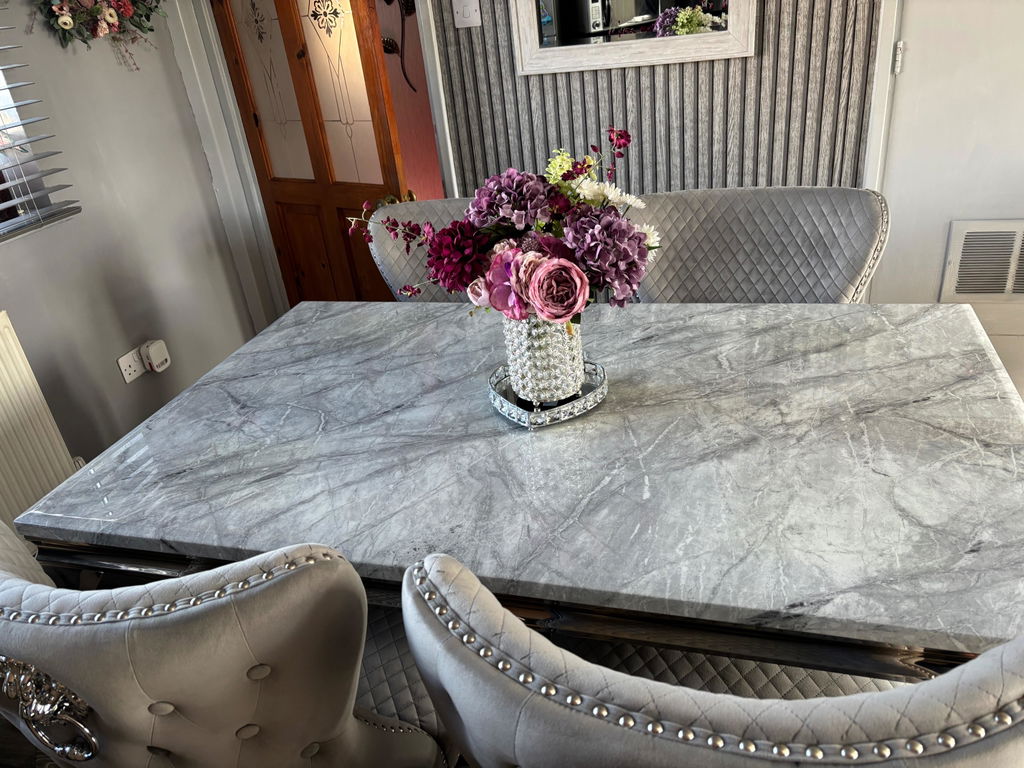
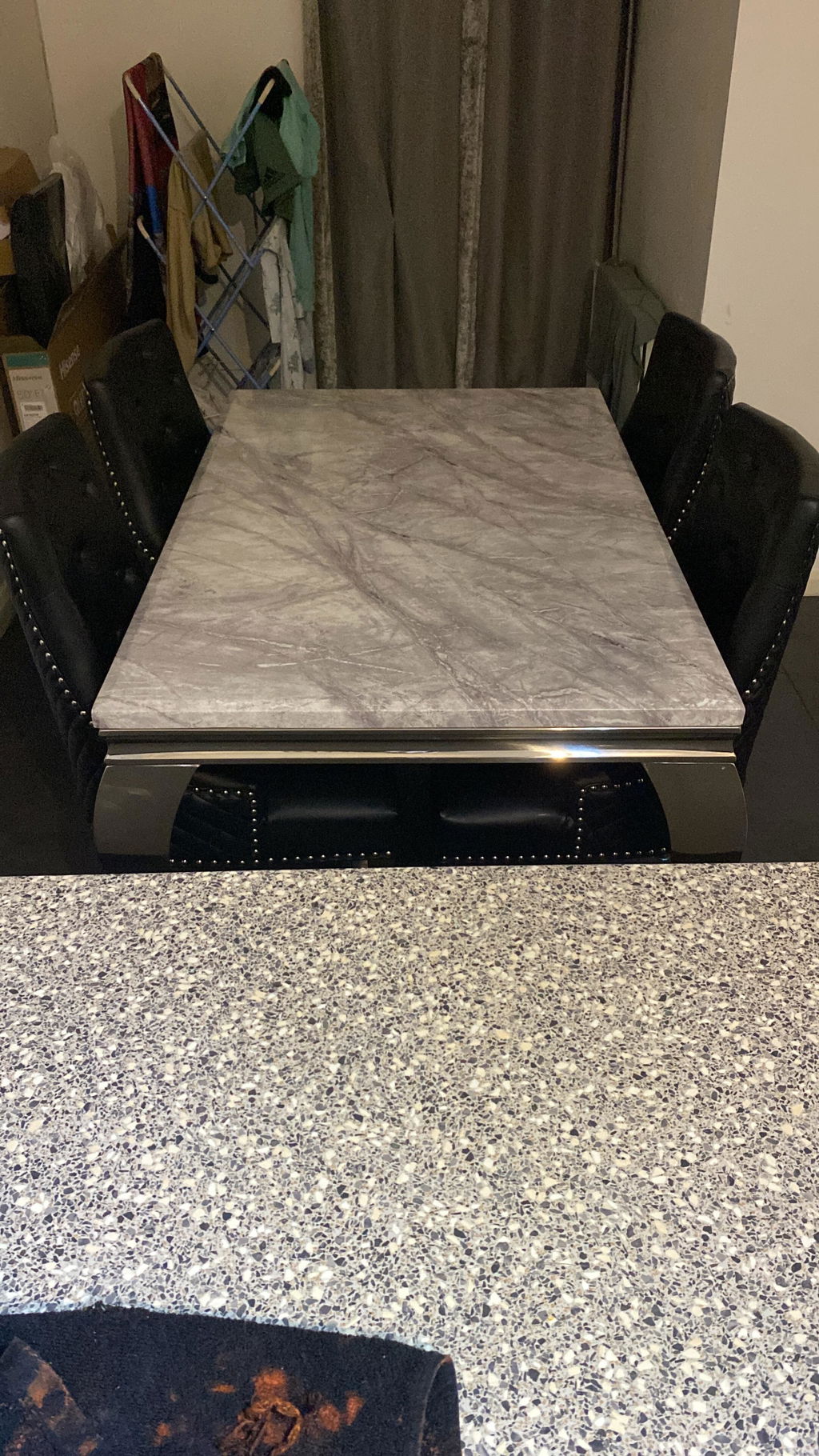
A chrome frame with a marble-effect or marble top is a slightly different register from the glass and ceramic combinations. Marble alongside chrome reads as contemporary but with more of a statement quality: the surface brings warmth and visual complexity that glass and plain ceramic don't, and the chrome frame keeps the combination grounded in a contemporary context rather than letting it tip into something more traditional. Whether this works depends on the room; in a sleek, modern kitchen it can look very considered, while in a room with warmer or more organic elements a gold dining table frame tends to complement marble more naturally than chrome.

Chrome in daily family use

Chrome is a durable material for a dining table frame. It doesn't rust under normal indoor conditions, it doesn't warp, and it holds its finish well over years of regular use without requiring any treatment or periodic maintenance beyond cleaning. Under the everyday demands of a family dining room, a chrome frame holds up without any realistic concern.

The honest thing to say is that chrome shows marks. Fingerprints and smears are more visible on a reflective chrome surface than on a matte or painted frame, and in a household where chairs are pulled in and out every day, the legs and lower frame sections that people touch regularly will show those marks. It's not a difficult problem to manage: a soft damp cloth deals with it quickly and a chrome frame wipes clean without any specialist products. But it is a regular job rather than an occasional one, and in a busy household it's worth factoring in alongside the top surface maintenance before you decide.

The top surface is where most of the day-to-day practical consideration sits. A chrome-framed table with a glass top needs the glass wiped after most meals, which is a consistent commitment. A ceramic top in the same chrome frame is considerably more forgiving: spills sit on the surface, heat isn't a concern, and the cleaning routine is a quick wipe with a damp cloth rather than a careful polish. For a table that's used most evenings by a family with children, the difference between a glass top and a ceramic top in daily maintenance terms is significant, even when the chrome frame is the same. The ceramic dining tables and glass dining tables pages cover the specific care requirements for each surface in full.

Sizes in our chrome dining tables

Chrome dining tables are available across a range of sizes to suit different rooms and households. A 1.5m dining table in chrome is the most common choice for a standard family dining room or kitchen-diner, seating four comfortably for daily meals and six when guests come round. A 1.6m dining table gives six people proper elbow room and suits a room with a little more length to work with. For larger rooms and households, 1.8m dining tables in chrome make a strong impression and suit a dedicated dining room where the table is a proper centrepiece rather than just functional furniture.

At the compact end, chrome works well in a smaller kitchen-diner where a contemporary finish ties the table to the room's wider look. A 1.2m dining table or 1.1m dining table with a chrome frame and glass or ceramic top suits a room where space is limited and a clean, unfussy finish is the priority.

As with any dining table, allow around 90cm of clearance on all four sides when planning against your room dimensions. If you'd like to check a specific size and configuration against your room before ordering, get in touch and we'll work through it with you.

Spreading the Cost

Finance is available on many of our dining tables, subject to status. If the table you want sits above your immediate budget, spreading the cost is worth exploring. We're happy to talk through the options at any point.

Why buy from Shawcross

We're based in Manchester and our showroom is open if you'd like to see chrome dining tables in person before buying. Chrome is a finish that reads quite differently in real light from how it appears in photographs: the reflectivity, the tone of the metal, and the way the frame sits alongside the top material are all things a visit makes immediately clear. If you're deciding between chrome and another frame finish, or between different top materials on a chrome frame, seeing them in the showroom is the most efficient way to settle the decision.

We deliver nationally across the UK, and you can contact us at any stage for guidance on sizing, top material, room fit, or chair compatibility before you order.


Chrome Dining Table FAQs

What top materials pair best with a chrome dining table frame?

Glass and ceramic are the most natural pairings with chrome, and both work well for different reasons.

Glass and chrome is the most minimal combination. Both materials are clean, reflective, and contemporary, and the overall effect is light and precise in a way that suits rooms that have been designed with care. The glass reveals the chrome base fully, which makes the frame a visible part of the design rather than something that sits beneath a solid surface. The trade-off is that a glass top requires more consistent maintenance than ceramic, showing marks after every meal and needing a proper wipe-down to look clean.

Ceramic with a chrome frame is the more practical combination for a family table. Stone-effect or marble-look ceramic alongside chrome keeps the contemporary character of the frame while giving you a surface that handles heat, spills, and daily use without the cleaning commitment of glass. This is the combination most commonly chosen for a kitchen-diner that's being used every evening rather than mainly for entertaining.

Marble-effect and real marble tops are also available with chrome frames. The combination works in a contemporary setting where the surface brings visual interest and the chrome keeps the overall look from tipping into something traditional. Where marble sits alongside a warmer interior, gold dining tables tend to complement it more naturally than chrome, and it's worth looking at both before you decide if marble is the surface you're drawn to.

Does chrome tarnish or scratch under normal use?

Chrome doesn't tarnish in the way silver does, and under normal indoor dining conditions it holds its finish well over years of regular use. It's not going to dull or discolour from everyday use, and it doesn't require any protective treatment to maintain its appearance.

Scratching the chrome surface deeply from normal use is unlikely: the kind of contact a dining table frame takes, chairs pulling in and out, cleaning, the occasional knock, doesn't typically cause visible scratching. The surface is more vulnerable during moves and delivery, when the frame might be dragged across a floor or knocked against a wall, so reasonable care during those moments is worth taking.

The more realistic day-to-day issue, as noted above, is fingerprints and smears rather than scratches. Chrome is reflective and picks up marks from hands readily, particularly on the chair-height sections of the legs and the lower frame. Regular cleaning manages this easily, but it's worth knowing in advance that chrome requires more frequent attention than a matte or powder-coated frame finish.

How do you clean chrome table legs and bases?

A soft damp cloth is the right tool for routine cleaning, and in most cases it's sufficient. For fingerprints and smears that a damp cloth doesn't fully clear, a small amount of glass cleaner or a specialist chrome cleaner on a soft cloth gives a better result and restores the shine more effectively.

The things to avoid are abrasive cloths or scouring pads, which will scratch the surface, and harsh chemical cleaners, which can affect the chrome finish over time. Chrome doesn't need any specialist products for routine cleaning: the goal is to keep it clean without abrading the surface, and a soft cloth used regularly is all that takes.

Drying the frame after cleaning is worth doing. Water left to dry on chrome can leave spots and marks, particularly in hard water areas. Wiping the chrome dry after cleaning and then buffing briefly with a dry cloth gives the cleanest result and keeps the frame looking well-maintained.

What rooms and interiors suit a chrome dining table?

Chrome works best in rooms that have made a clear contemporary decision about their look. A fitted kitchen with gloss or handleless units, an open-plan kitchen-diner with modern appliances and clean surfaces, or any room where the furniture throughout is contemporary and unfussy: these are the settings where a chrome dining table sits naturally. The frame finish is consistent with the rest of the room, and the table feels like it belongs rather than arrived from a different era.

Rooms where chrome is a harder fit are those with warm and traditional character. Dark wood panelling, heavy traditional furniture, rich patterned textiles, or a room that's been assembled around classical design principles are all settings where chrome tends to read as inconsistent with the surroundings. In those rooms, a warmer metal finish or a more traditional base design is usually the better choice.

Open-plan spaces particularly suit chrome. In a larger open-plan kitchen-diner where the dining area flows into the kitchen and living space, a chrome-framed table ties the dining area visually to a modern kitchen without creating a hard separation between the two. The finish is coherent across the space rather than making the dining table feel like a separate decision from the rest of the room.

Is a chrome dining table a good choice for a family kitchen-diner?

The frame is, yes. Chrome is durable in family use, cleans easily, and holds up to daily life without any particular concern. The question that matters more for a family household is the top material rather than the frame finish.

A chrome frame with a ceramic top is a genuinely practical choice for a family kitchen-diner. The frame holds up, the ceramic surface handles everything a busy family dining table encounters, and the combination is easy to keep clean without requiring any special products or careful handling. For a table that's in use most evenings and doing real work rather than being preserved for guests, this is the combination that will give the least cause for frustration over the years.

A chrome frame with a glass top in a family kitchen-diner is perfectly viable in terms of durability, but it asks more of you in maintenance. Glass shows every mark from every meal, and with children at the table most evenings the cleaning commitment is a daily one rather than occasional. Whether that suits your household is a question worth answering honestly before you buy. The glass dining tables page covers the full maintenance picture for glass surfaces in detail.

How does delivery work, and can I see chrome dining tables in person first?

We deliver nationally across the UK. Once your order is placed you'll receive a confirmation, and we'll be in touch closer to the time to arrange a delivery date that suits you. Delivery for dining tables is typically within 28 days. If there's anything about your property worth knowing in advance, such as a narrow hallway, a tight corner on the route to the dining room, or restricted parking, let us know when you order so the delivery team can prepare.

If you'd prefer to see chrome dining tables in person before you commit, our Manchester showroom is open and you're welcome to come in without any obligation. Chrome finishes are particularly worth seeing in real light: how the frame reads alongside different top materials, how reflective the chrome is in a natural light setting, and how the table sits in a room rather than in a product photograph are all things a visit makes clear quickly. If you'd like to confirm whether a specific piece is currently on the showroom floor before travelling, just give us a call.