Skip to content
Home  → Dining Tables  → Glass Dining Tables

Glass Dining Tables

A glass dining table is two things at once, and understanding both is what makes the decision clear. The surface itself is one part: transparent, r...
A glass dining table is two things at once, and understanding both is what makes the decision clear. The surface itself is one part: transparent, reflective, and doing something specific to a room that no other dining table material does. The base is the other part: fully visible through the glass from every angle, as much a design element as the top that sits above it. Most dining tables allow you to think about the surface and treat the base as secondary. A glass table doesn't allow that separation. The base is always on show, and the character of the table in a room comes from how the two work together rather than from either one independently. Getting both right is what makes a glass dining table genuinely impressive in the right setting, and it's what makes it worth spending time on the decision before you commit.
Our glass dining tables sit within our wider dining tables collection and are available in a range of sizes and base styles. Tables here are sold as standalone pieces to pair with dining chairs of your own choosing. If you'd prefer a matched table and chair combination, our glass dining sets collection covers that, and also addresses family suitability of the full set in more detail.
Finance is available on many of our dining tables, subject to status. We deliver nationally across the UK, and our Manchester showroom is open if you'd like to see glass dining tables in person before you order. Glass in particular is worth seeing in real light before you decide, because the way a base reads through a glass top is something photographs approximate but don't fully show.

This collection is empty

View all products

What's in this collection

Glass dining tables in this collection have toughened glass tops in clear or smoked configurations, mounted on bases that vary significantly in design, material, and finish. The base styles span contemporary metal frames in chrome and gold finishes, darker metal options, and other designs, with both four-leg and pedestal configurations available. The specific base design has a larger effect on the overall character of a glass table than it would on a solid-top table, for the simple reason that it's visible in its entirety from every seat and from every angle in the room.

Tables are available in fixed and extending configurations. An extending glass table typically has a glass top that opens to accommodate a matching or complementary leaf; the specific extension arrangement varies by table and is worth checking before you order. Both rectangular and round configurations are available in glass, with square options in the range too. Shape and size pages cover the room requirements for each in detail.

How a glass dining table works in a room

The defining quality of a glass top is transparency, and what transparency does in a room is allow the eye to read past the surface rather than stopping at it. In a compact dining room or kitchen-diner, a glass table takes up the same floor space as any other, but it registers as considerably less visually present because the floor, the base, and the space beyond the table are all visible through it. The room feels more open. This is the most useful thing a glass dining table does, and it's the reason so many people with smaller or busier rooms arrive at glass as the right choice.

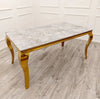
The base is what gives the table its visual character. A glass top with a chrome frame is clean and contemporary: the reflectivity of both materials works together, and the overall effect is light and precise. This combination suits a kitchen-diner that has been fitted with modern appliances and a contemporary palette, or any room where the brief is unfussy and considered. A glass top with a gold frame is a different look: the warmth of the gold reads through the transparent surface, and the table has a sense of occasion that a chrome equivalent doesn't quite achieve. A glass top on a darker or black metal frame is more architectural and considered, and suits interiors where the contrast between the transparent surface and the structural base is the point.

The pedestal versus four-leg question matters for a glass table in a specific way. A pedestal base is a single structural element rising from the floor, and through a glass top it reads as a clean, architectural form with space visible around it. A four-leg base has four points of visual interest and, particularly on a round or square glass table, the legs can make the overall effect feel busier than a pedestal would. Neither is wrong, but it's worth thinking about how the base reads from seated height and from across the room before you decide.

Clear glass is the default and the most versatile choice for most rooms and most situations. Smoked or tinted glass is a different aesthetic: it reduces the full transparency of the surface and adds a depth of tone that suits rooms with darker palettes or more moody interiors. A smoked glass top reduces the full visual openness of the table somewhat, which is worth being aware of if the primary reason for choosing glass is to keep a small room feeling light. In a room where the aesthetic, rather than the practical space-expanding quality, is the reason for choosing glass, smoked can work very well.

Toughened glass: what it means in practice

The glass used on a dining table top is toughened, also called tempered, which means it has been heat-treated during manufacture to make it significantly stronger than ordinary glass. Toughened glass is the standard for dining table tops and for good reason: the difference in strength between toughened and ordinary glass is substantial, and a toughened glass dining table top handles the knocks, weight, and everyday impacts of normal domestic use without concern.

The safety properties of toughened glass are also worth understanding. If toughened glass breaks under extreme impact, it breaks into small, relatively blunt fragments rather than the large sharp shards that ordinary glass produces. This is by design and is the standard for any glass used in a domestic furniture application. In practice, a toughened glass dining table breaking from normal household use is not a realistic scenario. The concern about glass tables being fragile in family use is generally misplaced when the glass is properly toughened.

What is realistic is maintenance. A glass top shows fingerprints, smears, and marks more clearly than almost any other dining table surface. After a family meal, the table will show where everyone sat, what they touched, and where food and drink went near the edge. This is the honest practical consideration for a glass dining table in daily family use, and it's more significant than the durability question. The table needs a proper wipe-down after most meals to look clean, and in a household that uses the dining room every evening, that's a daily commitment rather than an occasional one. For some households that's no different from wiping any surface and takes two minutes. For others, the visibility of every mark is genuinely frustrating. It's worth being clear about which type of household you are before you commit to glass.

For more on glass dining tables as part of a complete set with chairs, including how they hold up to everyday family life and the specific considerations for households with children, the glass dining sets page covers that in full.

Sizes in our glass dining tables

Glass dining tables are available across a range of sizes. A 1.5m dining table in glass is the most common choice for a family household: it seats four comfortably for everyday meals and six when guests come round, and the glass top keeps the room feeling open even at that length. A 1.6m dining table gives six people proper elbow room and is worth considering if the room can hold it with comfortable clearance. For larger rooms and larger households, 1.8m dining tables in glass make a considerable impression, and the transparency of the surface keeps even a table of that length from dominating the room the way a solid top might.

At the compact end, glass is particularly effective. A smaller glass table in a tight kitchen-diner does more for the feeling of space than any other surface at the same dimensions. A 1.2m dining table or 1.1m dining table in glass, whether rectangular, round, or square, suits a room where floor space is genuinely limited and the visual lightness of the table is a practical benefit rather than just an aesthetic preference.

As with any dining table, allow around 90cm of clearance on all four sides when planning against your room dimensions. If you'd like to check a specific size and configuration against your room before ordering, get in touch and we'll work through it with you.

Spreading the Cost

Finance is available on many of our dining tables, subject to status. If the table you want sits above your immediate budget, spreading the cost is worth exploring. We're happy to talk through the options at any point.

Why buy from Shawcross

We're based in Manchester and our showroom is open if you'd like to see glass dining tables in person before buying. How a base reads through a glass top, how the table sits in real light, and how the overall combination of surface and frame looks in a room are all things that product photography finds difficult to convey accurately. A visit tends to settle the decision between different base styles and between glass and other surfaces more quickly and confidently than any amount of time spent on product pages.

We deliver nationally across the UK, and you can contact us at any stage for guidance on sizing, base options, room fit, or chair compatibility. If you're deciding between glass and another surface and want an honest view on which suits your room better, we're happy to talk it through before you order.


Glass Dining Table FAQs

Is the glass on a dining table genuinely strong enough for daily use?

Yes, provided it's toughened glass, which is standard across dining table tops in our collection. Toughened glass is heat-treated during manufacture to be significantly stronger than ordinary glass, and it handles the weight, knocks, and everyday use of a family dining table without any realistic concern under normal conditions.

The practical question worth asking is not whether the glass will cope with daily use, because it will, but whether the maintenance that comes with a glass surface suits your household. Toughened glass is strong. It is also the surface that shows every fingerprint, smear, and mark most clearly of any dining table material. Those are two separate questions, and the second one is more relevant to most families than the first.

For households with young children, the durability question is sometimes more pointed: what about something being dropped on it, or a toy pushed into the edge? Under normal domestic impact, toughened glass is not at risk. Under an extreme or direct impact to an edge, any glass surface can be damaged. This is not a common occurrence with a dining table in a family home, but it's worth knowing that the edge is the vulnerable point rather than the flat surface.

What base styles are available with glass dining tables?

The bases available in our glass dining table collection vary in material, finish, and structural design, and the right choice depends on the room and the look you're working towards.

Chrome bases are the most common pairing with clear glass tops. Both materials are clean, reflective, and contemporary, and the combination suits modern kitchens and open-plan spaces well. The visual effect is light and precise, and chrome maintains its finish well in normal indoor use with regular wiping. Our chrome dining tables page covers the chrome base specifically in more detail.

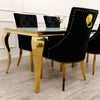
Gold bases with glass tops give a warmer and more considered look. The gold frame reads through the transparent surface, and the combination has a sense of occasion that a chrome equivalent approaches differently. This pairing suits rooms with warmth and depth in the surrounding palette. Our gold dining tables page covers the gold frame in more detail.

Darker metal bases, in black or near-black finishes, are an architectural option that suits more industrial or boldly contemporary interiors. The contrast between the dark structural base and the transparent top can be very effective in a room where that contrast is part of the design intent.

Pedestal bases give a cleaner, more minimal effect through a glass top than a four-leg design, because the single structural element reads as a simple form rather than four separate points. In a round glass table particularly, a pedestal base tends to give the most coherent and considered overall look.

How do you clean a glass dining table properly?

After most meals, a soft damp cloth removes the majority of marks, food residue, and general use from the surface. For fingerprints and smears, which are the most persistent and visible marks on a glass top, a glass cleaner on a lint-free cloth gives a better result than a damp cloth alone. The process takes a few minutes and the result is a surface that looks clean rather than just wiped.

The important things to avoid are abrasive cloths or scouring pads, which will scratch the glass surface over time, and letting cleaning products dry on the surface, which can leave their own marks. Always dry the surface after cleaning rather than leaving it to air-dry.

The base needs attention too. Chrome and gold frames show fingerprints and marks from hands touching the legs when sitting down and standing up, and a soft damp cloth on the frame as part of the post-meal wipe-down keeps the whole table looking consistent. The frame care requirements are covered in more detail on the chrome dining tables and gold dining tables pages depending on the base finish you're considering.

Will a glass dining table make a small room look bigger?

It will make the room feel more open, which is the practical equivalent in most cases. The eye passes through a glass top rather than stopping at a solid surface, so the table registers as less visually present than a solid-top table of the same dimensions. The floor beneath the table, the base structure, and the space beyond the table are all visible, which keeps the room reading as a continuous space rather than one that's been divided by a large piece of furniture.

The effect is real and worth factoring into a decision about a compact room, but it's worth being precise about what it does and doesn't do. A glass table doesn't add floor space: the clearance requirement is the same as for any other table, and the physical footprint of the furniture is unchanged. What changes is the visual weight of the table in the room, and in a room where that visual weight is the problem, glass is genuinely the better choice over a solid top.

A slim base amplifies the effect. A very substantial or visually heavy base partially offsets the lightness of the glass top. If keeping the room as open as possible is the priority, a slender pedestal or slim-legged base alongside the glass top gives the most consistently light result.

What chairs work best with a glass dining table?

The general principle is that chairs which are visually lighter complement a glass top better than very heavy or bulky designs, because they keep the overall look consistent with the openness of the surface. A chair with a slender frame, whether metal or a minimal wood design, works naturally alongside a glass table. An oversized heavily padded chair can feel disproportionate, particularly alongside a compact glass top.

That said, the specific pairing depends on the base finish. A chrome-framed glass table suits a contemporary upholstered chair with a chrome or metal frame leg. A gold-framed glass table works well with a more considered upholstered chair, and a velvet dining chair in a rich tone alongside a gold-framed glass table can look impressive in the right room. A darker-based glass table suits chairs with a similar tone in the frame, which ties the base colour of the table to the chair and gives the arrangement a coherent look.

Our dining chairs collection is worth browsing alongside the table you're considering. If you want a view on whether a specific chair and table combination will work before you order, we're happy to advise. The showroom is also the most useful way to make that assessment properly, with both pieces in the room at the same time.

How does delivery work, and can I see glass dining tables in person first?

We deliver nationally across the UK. Once your order is placed you'll receive a confirmation, and we'll be in touch closer to the time to arrange a delivery date that suits you. Delivery for dining tables is typically within 28 days. Glass tops require careful handling during delivery, and if there's anything about your property worth knowing in advance, such as a narrow hallway, a tight corner, or restricted parking, let us know when you order so the delivery team can prepare.

If you'd prefer to see glass dining tables in person before you commit, our Manchester showroom is open and you're welcome to come in without any obligation. How the base reads through the glass top, how the table sits in natural light, and how the surface marks and cleans in real conditions are all things the showroom can show you in a way a product page cannot. If you'd like to confirm whether a specific piece is currently on the showroom floor before travelling, just give us a call.