Skip to content

Ceramic Dining tables

Most people don't arrive at ceramic as their first choice. They arrive at marble, or at a stone-effect surface they've seen in a showroom or a kitc...
Most people don't arrive at ceramic as their first choice. They arrive at marble, or at a stone-effect surface they've seen in a showroom or a kitchen renovation, and then they start asking the practical questions. What happens when someone puts a hot pan down without thinking? What about the glass of red wine that gets knocked over at Christmas and sits for twenty minutes before anyone deals with it? At what point does the maintenance commitment stop feeling worth it? Ceramic tends to be where that conversation ends up, because it delivers most of what those other surfaces promise aesthetically and considerably less of what they demand in return. For a family dining table that gets used as one, ceramic is genuinely the most practical surface in the collection, and that's not a compromise: it's the right answer for most households.
Our ceramic dining tables sit within our wider dining tables collection and are available in a range of sizes, shapes, and base styles. The ceramic top is the defining feature, but the base design and frame finish carry as much of the visual character of the table as the surface itself, and both are worth thinking about carefully. Tables here are sold as standalone pieces to pair with dining chairs of your own choosing, or you can browse our broader dining sets collection if you'd prefer a matched table and chair combination.
Finance is available on many of our dining tables, subject to status. We deliver nationally across the UK, and our Manchester showroom is open if you'd like to see ceramic dining tables in person before you order.

This collection is empty

View all products

What's in this collection

A ceramic dining table has a top surface made from engineered ceramic, typically mounted on a metal or other frame base. The surface is manufactured rather than quarried, which gives it properties that natural stone doesn't have: consistency, non-porosity, and the ability to be engineered specifically for dining table use.

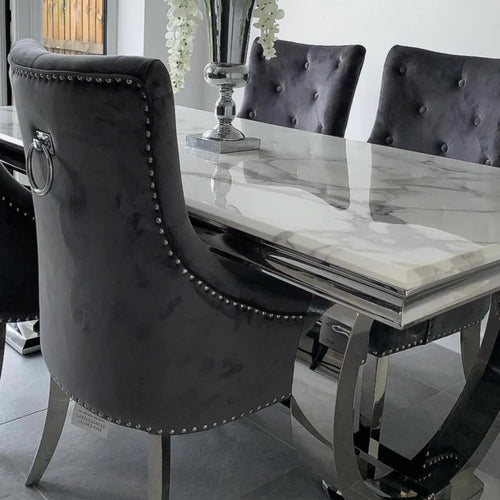
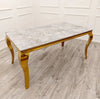
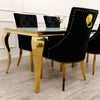
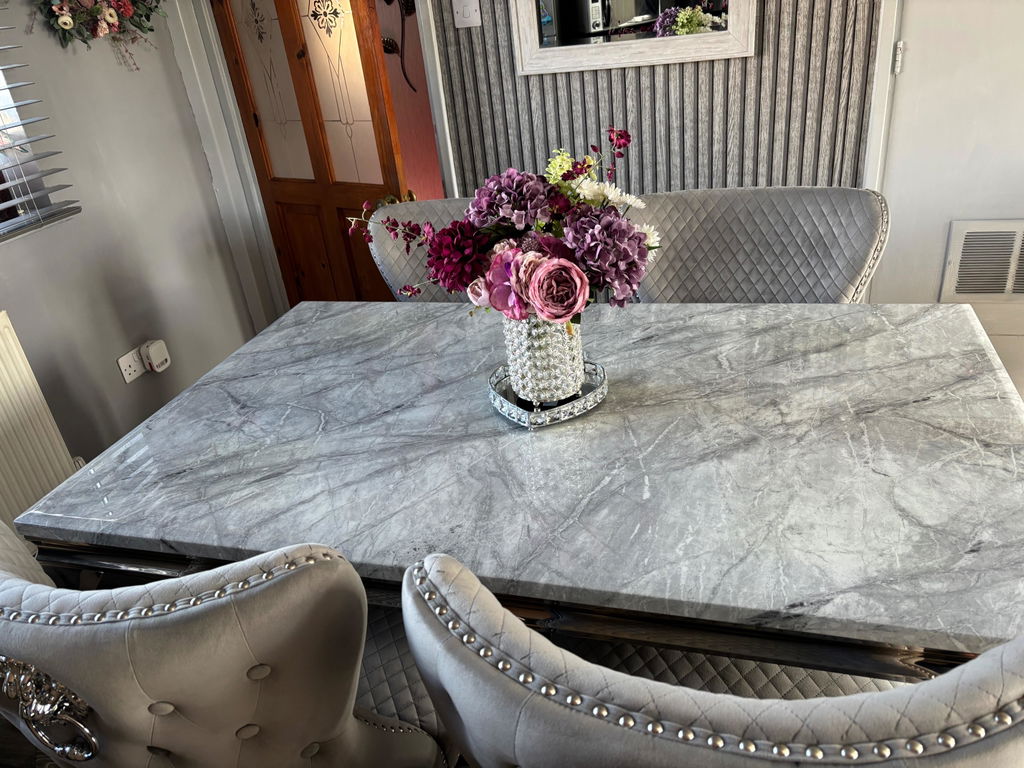
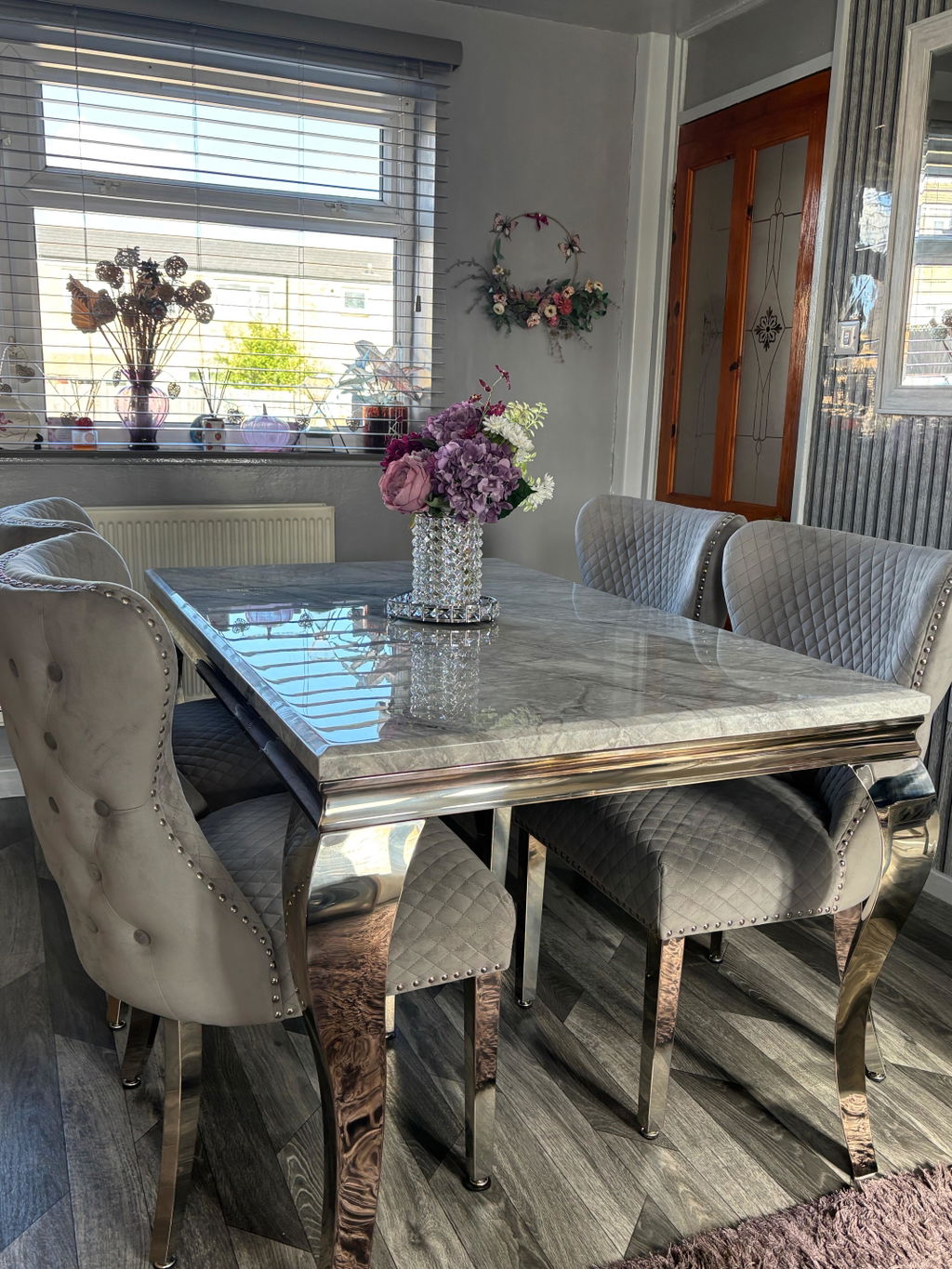
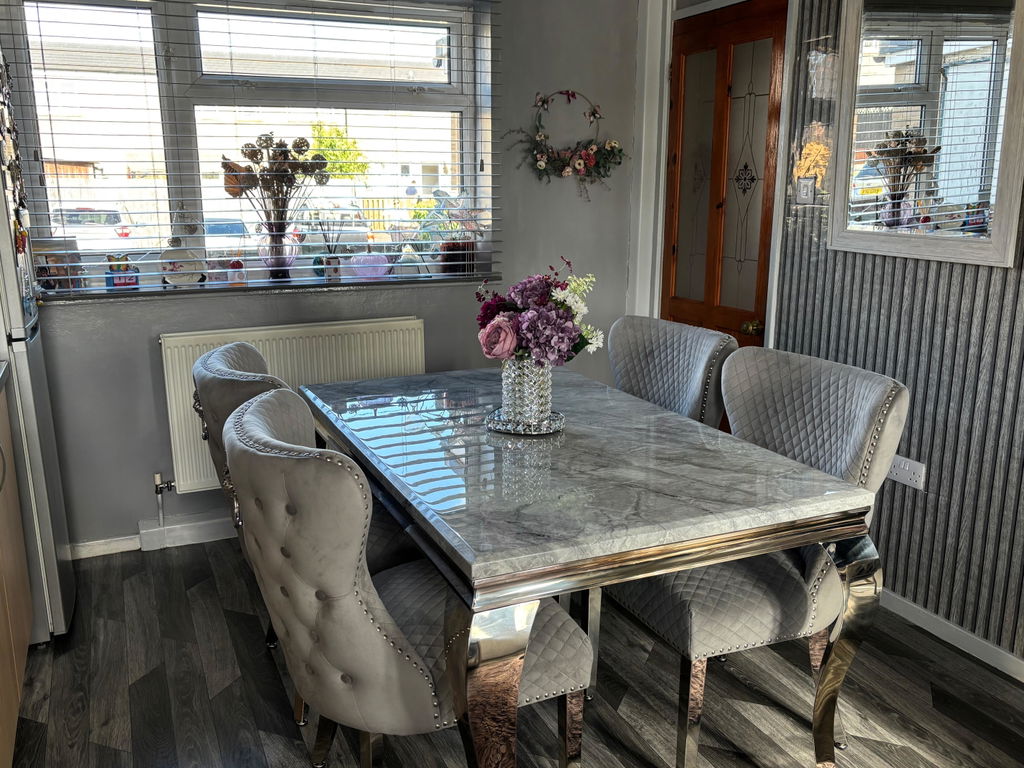
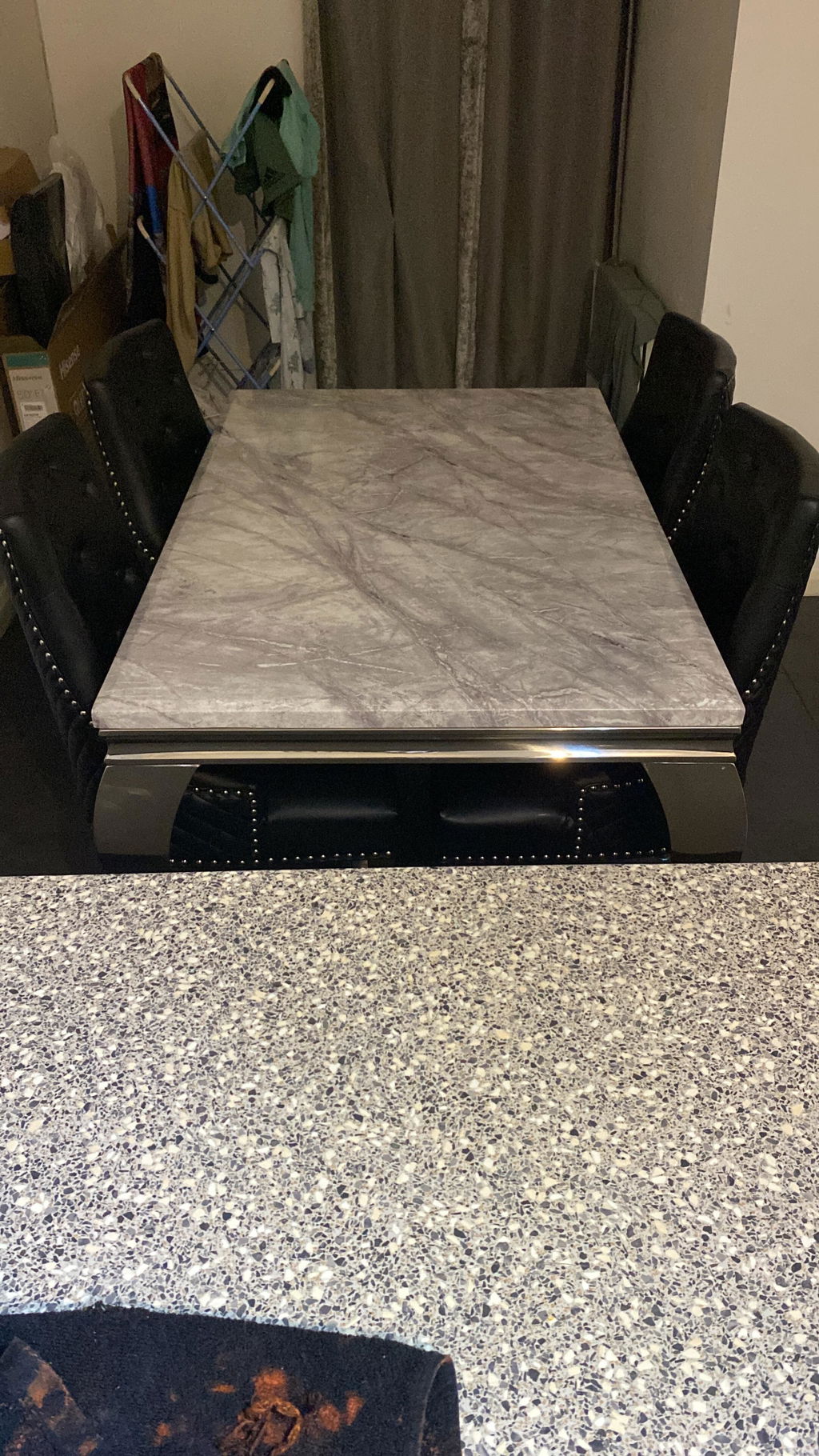
The surface effects available across the collection are wide. Stone-effect finishes in grey, white, and warm tones replicate the look of natural stone. Marble-effect surfaces, some with convincing veining and tonal variation, give the aesthetic of marble without the care requirements. Concrete-effect options suit more industrial or contemporary interiors. The base and leg designs span contemporary metal frames in chrome, gold, and darker finishes, with both four-leg and pedestal configurations available.

Some tables in the collection are fixed; others are extending dining tables that sit at a standard size for daily use and open out to seat more people when needed. Ceramic works particularly well in an extending table because the surface is manufactured to a consistent specification, which means the leaf tends to match the main surface more closely than a natural material like real marble would.

What ceramic actually means on a dining table

Ceramic in the context of a dining table top refers to a sintered or fired surface: material that has been subjected to extreme heat and pressure during manufacture to produce a surface that is dense, non-porous, and very hard. It is not the same material as a ceramic floor tile, though the manufacturing principle has similarities. Dining table ceramic is engineered specifically for surface performance, and the properties it delivers are the direct result of that manufacturing process.

The practical implications are significant. The surface is non-porous, which means liquids sit on it rather than being absorbed. A spill of wine, juice, or coffee on a ceramic top can be wiped away cleanly whether you deal with it in the first thirty seconds or the first thirty minutes. There is no staining, no absorption, no anxiety about what gets left on the table. On a real marble surface, that same spill left for thirty minutes could leave a permanent mark. The difference in daily use is substantial.

Ceramic is heat-resistant to a degree that real marble and most other dining table surfaces are not. Hot dishes, serving pots, and baking trays can be placed directly on a ceramic top without causing damage. This is not a trivial point for a dining table that sits between the kitchen and the table, because the moment of putting something hot down without thinking is something that happens in most households at some point. On a ceramic surface, that moment has no consequences.

The surface hardness of ceramic is also considerably greater than most natural stones. It is resistant to scratching from cutlery and general table use. It does not require periodic sealing. It does not need specialist cleaning products. A damp cloth and a standard surface cleaner handles everything the surface will encounter in normal domestic use.

Ceramic versus other surfaces

The comparison most people want to make is ceramic versus real marble, and it's worth being direct about it. A real marble surface has a depth and quality that comes from being a natural material: the variation in veining, the way light moves through it, the fact that no two pieces are exactly alike. High-quality ceramic marble-effect surfaces are very convincing, and in most rooms and at normal viewing distances the difference is not immediately obvious. Up close, in good light, and to someone looking specifically for it, the difference is there. Whether it matters depends on the individual, and it's a question worth answering honestly for yourself rather than assuming one way or the other. What is not in question is the practical difference: ceramic requires none of the sealing, heat protection, or careful cleaning that marble dining tables do. For a family table in daily use, that gap is meaningful.

The comparison with glass dining tables is different in character. Glass has its own qualities: transparency, the way it keeps a room feeling open, the relationship between the top and the base beneath it. These are things ceramic doesn't replicate. Glass is more demanding in maintenance terms than ceramic: the surface shows fingerprints and smears readily and needs regular wiping to stay looking clean. Ceramic is more forgiving. The choice between them is less about which is better and more about what each does for the room and whether that suits the household.

Chrome dining tables and gold dining tables refer to the base and frame finish rather than the top surface, and both pair naturally with ceramic tops. A chrome frame with a grey stone-effect ceramic top is a clean and contemporary combination that works in a modern kitchen-diner. A gold frame with a marble-effect ceramic top is a warmer and more considered look that suits a dining room with some depth of colour and character. Both are strong combinations and the ceramic surface works as well with one as the other.

Compared to wood-effect and laminate surfaces, ceramic is more resistant to heat, staining, and scratching, and holds its finish consistently over time without the fading or wear that some wood-effect surfaces develop. It also tends to have more visual presence, particularly in stone-effect finishes, than a wood top does.

Sizes and shapes in our ceramic dining tables

Ceramic dining tables are available across the full range of sizes in the collection, from compact options suited to a small kitchen-diner through to larger tables for a proper dining room. As a guide to the most common sizes: a 1.5m dining table is the most common choice for a standard family dining room, seating four comfortably for everyday meals and six when guests come round. A 1.6m dining table gives six people proper elbow room and suits a room with a little more length to work with. A 1.8m dining table moves into the territory of a dedicated dining room that can hold a longer table with proper clearance on all sides.

In terms of shape, ceramic tops are available in rectangular, round, and square configurations. The right shape depends on the room, and those pages cover the shape decision in detail. The material considerations for ceramic apply equally regardless of shape: the same surface properties, the same care approach, the same practical advantages in daily use.

As with any dining table, allow around 90cm of clearance on all four sides when planning against your room dimensions. If you'd like to check a specific size and configuration against your room before ordering, get in touch and we'll work through it with you.

Spreading the Cost

Finance is available on many of our dining tables, subject to status. If the table you want is above your immediate budget, spreading the cost is worth exploring. We're happy to talk through the options at any point.

Why buy from Shawcross

We're based in Manchester and our showroom is open if you'd like to see ceramic dining tables in person before buying. Surface effect and colour are the things most difficult to judge from product photography: the way a stone-effect or marble-look ceramic reads in natural light, how convincing the veining is on a marble-effect finish, and how the top sits alongside the frame and the chairs you're considering are all things a visit can settle quickly. For a surface that often gets chosen as an alternative to real marble, seeing them both in the showroom alongside each other tends to make the decision considerably clearer.

We deliver nationally across the UK, and you can contact us at any stage for guidance on sizing, surface finish, room fit, or chair compatibility before you order.


Ceramic Dining Table FAQs

What exactly is a ceramic dining table top, and how is it made?

A ceramic dining table top is a sintered surface: material, typically made from natural raw components including clay, mineral oxides, and other compounds, that has been subjected to extreme heat and pressure during manufacturing to produce a very dense, hard, non-porous surface. The process is similar in principle to how ceramics have been manufactured for centuries, but applied with modern engineering to produce a surface specifically designed for performance in domestic use.

The key outputs of that process are the properties that make ceramic useful on a dining table. The extreme heat and pressure eliminate porosity: the surface has no pores for liquids to penetrate, which is what gives it the stain resistance that natural stone lacks. The hardness of the finished surface resists scratching from cutlery and normal use. And the firing process makes the surface stable under heat in a way that natural stone is not.

The surface effects, whether stone-look, marble-look, or concrete-effect, are achieved through the pigmentation and patterning of the raw material before firing. In high-quality ceramic, the pattern runs through a significant depth of the surface rather than being applied as a thin layer on top, which means the visual character is consistent even if the surface is scratched or chipped.

Is ceramic better than marble for a family dining table?

For most families, yes, and it's worth being direct about why rather than presenting it as a matter of preference. Real marble is a porous natural stone that absorbs liquids if not sealed, reacts to acidic substances including wine, juice, and many common foods, and can be damaged by heat placed directly on the surface. Managing those vulnerabilities requires consistent attention that a dining table used every day by a busy household will regularly test. Sealing needs to be done periodically. Spills need to be dealt with promptly. Hot dishes need a trivet every time.

Ceramic has none of those vulnerabilities. Spills sit on the surface and are wiped away. Heat doesn't damage it. No sealing is required. In a household with children eating at the table most evenings, the practical difference is significant and compounds over the years.

The honest qualification is that real marble has a quality that ceramic replicates very well but doesn't entirely replicate. If the material itself genuinely matters to you, that's a legitimate consideration. For most families making a long-term purchase for a table they'll use daily, the practical advantages of ceramic over real marble outweigh the aesthetic difference, and the marble dining tables page covers the care requirements of real marble in full if you want to make that comparison properly before you decide.

Can you put hot dishes directly on a ceramic dining table?

Yes, and this is one of the most meaningful practical advantages of ceramic over other dining table surfaces. The sintering process makes ceramic stable under the kind of heat a hot dish, serving pot, or baking tray coming off the hob or out of the oven would place on the surface. In normal domestic use, direct heat contact will not damage, crack, or discolour a ceramic top.

This matters in a household where the dining table is a working part of the kitchen-to-table process, not just a surface for plated food. Trivets and mats are still sensible precautions for very extreme or sustained heat, but for the everyday reality of a pot coming off the hob and going on the table while everyone sits down, ceramic handles it without concern.

By contrast, real marble can be damaged by thermal shock from extreme heat. A hot dish placed directly on a marble surface can cause cracking or discolouration, and the guidance on marble tables is to always use a mat or trivet. Glass surfaces are similarly not recommended for direct heat contact. Ceramic removes that consideration from the daily routine.

Does ceramic scratch or chip easily?

Scratching under normal dining table use is not a realistic concern. Ceramic is a very hard surface and resists scratching from cutlery, serving utensils, and the kind of contact a dining table takes in everyday use. You would struggle to scratch a ceramic surface with a knife used normally, and the hardness that prevents scratching is a permanent property of the surface rather than a coating that wears over time.

Chipping is a different question. Ceramic is hard but it can chip under a sharp impact, particularly at the edges. Dropping a heavy object onto the corner of a ceramic table top is the kind of event that can cause edge chipping. In normal domestic use this doesn't happen, but it's worth knowing that the vulnerability of the surface, if it has one, is impact at the edge rather than scratching in the middle.

The interior of the surface, the flat area where food is placed and meals are served, is extremely durable under normal use. With reasonable care the surface holds its finish indefinitely without refinishing, resealing, or any specialist treatment.

How do you clean a ceramic dining table?

A damp cloth deals with most of it. After most meals, wiping the surface with a soft damp cloth is all that's needed to return it to a clean finish. For more stubborn marks or dried food residue, a standard surface cleaner on a soft cloth handles it without any concern about damaging the surface. Ceramic doesn't react to cleaning products the way natural stone does, and there's no risk of inadvertently etching the surface with a standard household cleaner.

The things to avoid are abrasive cloths or scouring pads, which can dull the surface finish over time even though they won't scratch the ceramic itself in any significant way. Keeping cleaning straightforward and regular is all the surface asks: a quick wipe after meals rather than periodic intensive cleaning. The non-porous surface means dried food doesn't penetrate and soak in the way it can on a more porous surface, so even marks left for a while tend to clean away without much effort.

How does delivery work, and can I see ceramic dining tables in person first?

We deliver nationally across the UK. Once your order is placed you'll receive a confirmation, and we'll be in touch closer to the time to arrange a delivery date that suits you. Delivery for dining tables is typically within 28 days. Ceramic tops are heavy pieces, so if there's anything about your property worth knowing in advance, such as a narrow hallway, a tight corner on the route to the dining room, or restricted parking, let us know when you order so the delivery team can prepare properly.

If you'd prefer to see ceramic dining tables in person before you commit, our Manchester showroom is open and you're welcome to come in without any obligation. Surface effect and colour are the things most worth seeing in real light, and for a material that is often being considered alongside real marble as an alternative, seeing both in the showroom together tends to make the decision considerably easier. You can check the finish quality, the base design alongside the top, and ask questions directly. If you'd like to confirm whether a specific piece is currently on the showroom floor before travelling, just give us a call.