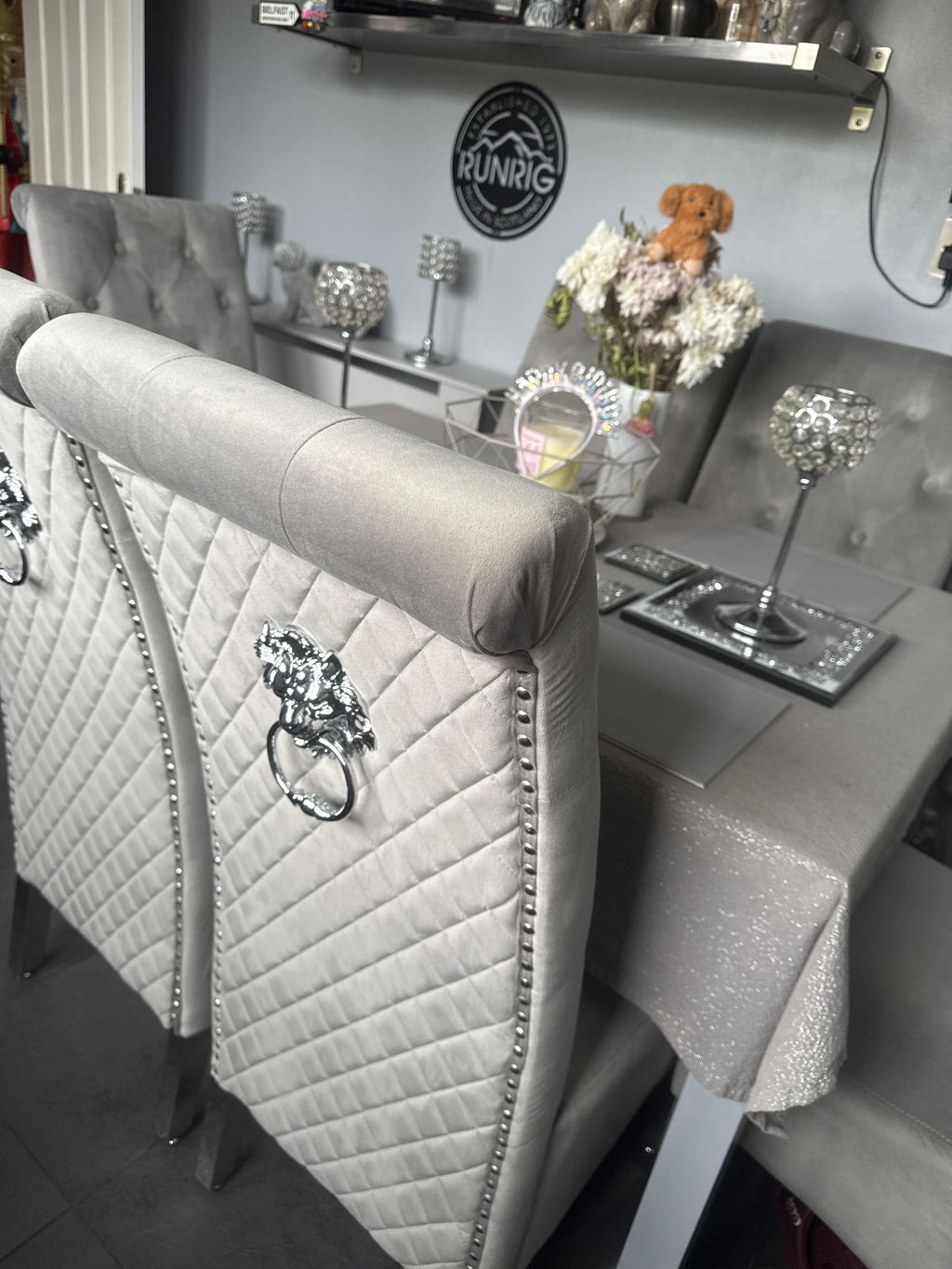
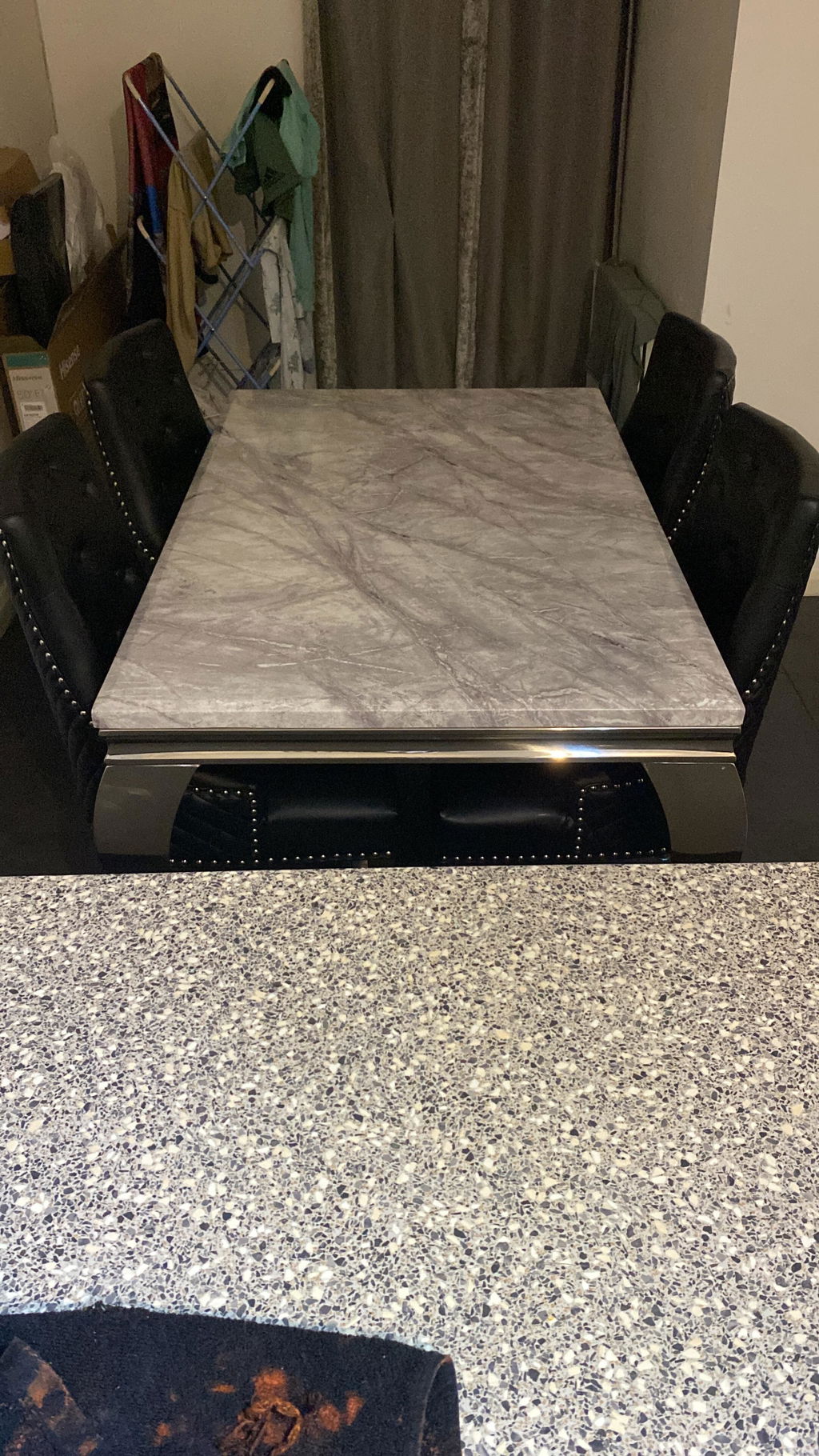
What's in this collection
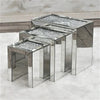
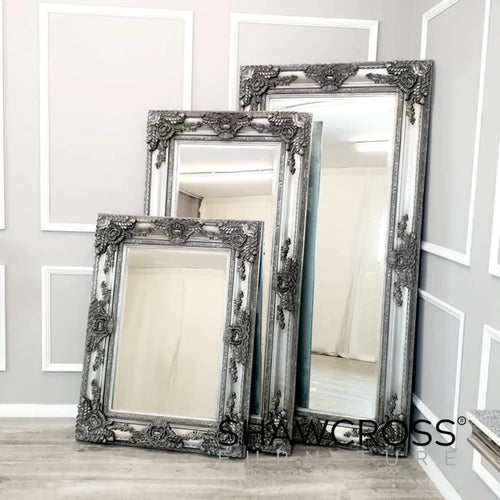
Mirrored dining tables use mirrored glass panels in the structural elements of the table, the top surface, the base, the legs, or some combination of these depending on the specific design. The configuration of mirrored elements varies across the collection, and that variation has a significant effect on the character and maintenance requirements of each table.
A table with a fully mirrored top is the most striking version of the look and the most demanding in maintenance terms. The entire eating surface is mirrored glass, which reflects everything above and around it and marks from every hand, plate, and glass that touches it. A table with a mirrored base and a glass or stone-effect top has a different balance: the surface is more practical for daily use, and the mirrored elements are concentrated in the structural panels where they do the work of reflecting light without bearing the full weight of the table's maintenance demands. Understanding which configuration a specific table uses is the first practical question worth answering before you decide.
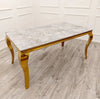
Base designs vary from architecturally structured frames with mirrored panels to more minimal pedestal options. Some tables combine mirrored elements with metal frames in gold or chrome. The combination of mirrored glass and gold dining tables framing is one of the most natural in the collection: both materials share a reflective warmth that places them in the same design register, and the combination tends to work in rooms where either alone would also feel at home.
Tables are available in fixed configurations, across rectangular, round, and square shapes. The shape and size pages cover room requirements in detail.
What a mirrored dining table does in a room
The practical effect of mirrored furniture in a room is the multiplication of light. A mirrored surface picks up every light source in the room, natural and artificial, and distributes it back into the space. In a dining room with limited natural light, a north-facing room, a basement, or a room where the windows are small relative to the floor area, this effect is genuinely useful rather than merely decorative. The room feels brighter not because more light is entering it but because the light that is there is being used more efficiently.
The other effect is the sense of depth. A mirrored panel reflects the room beyond it, creating the impression that the space continues rather than ending at a solid surface. At a dining table this is most noticeable in the base panels: a mirrored base that reflects the floor and the chairs around it reads as less visually present than a solid base of the same dimensions, and the room feels less occupied by the furniture than it actually is. For a dining room where the table needs to be substantial enough to seat the household properly without dominating the space, this quality has real practical value.
The rooms where mirrored furniture works best are those where these effects are needed and where the surroundings are considered enough to be worth reflecting. A room with deep wall colour, quality soft furnishings, good lighting, and considered furniture is transformed by a mirrored table: the table gathers all of that and makes it more present. A room that is still unfinished, bland, or inconsistently furnished gives the mirrored surface something less flattering to reflect, and the result is that the table draws attention to the room's shortcomings rather than its qualities. This is the most honest thing to understand about mirrored furniture: it amplifies what the room already has, for better or worse. The room has to be ready for it.
Glass dining tables share some qualities with mirrored ones, particularly the sense of visual openness and the relationship between the surface and the base beneath it. The difference is that glass is transparent where mirror is reflective: glass makes you aware of what's below and beyond the surface; mirror makes you aware of what's above and around it. They are complementary effects rather than identical ones, and in a room where mirrored furniture is the right choice, the quality of reflection is usually the specific thing driving the decision rather than just openness generally.
Mirrored dining tables and maintenance
The maintenance requirements for a mirrored dining table are the most significant practical consideration, and they are worth understanding precisely rather than in general terms.
Mirrored surfaces show marks more readily than almost any other finish. Fingerprints, smears from hands, condensation rings from glasses, and general handling marks are all clearly visible on a mirrored panel. On a fully mirrored top, this means the surface needs a proper clean after every meal rather than a casual wipe, and in a household that eats together every evening, that is a daily commitment. On a table with mirrored base panels rather than a mirrored top, the maintenance is more manageable: the base panels are touched less frequently than a table surface and can be cleaned less often without the table looking neglected.
The cleaning approach for mirrored panels requires care beyond what most other surfaces need. A soft lint-free cloth, either a microfibre cloth or a specialist glass cloth, used with a glass cleaner or a mild solution, is the right tool. Wipe gently rather than with pressure, and dry the surface after cleaning rather than leaving cleaning product to evaporate, which will leave its own marks. Abrasive cloths must be avoided entirely: they will scratch the mirrored surface permanently, and scratched mirror cannot be restored. Strong chemical cleaners should also be avoided, because prolonged contact with harsh products can damage the silvering behind the glass over time.
The edges of mirrored panels are the most vulnerable point from an impact perspective. Mirrored glass can chip at the edge under a sharp knock, and this is more likely during delivery and room rearrangement than in normal daily use. Planning the delivery route carefully and handling the table with care during placement significantly reduces this risk.
For a household that uses the dining room mainly for meals and entertaining rather than as a daily working space, the maintenance commitment of a mirrored table is very manageable. For a table that is in use every evening by a busy family with children, the cleaning picture is worth thinking through honestly before you commit. The mirrored dining sets page addresses this question specifically in the context of a full household, and it's worth reading alongside this page if that's the situation you're buying for.
Pairing a mirrored dining table with chairs
A mirrored dining table as a standalone piece gives you the freedom to choose chairs independently, and that freedom is worth using carefully rather than defaulting to the first option that roughly matches.
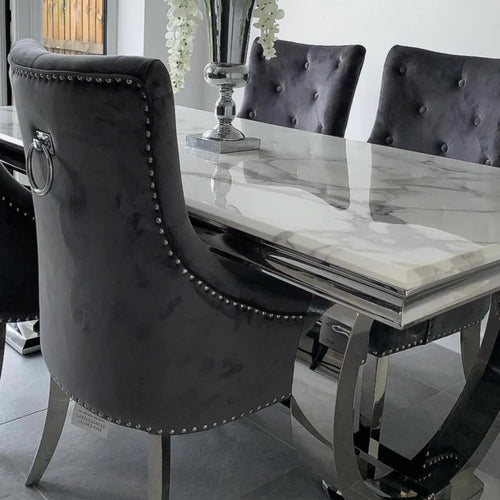
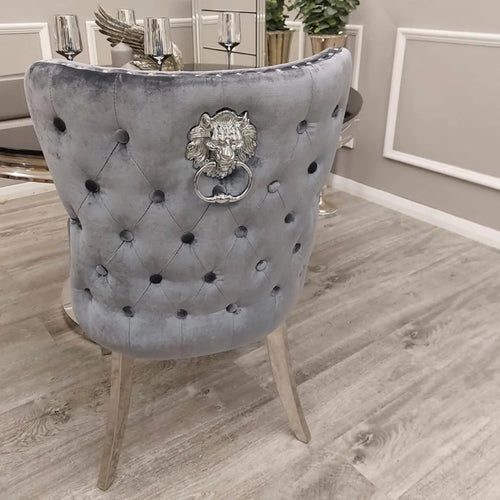
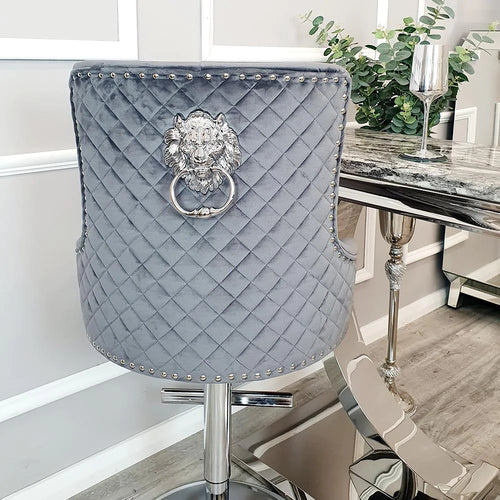
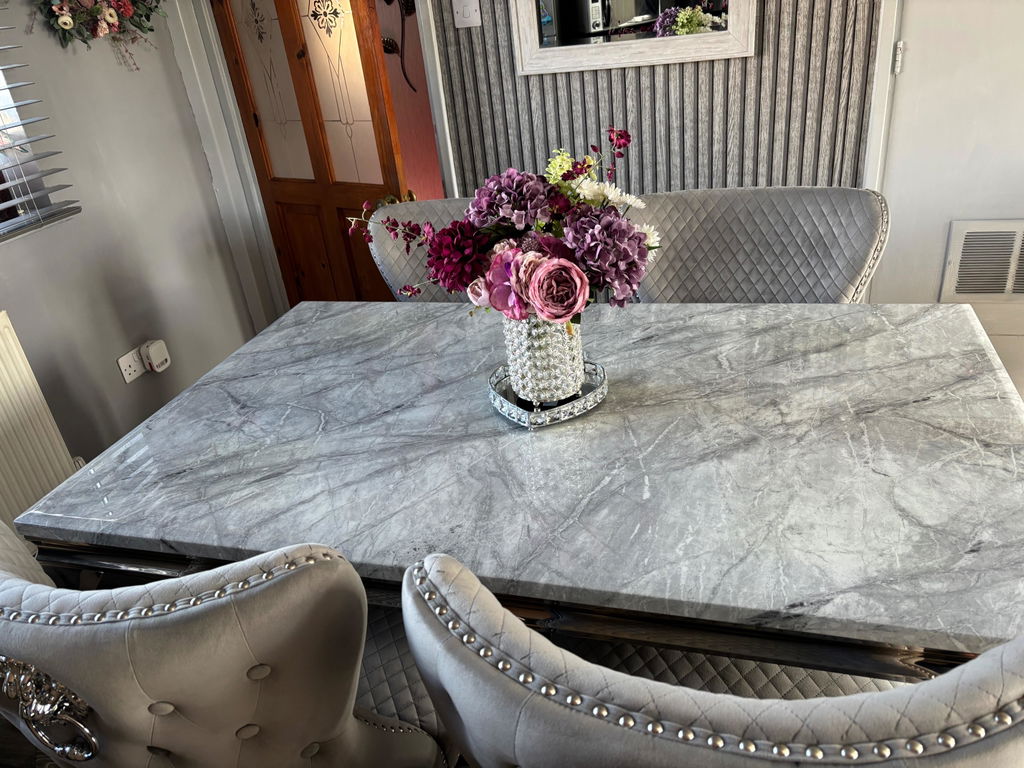
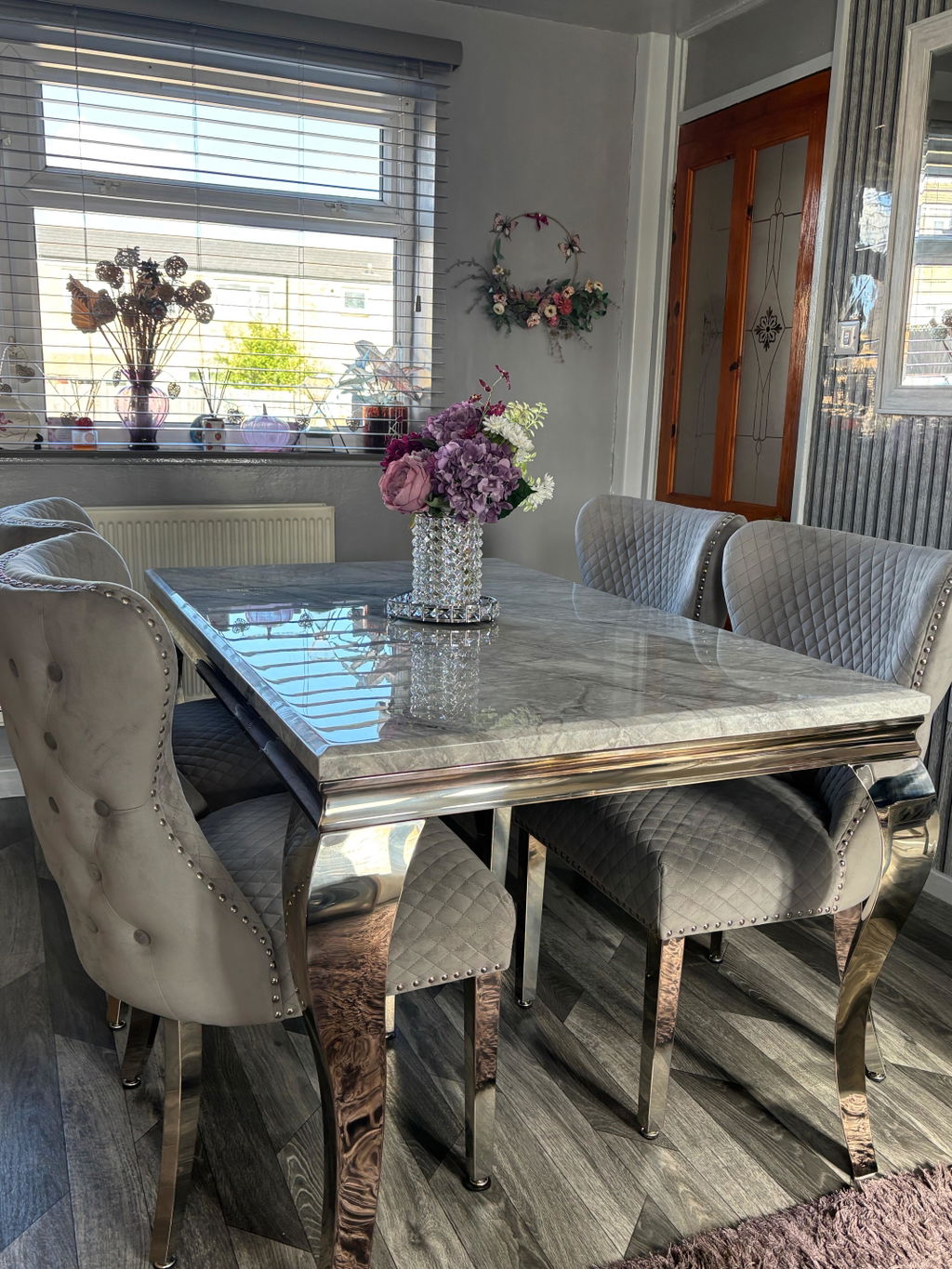
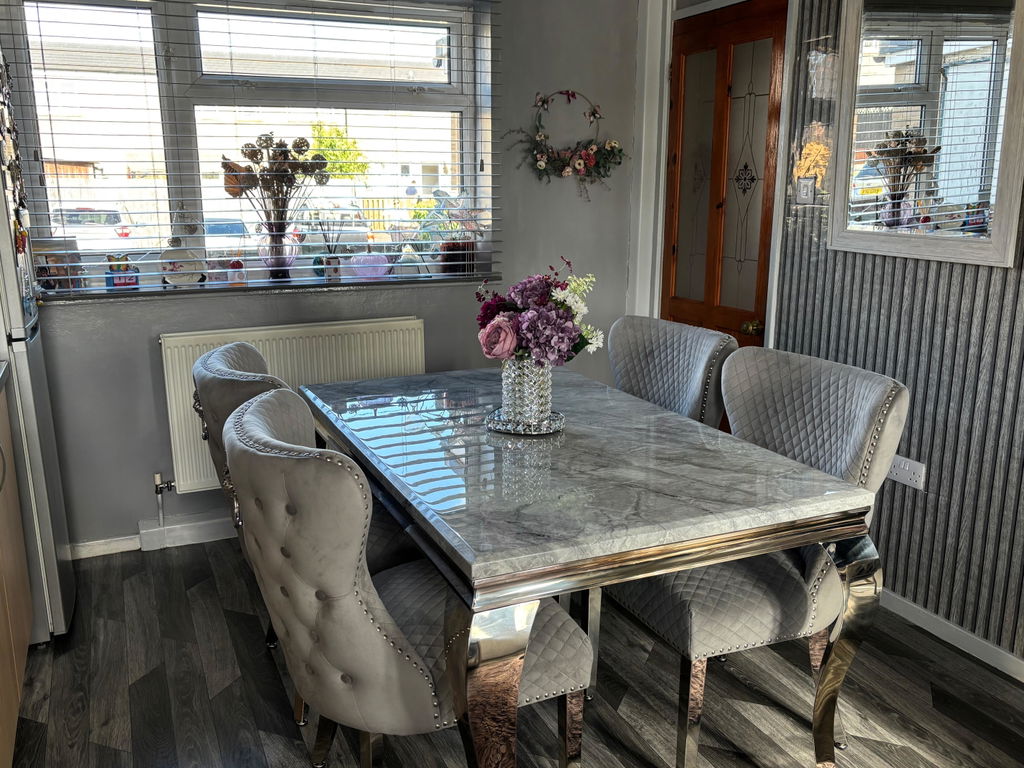
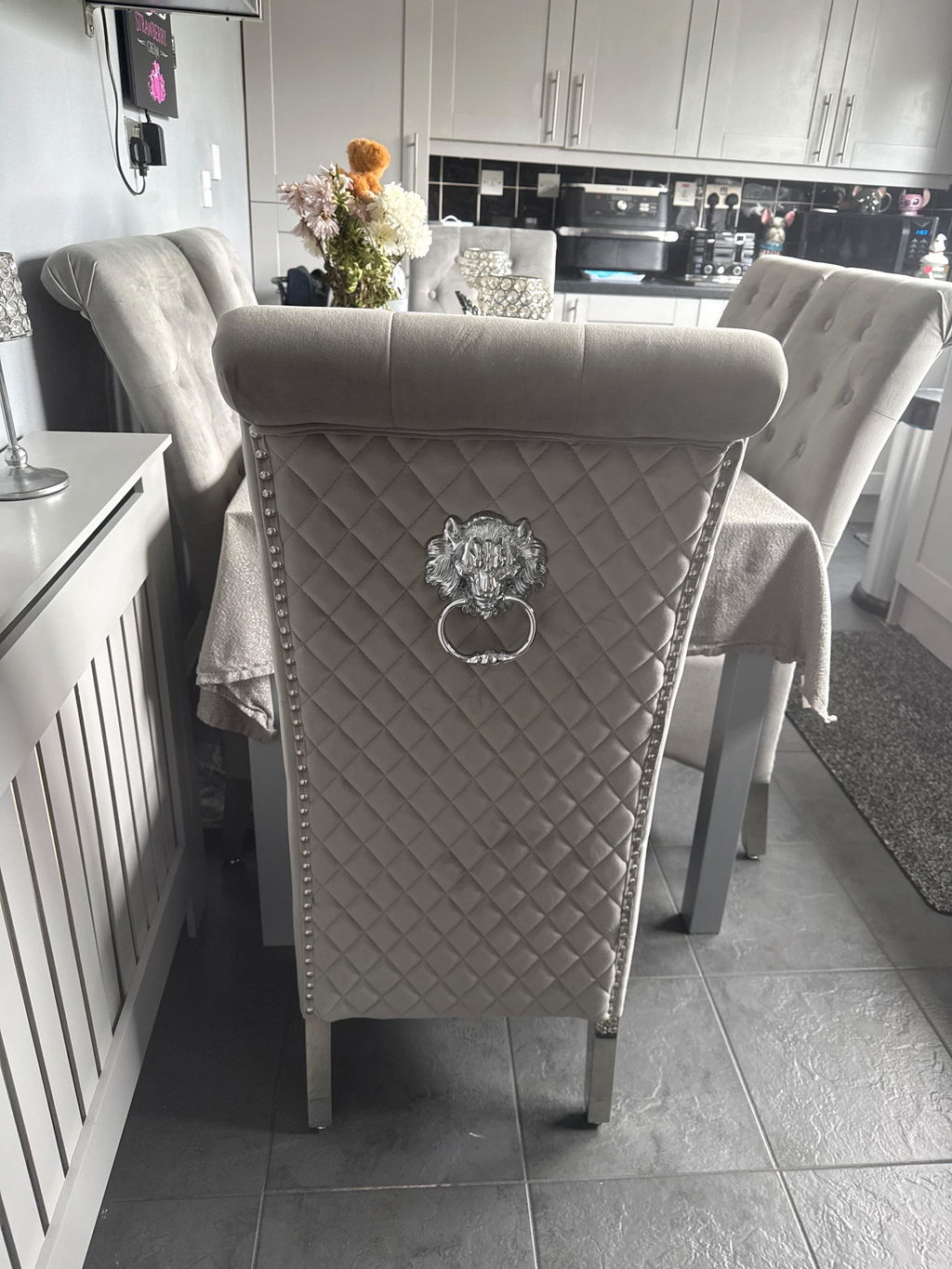
The chairs that tend to work best alongside a mirrored table have some considered detail to them: something that holds its own alongside the table rather than looking plain or provisional in comparison. A richly upholstered chair in a deep fabric is the most natural companion. Velvet dining chairs in a jewel tone alongside a mirrored table is a combination with genuine presence: the softness and depth of velvet works with the reflectivity of the table in a way that a plainer or harder-finish chair doesn't. The caveat for velvet in daily use is that it marks and flattens more readily than most fabrics, and in a household using the dining room every evening a more robust upholstery in a similarly rich tone is worth considering as the practical alternative.
Button back dining chairs add a layer of detail that complements the considered character of a mirrored table well. In a room going for a more formal or glamorous look, a button back chair with a gold or mirrored frame element ties the table and chairs into a coherent scheme. A chair with a gold frame alongside a mirrored table is a natural combination for the same reason that gold and mirrored furniture sit naturally together in the room more broadly.
Chair frame finish is worth thinking about specifically. A chair with a gold-toned frame works well alongside a mirrored table with gold detailing or framing. A chair with a chrome frame suits a mirrored table where the structural elements are chrome or plain metal. A chair with a mirrored or reflective element in the frame can work well in a room where the mirrored theme is being carried through deliberately, though this is a specific aesthetic that needs the room to support it fully.
Our full dining chairs collection is worth browsing alongside the table you're considering. If you want a view on which specific chair and table combination will work before you commit to both, we're happy to advise, and the showroom is the most reliable way to see combinations in person before you order.
Building a mirrored room scheme
A mirrored dining table as the centrepiece of a dining room works best when the room around it has been considered as a whole rather than built piece by piece without a thread running through it. That doesn't mean everything in the room needs to be mirrored: a room where every surface is reflective quickly becomes overwhelming rather than impressive. It means the other elements of the room, wall colour, lighting, soft furnishings, other furniture pieces, are chosen in a way that gives the table something worth reflecting and a context that feels coherent.
Other mirrored pieces can extend the scheme without overdoing it. A mirrored console table in a hallway or against a dining room wall carries the finish language through the room without creating a room that is defined entirely by one material. Mirrored accessories offer a lighter way to introduce the same quality of finish in smaller doses. The principle is that mirrored elements work best when they are balanced by surfaces and materials with depth and warmth: upholstery, textured wall treatments, rich colour, wood or stone elsewhere in the room.
Lighting deserves particular attention in a room with a mirrored dining table. The table reflects light sources, which means the quality of the lighting in the room matters more than it would with a non-reflective surface. A well-positioned pendant over the table, ideally with a warm tone rather than a cold white, will be reflected by the table surface and contribute to the atmosphere of the room in a way that a functional overhead light fitting wouldn't. If you're furnishing a dining room around a mirrored table, thinking about the lighting scheme alongside the furniture rather than as an afterthought is worth doing.
Sizes in our mirrored dining tables
Mirrored dining tables are available across a range of sizes. The most common choice for a household eating together regularly is a 1.5m dining table or 1.6m dining table, both of which seat four to six people and suit a standard to large dining room with proper clearance on all sides. A 1.8m dining table in a mirrored finish makes a genuinely commanding statement in a large dining room and suits a household that entertains regularly and has the space to carry a table of that scale.
One practical note specific to mirrored furniture: the panels are glass-based and contribute to the overall weight of the table. At larger sizes a mirrored dining table is a substantial piece of furniture, and delivery and placement planning is worth thinking through in advance. This is covered in the FAQ below.
As with any dining table, allow around 90cm of clearance on all four sides when planning against your room dimensions. If you'd like to check a specific size against your room before ordering, get in touch and we'll work through it with you.
Spreading the Cost
Finance is available on many of our dining tables, subject to status. A mirrored dining table is often a considered purchase for a room being furnished with care and intention, and spreading the cost can make the right table more accessible without compromising on what you actually want. We're happy to talk through the options at any point.
Why buy from Shawcross
We're based in Manchester and our showroom is open if you'd like to see mirrored dining tables in person before buying. Of all the surfaces in the dining tables collection, mirrored furniture is the one where a visit makes the most difference. How the surface catches light, how the mirrored panels read in a real room rather than in a photograph, the quality of the mirrored finish itself, and how the table looks alongside chairs you're considering: these are all things the showroom shows you clearly and product photography consistently cannot. A visit before buying a mirrored dining table is strongly worth making.
We deliver nationally across the UK, and you can contact us at any stage for guidance on sizing, configuration, room fit, or chair compatibility before you order.