Skip to content
Home  → Dining Tables  → 2m Dining Tables

2m Dining Tables

A 2m dining table is not a purchase that happens by accident. Nobody measures a room, does the clearance calculation, and arrives at 2m as the si...


A 2m dining table is not a purchase that happens by accident. Nobody measures a room, does the clearance calculation, and arrives at 2m as the size that just about fits. A 2m table requires a room that is genuinely large enough to hold it properly, a household that uses that room for meals regularly enough to justify a table of that scale, and a clear-eyed decision that eight seats, as the primary configuration rather than an occasional extension of something smaller, is what the household actually needs. When all three of those things are true, a 2m table is simply the right answer: a proper dining table for a proper dining room, sized honestly for the way the room and the household work rather than for an aspirational version of either.


Our 2m dining tables sit within our wider dining tables collection and are available in a range of surface materials and base styles. Tables here are sold as standalone pieces to pair with dining chairs of your own choosing. If you'd prefer a matched table and chair combination, our dining sets collection includes sets at larger sizes across different styles and materials.


Finance is available on many of our dining tables, subject to status. We deliver nationally across the UK, and our Manchester showroom is open if you'd like to see tables in person before ordering. For a table at this scale, a conversation about room fit before you order is worth having: get in touch at any point and we'll work through the specifics with you.

What's in this collection

A 2m dining table measures 2 metres in length, sitting at the largest end of the standard dining table range. At this size the table seats eight comfortably as its primary configuration, with ten possible when the room and the occasion allow it. It is a substantial piece of furniture that occupies the dining room in a way smaller tables don't, and the room needs to be genuinely sized for it rather than technically capable of holding it.

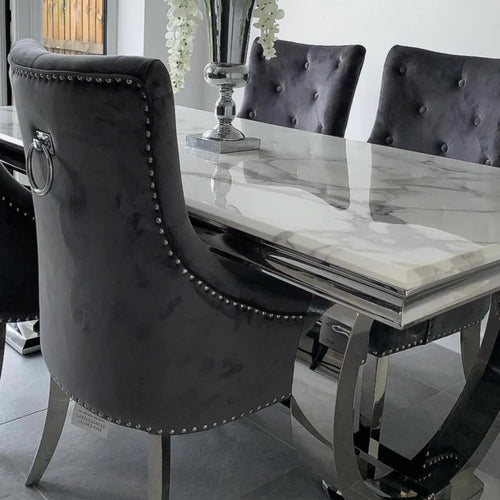
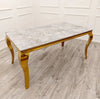
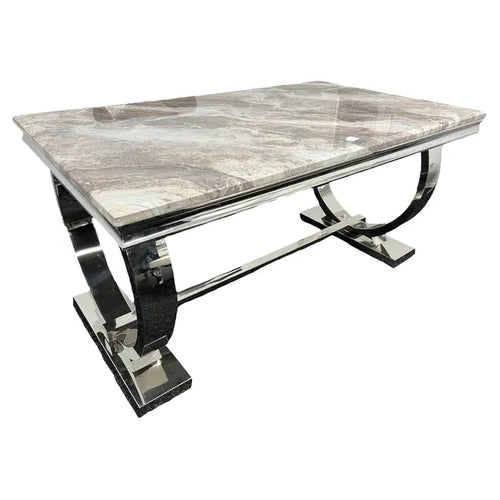
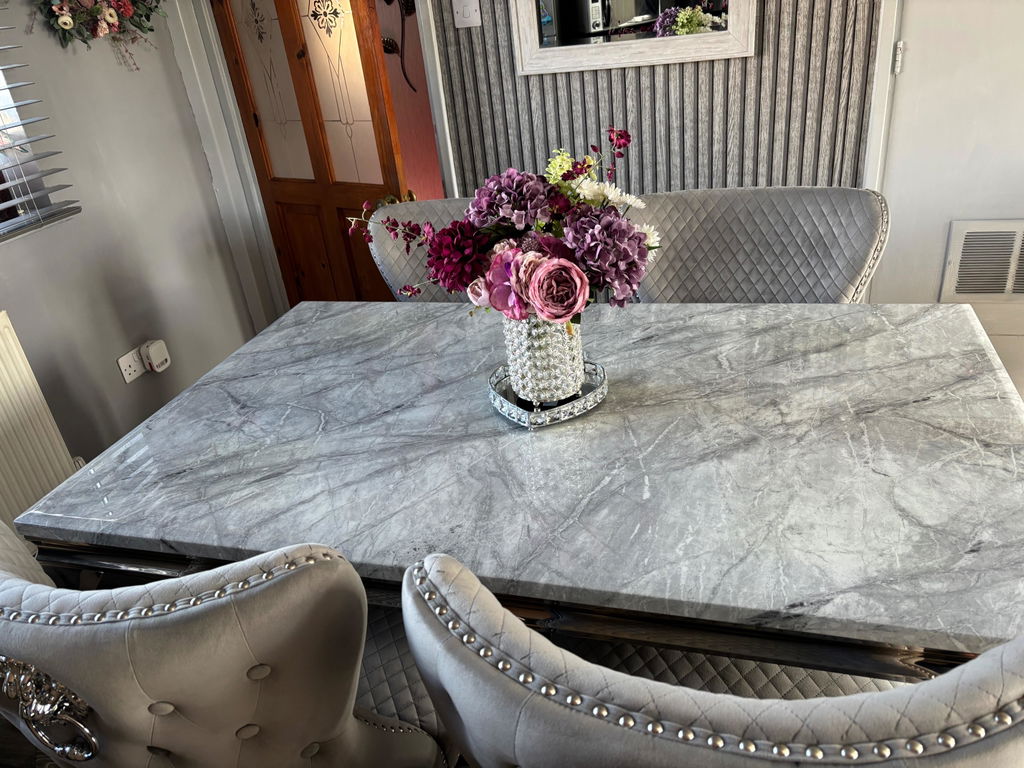
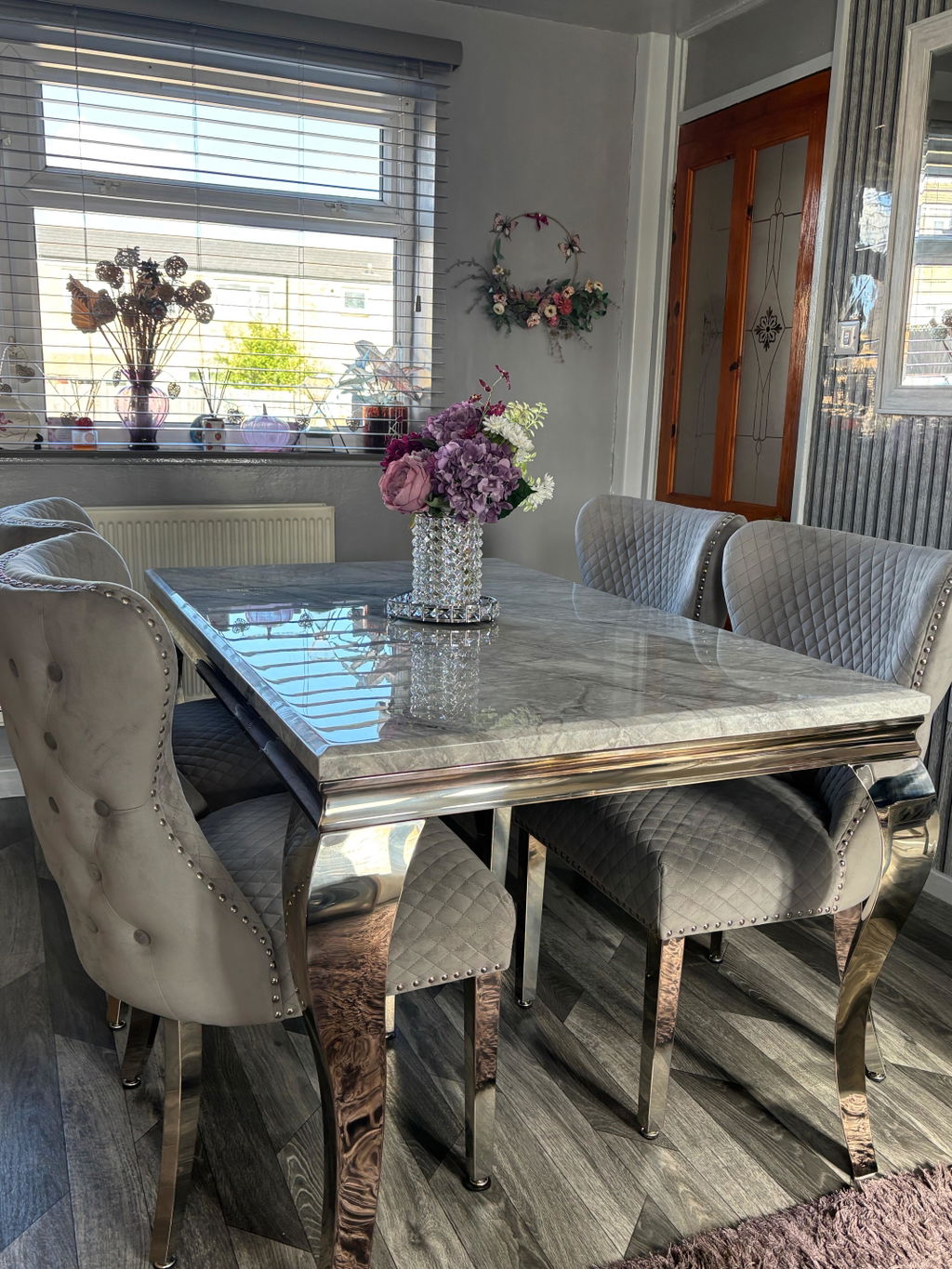
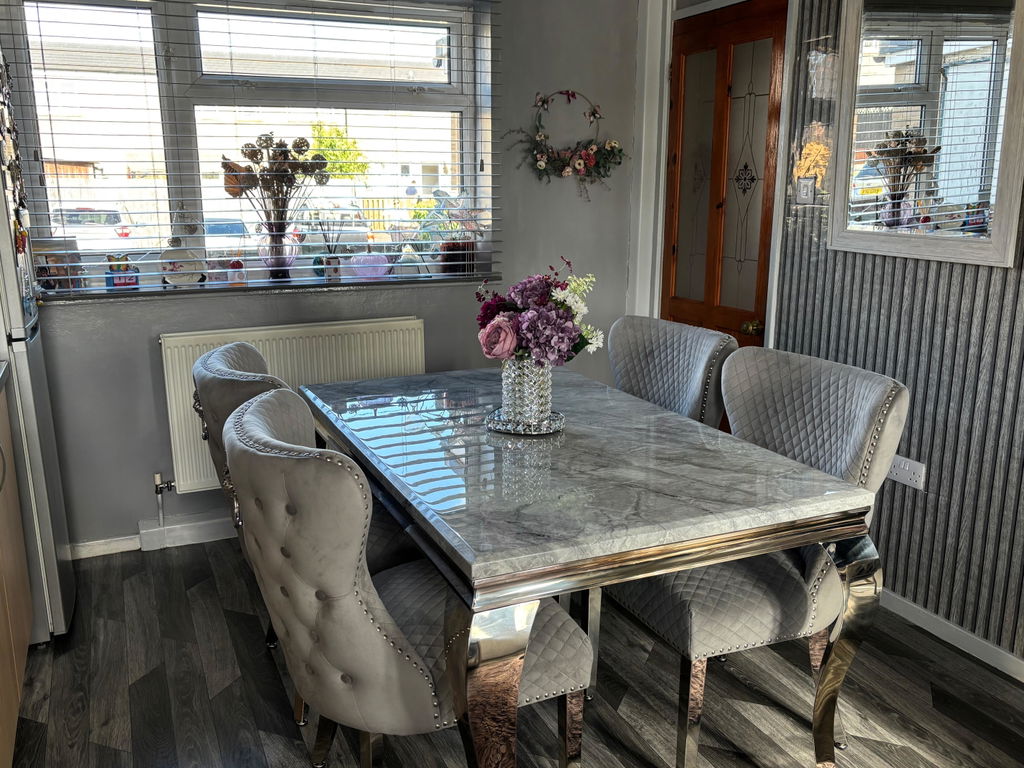
Surface materials across the collection include ceramic and stone-effect tops, real marble and marble-effect finishes, and glass, with base and frame options in contemporary metal designs including chrome and gold among others. Both fixed and extending configurations exist at this scale: a fixed 2m table is permanently that size, while some extending tables reach 2m from a smaller standard size. The distinction matters, and both routes are covered below.

What a 2m dining table needs from the room

A 2m table needs a proper dining room, and the room planning exercise is more important at this size than at any other in the collection. The clearance requirement is the same as for any dining table, 90cm on all four sides, but applied to a table of this length the floor area required is substantial.

A 2m table is typically around 90 to 100cm wide. Apply 90cm clearance on all four sides and the minimum room required is approximately 3.8m in length and 2.7m to 2.8m in width. These are genuine minimums: at these dimensions the clearance exists and the table functions, but the room will feel like the table is its primary and almost exclusive purpose. A room that gives the table more to work with, 4m or more in its longer direction and 3m or more in its shorter one, carries a 2m table considerably more comfortably and leaves room for a sideboard, a dresser, or other pieces around the perimeter without the dining area feeling tight.

The room's shorter dimension is often the more important constraint. A room that is 4.5m long but only 2.8m wide gives the table just about enough clearance in the width direction but feels narrow in use because the 90cm on each side is the minimum rather than a comfortable allowance. A room that is 4m long and 3.2m wide gives eight people proper space to move, sit comfortably, and use the room as a dining room rather than as a corridor with a table in it.

In rooms where other furniture sits against the perimeter walls, the usable floor space is smaller than the wall-to-wall measurements suggest. A sideboard along one long wall reduces the effective width available for clearance. A dresser or cabinet on the short wall reduces the effective length. Measure from obstacle to obstacle rather than from wall to wall, and apply the clearance to those figures rather than to the room's headline dimensions.

Doorway and hallway access is worth planning carefully before you order at this size. A 2m table is typically delivered in sections or with the top separate from the base, which makes access more manageable than moving a fully assembled 2m surface through a standard property. Even so, the route from the front door to the dining room is worth walking through: any narrow hallway, tight corner, staircase between the entrance and the dining room, or doorway that opens in an awkward direction are all worth flagging when you place the order. At this scale, the delivery team needs to know what they're navigating before they arrive rather than working it out on the day.

Placement matters too. Once a 2m dining table is in position it is not a piece of furniture you move casually. Deciding exactly where the table is going before delivery day, confirming that position works with the room's other furniture and the clearance on all sides, and making sure the delivery team can place it there directly saves the difficulty of trying to reposition a large and heavy piece after they've left.

Materials at 2m

At 2m, the surface material is a more significant visual and practical decision than at smaller sizes, because the scale of the surface means its character is present in the room in a way that a compact table's surface isn't. A 2m ceramic top, a 2m marble surface, a 2m glass table: each makes a substantial statement, and the choice of material is part of the overall character of the dining room in a way that compounds with the size of the table.

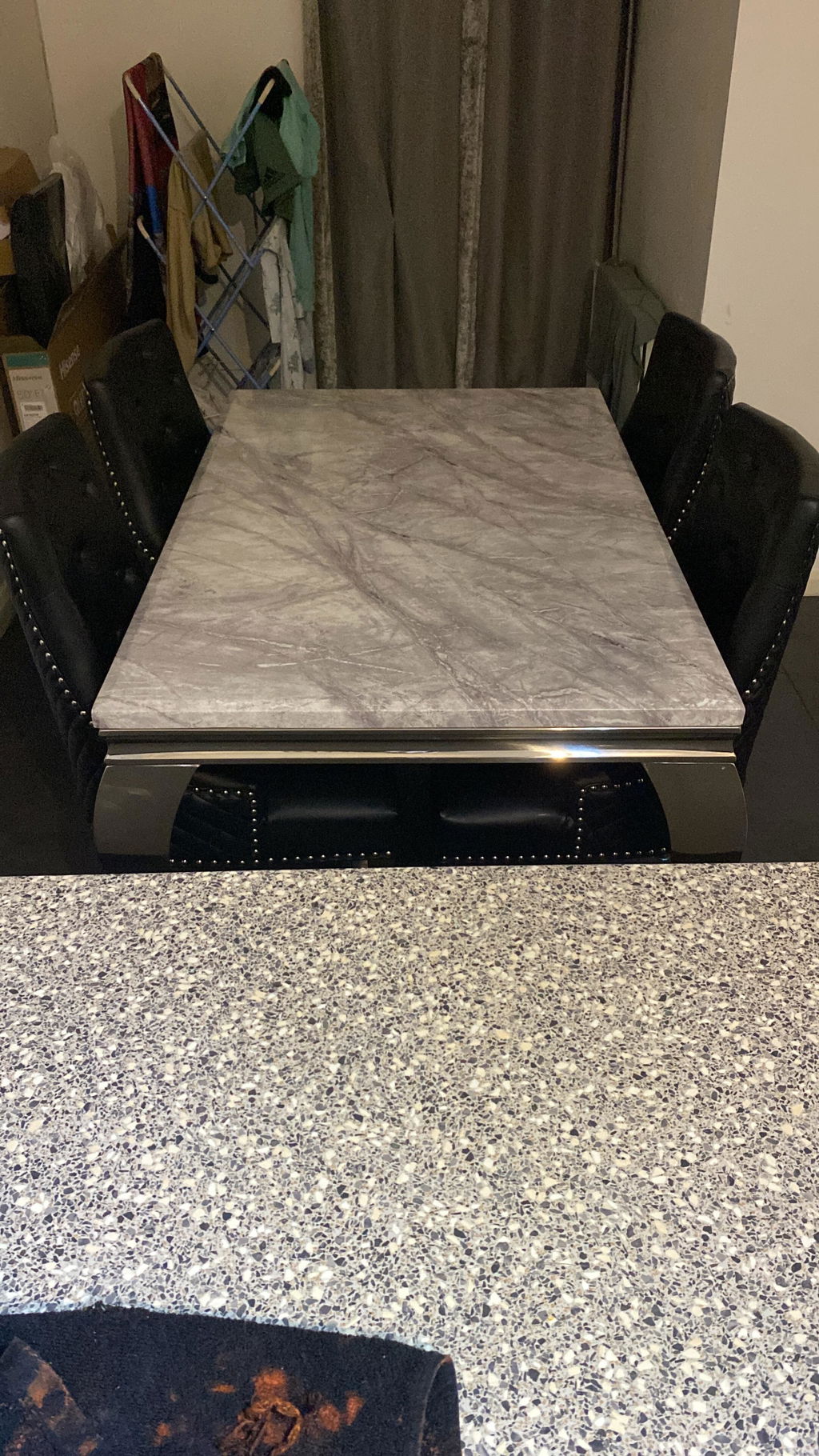
Ceramic dining tables at 2m are the most practical choice for a table at this scale that is used regularly. Non-porous, heat-resistant, and easy to wipe down after meals, ceramic handles eight people's worth of daily use without any specialist care or periodic treatment. Stone-effect and marble-look finishes have genuine visual presence at 2m: a stone-effect ceramic surface across a 2m table reads as a considered and substantial piece rather than as a practical concession, and for a household that uses the dining room most evenings the maintenance picture of ceramic is considerably more manageable than the alternatives at this surface area.

Marble dining tables at 2m are a serious piece of furniture in the most literal sense. A 2m marble surface is a considerable amount of natural stone, and the visual quality of the material across that length in a properly furnished dining room is genuinely impressive. The care requirements for real marble apply at 2m as at any other size, and at this scale they apply across a larger surface with more people using it. Sealing, heat protection, and prompt attention to acidic spills are habits that need to be consistently maintained at a table this size in regular use. Marble-effect ceramic gives you much of the visual quality of real marble at 2m with considerably less ongoing commitment, and for a household where the table sees regular use by a large group, the practical difference between the two surfaces compounds over the years more than it does at a compact size.

Glass dining tables at 2m keep even a table of this length from dominating the room visually, because the eye reads through the surface rather than stopping at it. In a large dining room where the table is the central piece, a glass top prevents the room from feeling as though it is entirely occupied by the furniture. The cleaning commitment at 2m is real: eight people at a glass table produce a surface that clearly needs attention after every meal, and in a household that uses the room regularly the daily cleaning routine is a consistent one. For a dining room used mainly for formal entertaining rather than every evening by a large family, the maintenance picture is more manageable and the visual quality of a 2m glass table in a properly furnished room is a strong argument in its favour.

Chrome dining tables and gold dining tables at this size refer to the base and frame finish. Both are available at 2m and the choice between them follows the same room and aesthetic logic as at smaller sizes. Chrome suits a contemporary dining room where the interior is clean and modern throughout. Gold suits a room with warmth and depth in the palette, and at 2m with a marble-effect or stone-effect ceramic top, a gold-framed dining table is a commanding and considered piece in the right room. Each frame finish page covers the specific properties and care requirements in detail.

Fixed versus extending at 2m

The question of fixed versus extending is worth thinking through specifically at this size, because the answer is different from the same question at smaller sizes.

A fixed 2m table suits a household for whom eight seats is the everyday configuration, or close to it. The room is sized for the table permanently, the household uses the space at that scale regularly, and there is no benefit to a mechanism that allows the table to be smaller than it is. For most households buying a 2m table, this is the right choice: they've decided they need 2m, the room holds it, and the table should be as substantial and simple as the size allows.

An extending table that reaches 2m from a smaller standard size suits a household whose everyday count is six or fewer but who want the capacity of a 2m table for regular occasions. A table that closes to 1.6m or 1.8m for daily use and extends to 2m for guests gives the flexibility of two configurations without permanently committing the full floor space of a 2m table. The trade-offs of extending mechanisms, the leaf storage, the join when extended, the additional complexity, apply at 2m as they do at any size, and the extending dining tables page covers those fully.

The critical room planning point for an extending table that reaches 2m is that the room needs to hold 2m with full clearance, because that is the configuration in which the most people are seated and movement around the table matters most. Planning the room around the closed dimensions and assuming the extended size will manage is the most common mistake with extending tables, and at 2m it is a more significant error than at smaller sizes.

Spreading the Cost

Finance is available on many of our dining tables, subject to status. A 2m dining table is one of the more significant furniture purchases a household makes, and spreading the cost can make the right table more accessible without compromising on what you actually want. We're happy to talk through the options at any point.

Why buy from Shawcross

We're based in Manchester and our showroom is open if you'd like to see dining tables in person before buying. For a table at 2m, a showroom visit is more than usually worth making. Seeing the length in a real space with chairs around it, assessing surface quality in natural light, and getting a genuine sense of the proportions of the piece before you commit to bringing it into your home are all things that product pages approximate rather than deliver. At this scale, the confidence that comes from having seen the table in person is worth the trip.

We deliver nationally across the UK, and you can contact us at any stage for guidance on room fit, material, or which configuration is right for your dining room. For a table this size, talking through the room specifics before you order is always worthwhile.


2 Metre Dining Table FAQs

What room size do I need for a 2m dining table?

The working minimum is a room of approximately 3.8m in length and 2.7m to 2.8m in width, applying 90cm clearance on all four sides of the table. These are minimums rather than comfortable dimensions: a room at exactly these figures holds the table with just enough clearance to pull a chair out and sit down, but there is limited additional space for perimeter furniture or free movement through the room beyond the immediate seating area.

A room that is 4m or more in its longer dimension and closer to 3m or more in its shorter one carries a 2m table properly: the clearance is genuinely comfortable, there is room for a sideboard or other dining room furniture around the perimeter, and the room functions as a dining room rather than as a space defined entirely by the table's footprint.

The shorter dimension of the room is often the practical constraint. Most dining rooms have more length than width, and the width available for clearance on the two long sides of the table is where the experience of sitting at a 2m table is most affected. Cramped clearance on the long sides means every person at the table has limited room to push their chair back, and at eight people that effect is compounded across the full length of both sides.

As always, measure from obstacle to obstacle rather than wall to wall, and account for any perimeter furniture in the available clearance. If you'd like a direct answer on whether your specific room holds a 2m table comfortably, share the dimensions with us and we'll work through it before you commit.

How many people does a 2m dining table seat?

Eight people is the primary and most comfortable configuration. With four on each long side and approximately 60cm per person, eight at a 2m table have proper elbow room for a full meal: enough space for plates, glasses, and serving dishes without anyone feeling squeezed. End seats at both short ends are also available, and adding one person at each end brings the total to ten.

Ten at a 2m table is a workable arrangement rather than a generous one. With four on each long side and one at each end, the end seats are real seats rather than overflow positions at this length, and the table handles ten for a dinner party or a family gathering without the arrangement feeling improvised. For households that regularly need to seat ten, it is worth confirming that the end seat positions work comfortably on the specific table you're considering: some base designs accommodate end chairs more naturally than others, and it's the kind of thing worth checking in the showroom before you rely on it as a regular configuration.

For households that occasionally need more than ten, extra chairs pulled to the ends can work as a very occasional arrangement, but a table sized for ten as its primary purpose rather than a 2m table stretched to twelve is a more honest approach to that seating count.

Will a 2m dining table fit through standard doorways?

Most tables at this size are designed to be delivered in a way that manages standard doorway dimensions: the top surface and the base are typically separated for delivery, and the components are moved through the property individually before being assembled in the dining room. This makes access considerably more manageable than the 2m length might suggest.

That said, the specific route through the property, from the front door to the dining room, is worth walking through in advance. A narrow hallway is less of a concern when the table is being moved in sections, but a staircase with a tight turn, a doorway that is unusually narrow, or a right angle bend between rooms can still present challenges with larger components. Flagging anything that might be relevant about the route when you place the order allows the delivery team to plan rather than improvise on the day.

Parking access outside the property is also worth mentioning if it is restricted: a delivery that cannot park close to the property requires the team to carry components a greater distance, and knowing this in advance allows them to plan with the right number of people.

What materials work best at 2m?

The material question at 2m comes down to the same considerations as at other sizes, but the scale amplifies the differences between surfaces in both the visual and practical dimensions.

Ceramic is the most practical choice for a family or household that uses the table regularly. Non-porous, heat-resistant, and easy to clean, ceramic handles eight people's worth of daily use without complaint. At 2m the surface area is significant enough that the maintenance difference between ceramic and real marble becomes very tangible in practice: cleaning and maintaining 2m of marble correctly requires more consistent effort than 2m of ceramic, and that difference compounds every day.

Real marble at 2m is a statement of intent about the dining room and the way it is used. It suits a household where the dining room is used for considered meals and entertaining rather than as a daily working surface for a large family, and where the care requirements of the material are understood and accepted rather than discovered after the fact. Marble-effect ceramic at this scale closes most of the gap between the two surfaces in visual terms while maintaining all of ceramic's practical advantages.

Glass at 2m keeps the room from being visually dominated by the table, which at this scale is a genuine practical consideration as much as an aesthetic one. The cleaning commitment is proportionally real at 2m: eight people at a glass table produce visible marks across a considerable surface after every meal. For a formal dining room used primarily for entertaining, that is a manageable trade-off. For a household eating together every evening, it is a consistent daily task.

Should I consider 1.8m instead of 2m?

The honest question to ask is what the table will be used for at its primary seating count, not its maximum one.

A 1.8m dining table seats six to eight. If six is the regular household count and eight is the occasional one, 1.8m handles both comfortably as its designed purpose. The room it requires is also smaller: the minimum length drops from around 3.8m to around 3.6m, and in a dining room at the borderline that 20cm can make a meaningful difference to how comfortable the clearance feels in daily use.

A 2m table makes sense when eight is the primary configuration rather than the maximum one: a household that regularly eats as eight, a home that entertains at scale and wants a table that handles ten without it being a stretch, or a room that is genuinely large enough that 2m is what the proportions call for rather than what they can technically accommodate. Buying 2m for a room that would carry 1.8m with considerably more comfort is an outcome worth avoiding, because the table will always feel slightly too large for the space even if it technically fits.

If you're deciding between the two and you'd like a direct view on which suits your room and household better, share the dimensions and the household count with us and we'll give you an honest answer.

How does delivery work, and can I see 2m dining tables in person first?

We deliver nationally across the UK. Once your order is placed you'll receive a confirmation, and we'll be in touch closer to the time to arrange a delivery date that suits you. Delivery for dining tables is typically within 28 days. A 2m table is a large piece of furniture and the delivery team will need a clear and manageable route through your property to reach the dining room. If there is anything about your property worth knowing in advance, such as a narrow hallway, a staircase, a tight corner between the entrance and the dining room, or restricted parking outside, please let us know when you order so the delivery team can plan accordingly.

It is also worth deciding exactly where the table will be positioned before delivery day. Once a 2m dining table is placed in the room it is not a piece of furniture that moves easily, and confirming the position in advance, with the clearance checked on all four sides and the route to that position clear of obstacles, avoids the difficulty of trying to reposition a large and heavy piece after the delivery team has left.

If you'd prefer to see 2m dining tables in person before you commit, our Manchester showroom is open and you're welcome to come in without any obligation. For a table at this scale, seeing the length in a real space with chairs around it is the most useful thing you can do before you decide: the difference between how 2m reads on a tape measure and how it reads in a room is more significant than at smaller sizes, and a visit tends to make the proportions and the decision considerably clearer. If you'd like to confirm whether a specific piece is currently on the showroom floor before travelling, just give us a call.