What's in this collection
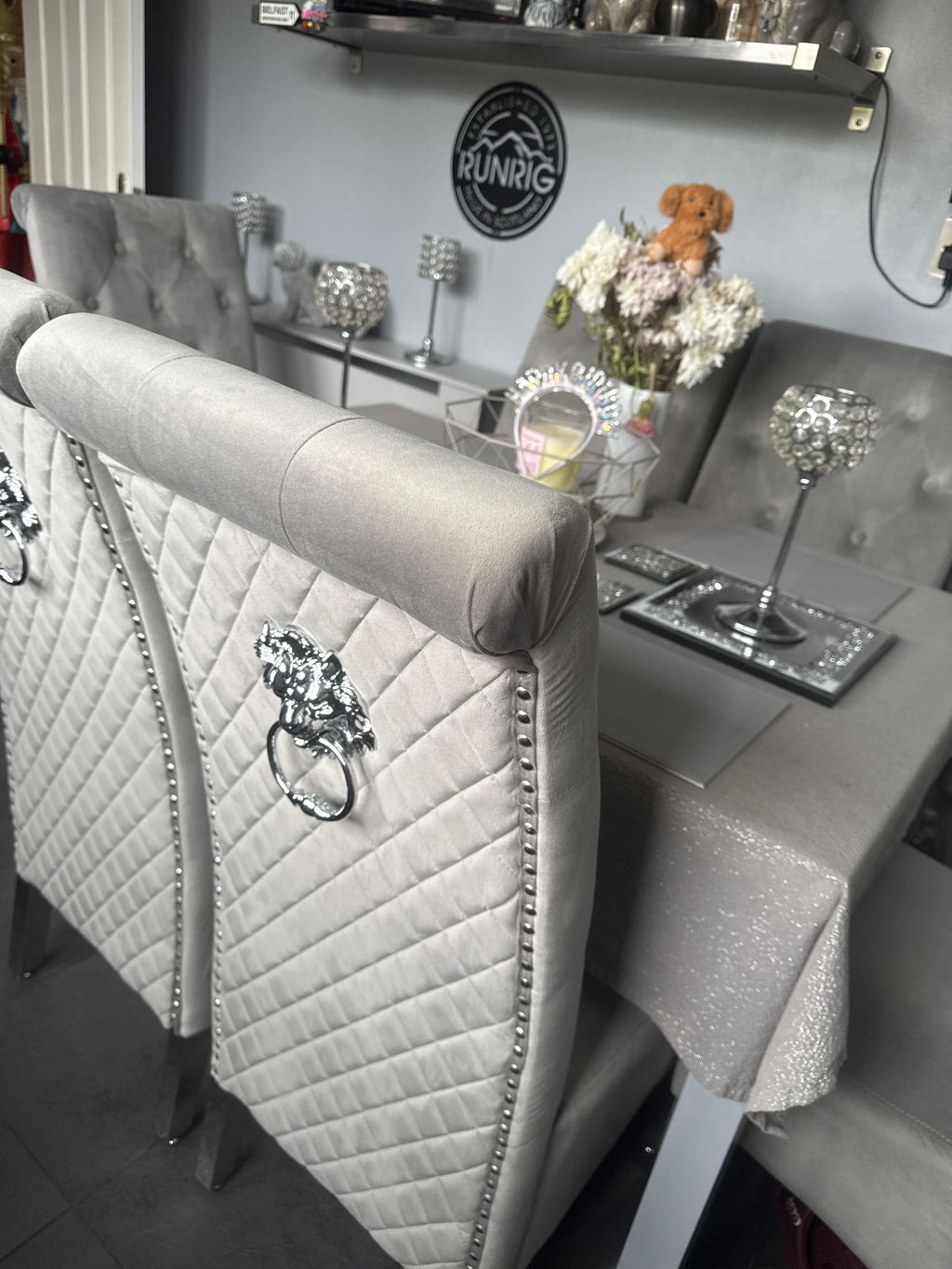
Leather and faux leather dining chairs in this collection are available across a range of seat and back designs, frame finishes, and colours. The most common configurations use a fully leather or faux leather seat and back with a metal or wooden frame in a finish suited to the chair's overall character. Frame finishes span contemporary metal options including chrome and gold, and more traditional leg designs for chairs that suit a classic or transitional interior.
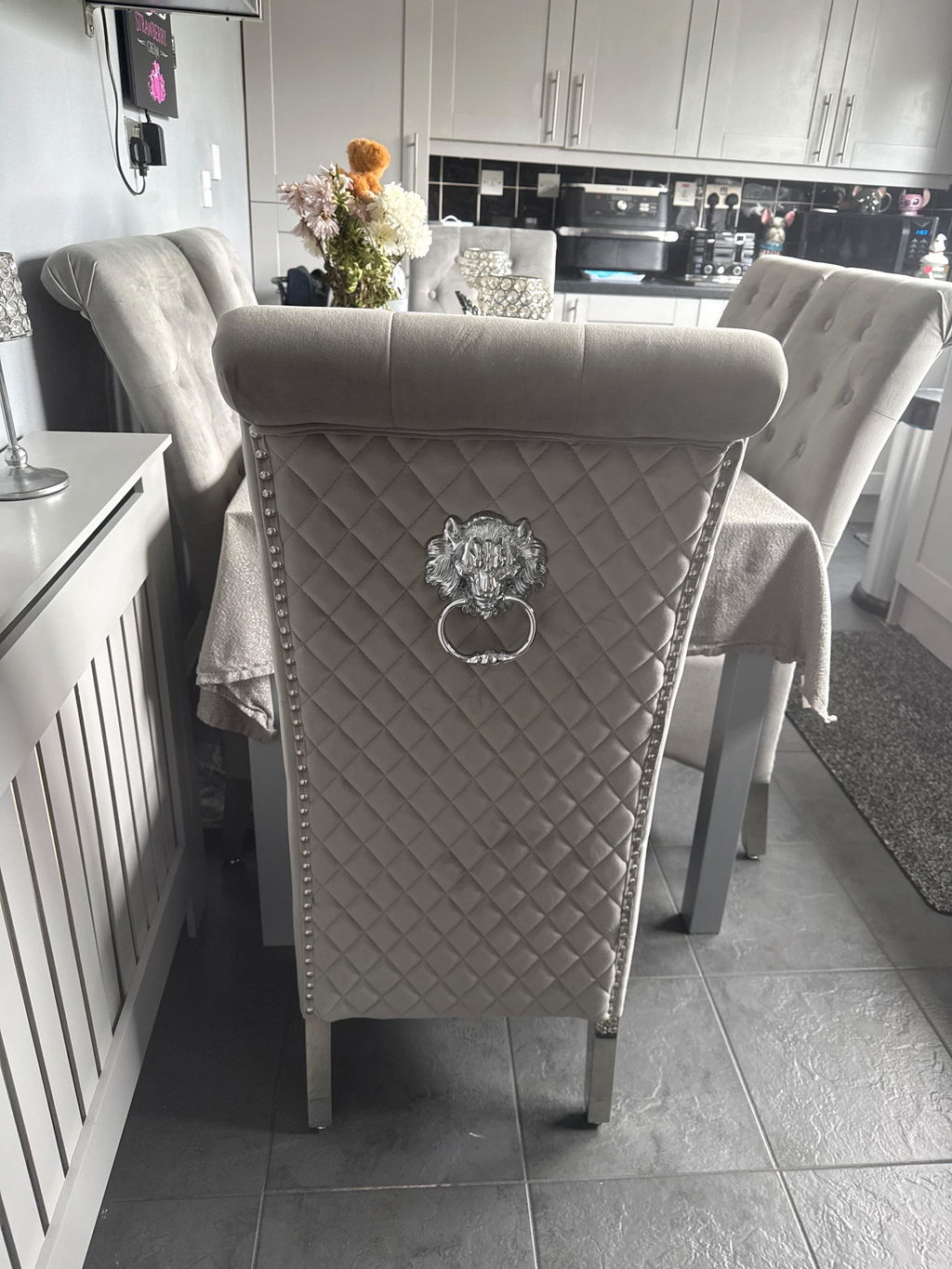
Back designs include plain upholstered backs, which are the most common in leather and suit the material's clean and unfussy character, and more structured designs that give the chair a more considered profile in the room. The material's wipe-clean practicality is consistent across all back designs, though the plain back is the most straightforward to clean and maintain.
Colours available across the collection include black, which is the most popular and the most versatile, cream and ivory for a lighter and more considered look, and other tones depending on the specific chairs. Each colour brings a different character to the combination with the frame and the table, and the colour pages cover the room implications of each in detail.
Real leather versus faux leather
This is the decision most people buying leather dining chairs need to make, and it's worth being specific about what distinguishes the two rather than treating one as straightforwardly better than the other.
Real leather is a natural material produced from animal hide. Each piece has its own character: slight variations in tone, texture, and surface quality that are products of the material rather than manufacturing inconsistencies. Real leather ages with a patina that many people find attractive and that contributes to the sense that the chairs are quality pieces rather than functional objects. Under daily use it holds up well, softening and developing character over time rather than degrading in the way that lower-quality alternatives can. It breathes, which affects comfort in warm weather compared to some synthetic alternatives. Real leather costs more than faux leather, requires occasional conditioning to prevent drying and cracking, and is more variable in appearance between chairs in the same set than a manufactured material would be.
Faux leather, sometimes called PU leather or bonded leather, is a manufactured material designed to replicate the appearance and surface feel of real leather. High-quality faux leather is convincing in appearance and very practical in use: it is consistent in colour and texture across every chair in a set, requires less maintenance than real leather, is more resistant to staining, and costs less. It does not develop the same patina as real leather over time, and at the lower end of the quality range it can crack or peel after years of heavy use in a way that real leather doesn't. The quality of faux leather varies considerably between products, and a good-quality faux leather chair is a more sensible purchase for most households than a poor-quality real leather one.
For most family households the decision comes down to this: if the material itself genuinely matters to you, and the quality and character of real leather is part of what you're buying, real leather is worth the additional cost and occasional maintenance. If the look and wipe-clean practicality are the goals and the specific material is secondary, a good-quality faux leather gives you both without the conditioning requirement or the higher price point. The difference between the two is more apparent in person than in product photography, and the showroom is the most useful place to make that comparison if it matters to your decision.
Leather dining chairs in a family home
The wipe-clean advantage of leather in a family home is genuine and it's worth being specific about what it means in practice. A spill on a leather or faux leather seat can be wiped away with a damp cloth within a few seconds. There is no absorption, no immediate anxiety about the mark setting into the fabric, and no careful blotting required. Compared to fabric and particularly to velvet, the daily maintenance of a leather dining chair in a busy household is significantly less demanding. For a household with young children who reliably find new ways to get food onto furniture that isn't in front of them, that advantage is real and compounds over the years.
The trade-offs are worth knowing. Leather is a firmer surface underfoot than a padded fabric seat, and the comfort profile for a long meal differs from a well-padded fabric chair. A quality leather or faux leather seat has enough give and padding beneath the surface to be comfortable through a full dinner, but the feel is different from velvet or a soft woven fabric and it's worth sitting in the chair before you commit if comfort over a long meal is a particular consideration. The showroom is the most reliable way to make that assessment.
In warm weather, leather can feel warmer and slightly less comfortable than a breathable fabric seat, particularly in a south-facing dining room or a conservatory. Real leather breathes more than faux leather, which reduces this effect somewhat, but it's a practical note worth being aware of rather than something discovered in July.
Leather also shows scratching more visibly than most fabrics, and in a household with cats or a dog that sits on chairs, scratch marks on a leather seat are a realistic possibility. Real leather can be treated and conditioned to minimise the visibility of light scratches; faux leather is less forgiving of the same. If pets with claws sharing the dining chairs is a daily reality in your home, a robust woven fabric in a mid-tone is actually the more practical choice than leather, because fabric conceals surface wear better than a smooth leather finish does.
Colours in our leather dining chairs
Black leather dining chairs are the most popular choice in the collection and the most versatile. Black leather reads as clean and deliberate in a contemporary or transitional room, works alongside almost any table finish, and shows the wipe-clean advantage of the material without the marking concern that pale leather carries. The honest note on black leather is that it shows dust, fluff, and any surface residue more clearly than a mid-tone, and requires a regular wipe to stay looking clean rather than just being cleaned after spills.
Cream dining chairs in leather are a strong choice for a household that wants the look of pale upholstery without the marking anxiety of cream velvet or fabric. Leather's wipe-clean surface makes pale colours more manageable than they are in a soft fabric, and cream leather in the right room has a clean and considered quality. The caveat is that pale leather does show marks and discolouration over time in a way that a darker colour conceals better, and in a household with young children the inside edges of the seat and the back are areas that will show use more quickly on a pale finish.
Ivory dining chairs in leather offer a slightly warmer tone than cream and suit a more traditional or warmer interior where cream's cooler quality would sit less naturally. The same practical notes apply as for cream leather.
What leather dining chairs work best with
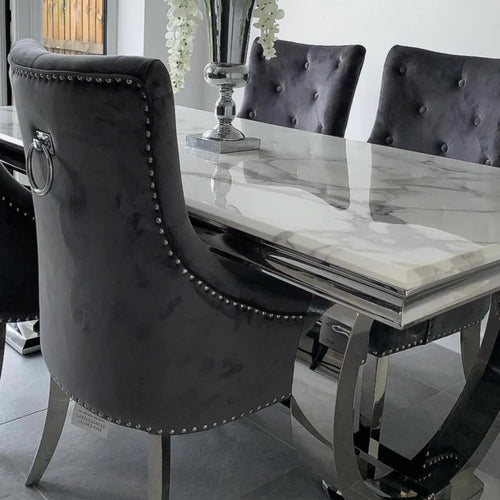
Leather dining chairs work across a wider range of table finishes and room types than velvet, partly because the material is less insistent about the surrounding room needing to hold its own alongside it. A black leather chair with a chrome frame alongside a glass dining table or ceramic dining table is one of the cleanest and most contemporary combinations in the collection: both materials are practical, both are confident in their character, and the overall effect suits a modern kitchen-diner or open-plan space well.
Chrome dining tables pair particularly naturally with leather chairs: both materials are durable, wipe-clean, and share a contemporary quality that places them in the same design register. A chrome-framed leather chair alongside a chrome-based dining table is among the most coherent and low-maintenance combinations for a family household that wants the dining room to look considered without requiring constant maintenance to stay that way.
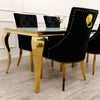
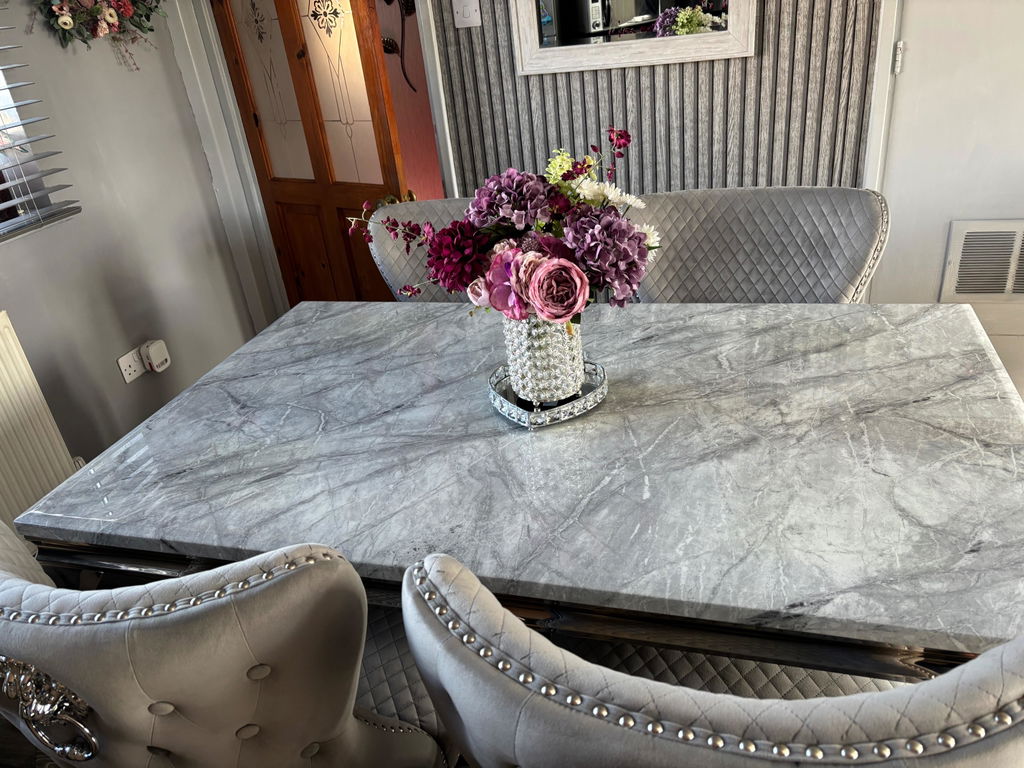
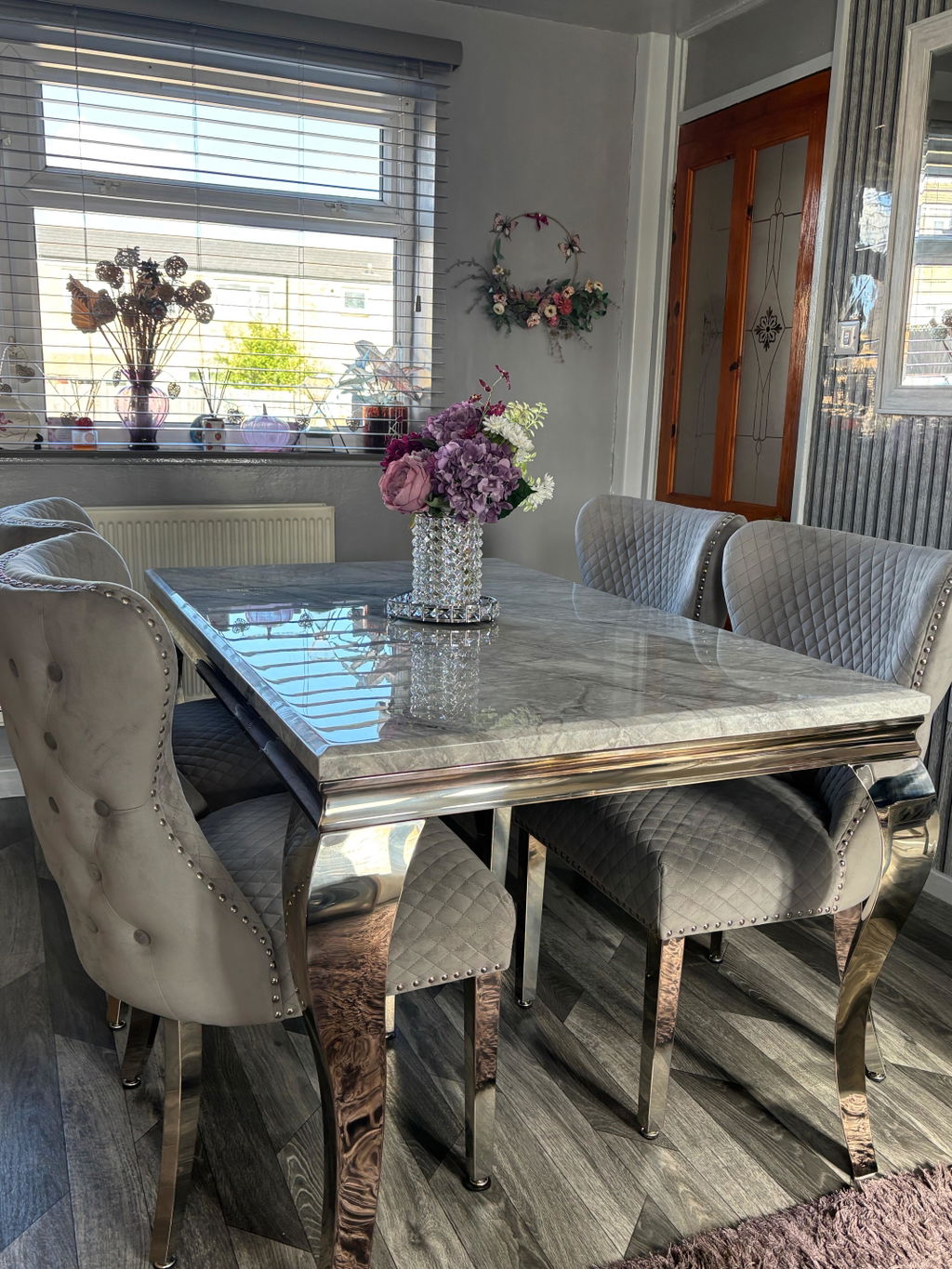
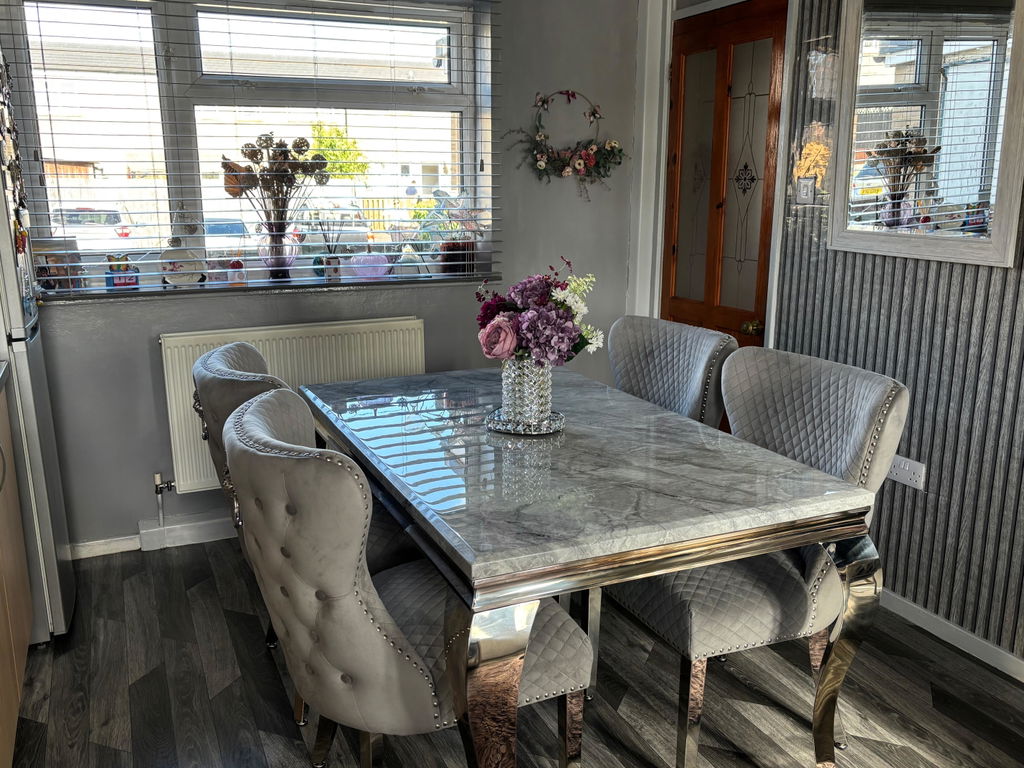
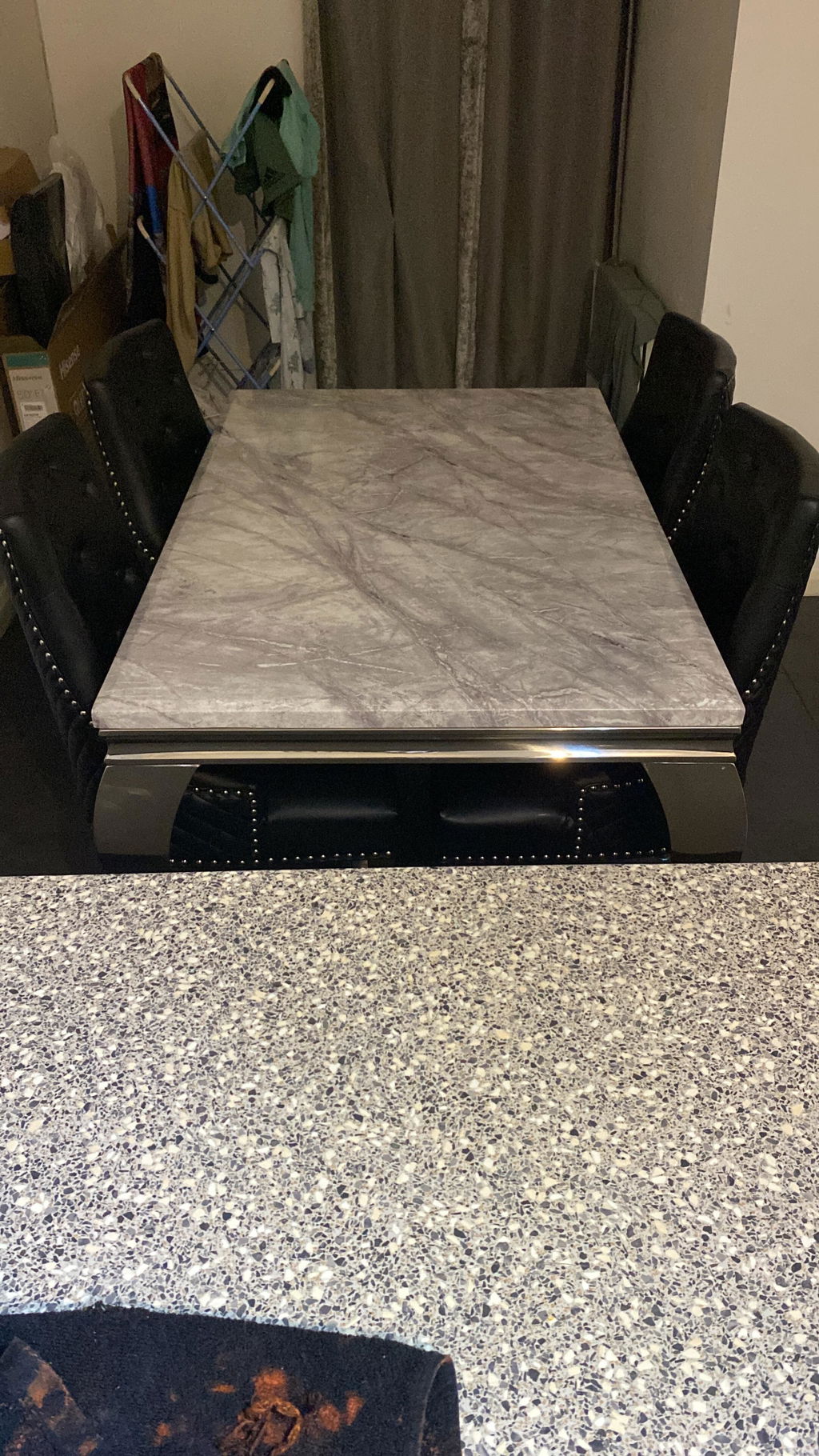
Marble dining tables with leather chairs work well in a room where the table is the visual statement and the chairs are the practical complement: cream or ivory leather alongside a marble top reads as clean and considered without the chairs competing with the table for attention. Gold-framed leather chairs alongside a marble or marble-effect table is a more formal version of the same idea, with the gold frame adding warmth to a combination that might otherwise read as slightly cold.
Spreading the Cost
Finance is available on many of our dining chairs, subject to status. A set of leather dining chairs at the quality end of the range is a meaningful purchase, and spreading the cost can make the right set more accessible. We're happy to talk through the options at any point.
Why buy from Shawcross
We're based in Manchester and our showroom is open if you'd like to see leather dining chairs in person before buying. The difference between real leather and faux leather, and between different qualities of faux leather, is more apparent in person than in product photography. The comfort of the seat through a full meal and the feel of the material are also things that a visit assesses properly in a way that reading a product description cannot. For a purchase that will see daily use in your household for years, seeing and sitting in the chairs before you commit is time well spent.
We deliver nationally across the UK, and you can contact us at any stage for guidance on real versus faux leather, colour choice, frame finish, or chair and table compatibility before you order.