What's in this collection
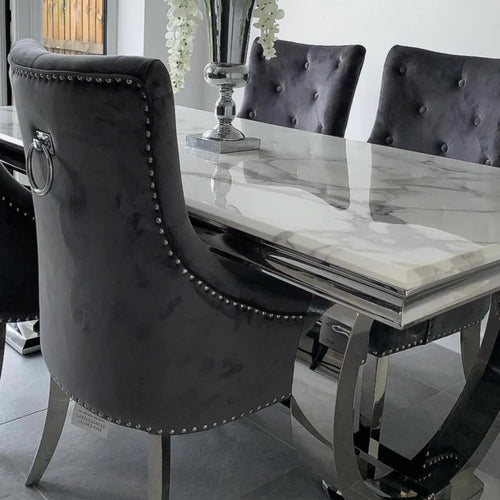
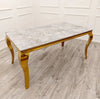
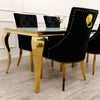
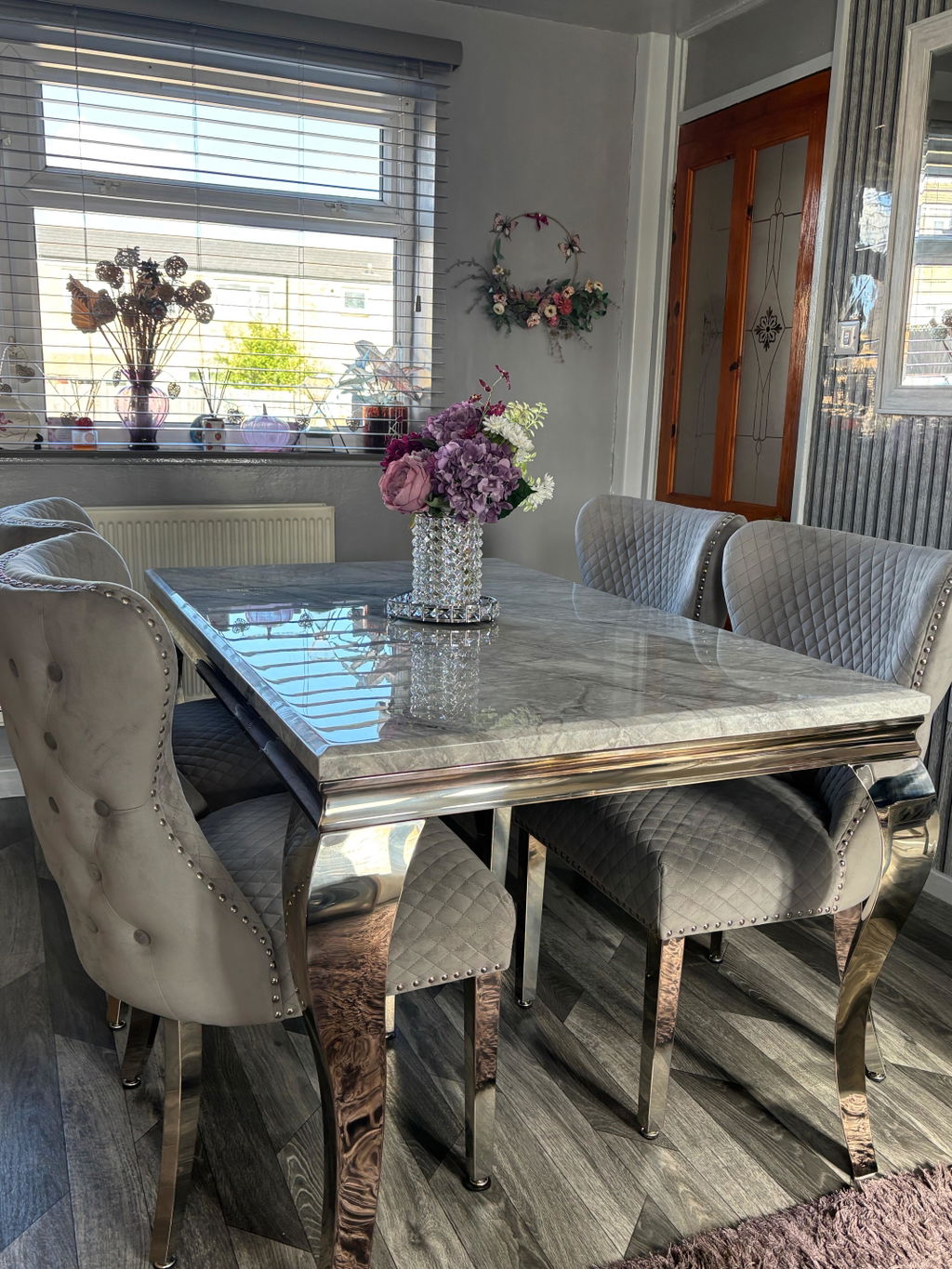
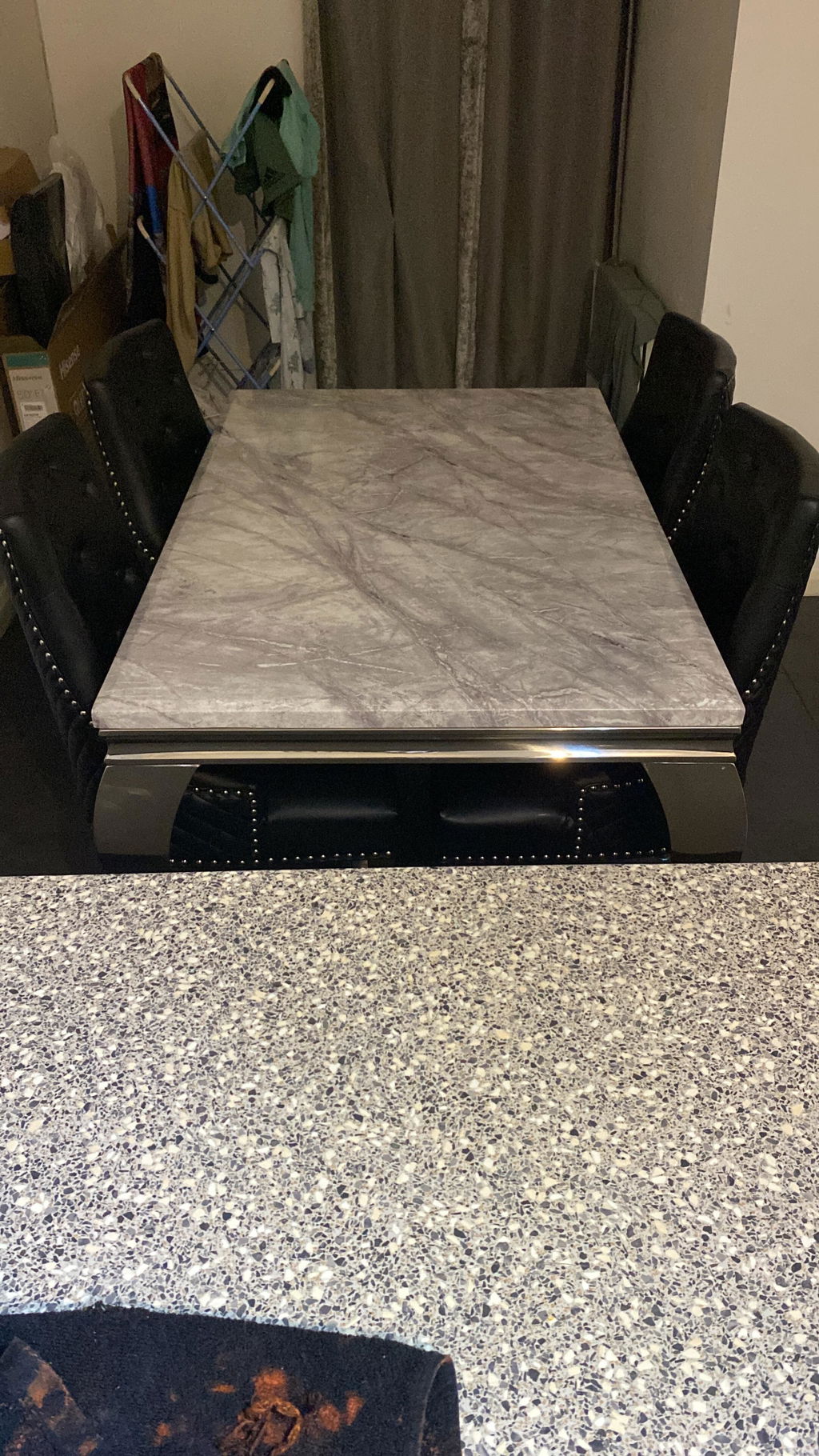
Chrome dining tables use chrome for the structural elements of the table: the legs, base, or frame that supports the top surface. The chrome is the constant; the top material and the structural design around it vary across the collection.
Top materials include toughened glass, ceramic and stone-effect surfaces, and marble-effect finishes. Each brings a different character to the combination and different practical properties in daily use, covered in detail in the section below. Base designs range from four-leg configurations, where slender chrome legs sit at the corners of the table, to more architectural frames and pedestal bases, where the structural form of the base is a more prominent design feature. A pedestal base in chrome has a different visual effect from four legs: more minimal, more deliberate, and particularly effective under a glass top where the base is fully visible through the surface.
Tables are available in fixed and extending configurations, across rectangular, round, and square shapes. The right size and shape depends on the room, and the size and shape pages cover those decisions in detail.
What chrome does for a dining table
Chrome is a reflective metal finish, and what it does in a room is amplify the feeling of cleanness and precision. A chrome-framed dining table in a modern kitchen-diner contributes to the overall sense that the room has been designed rather than assembled, which is why it suits rooms that have already committed to a contemporary look. The frame carries the same quality of finish as chrome appliances, chrome taps, and chrome fittings elsewhere in the room, and that consistency of finish is what makes the table feel like it belongs rather than was added as an afterthought.
The top material is where the character of the table shifts most significantly. A chrome frame with a glass top is the most minimal and contemporary combination: both materials are clean and reflective, and the overall effect is light and precise in a way that suits open-plan spaces and rooms where keeping the space visually uncluttered is a priority. The glass reveals the base fully, which means the chrome frame becomes as much a visible design element as the surface itself.
A chrome frame with a ceramic top is a different balance. The ceramic surface brings more visual weight to the table, and the chrome frame becomes more of a supporting element rather than the primary feature. This combination is often the more practical choice for a family kitchen-diner: the ceramic surface handles heat, spills, and daily use with considerably less maintenance than glass, while the chrome frame keeps the contemporary character of the table intact. Stone-effect ceramic in grey or warm neutral tones alongside a chrome frame works particularly well in a room with modern fitted units, because the combination of materials is consistent without being self-conscious.
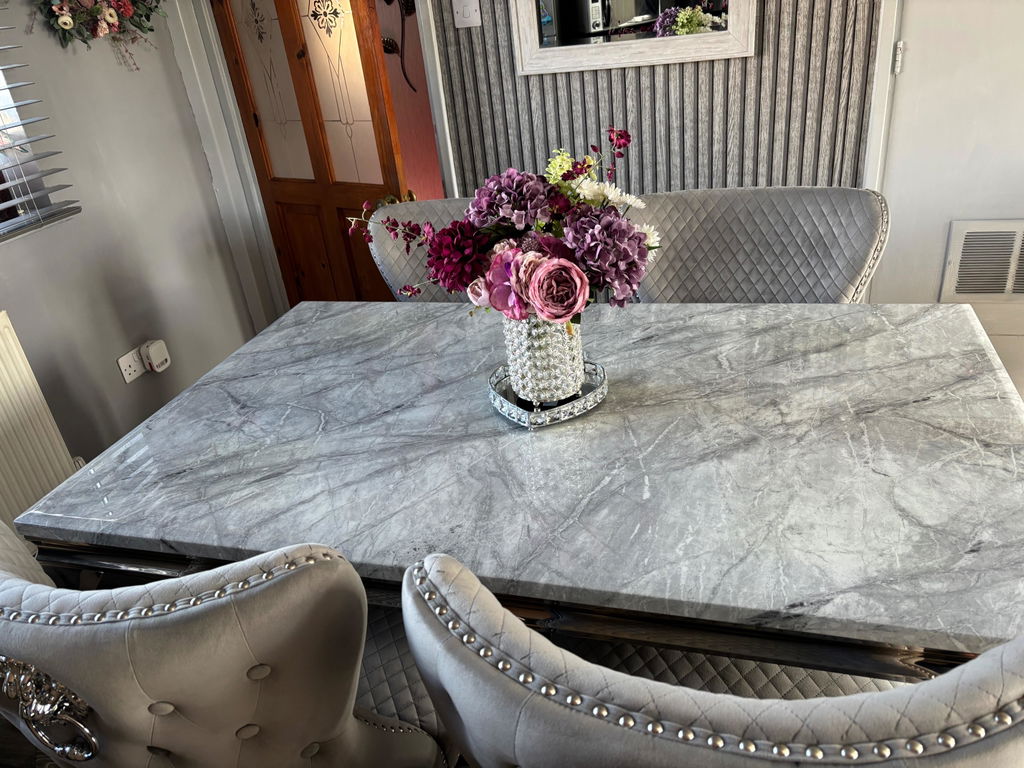
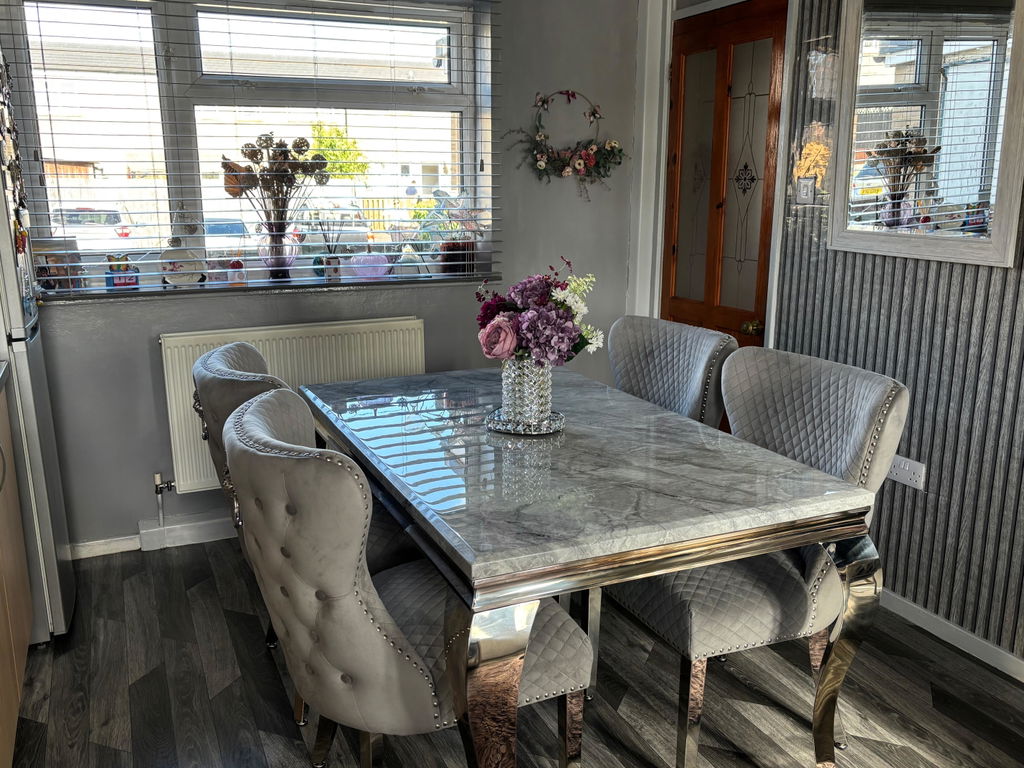
A chrome frame with a marble-effect or marble top is a slightly different register from the glass and ceramic combinations. Marble alongside chrome reads as contemporary but with more of a statement quality: the surface brings warmth and visual complexity that glass and plain ceramic don't, and the chrome frame keeps the combination grounded in a contemporary context rather than letting it tip into something more traditional. Whether this works depends on the room; in a sleek, modern kitchen it can look very considered, while in a room with warmer or more organic elements a gold dining table frame tends to complement marble more naturally than chrome.
Chrome in daily family use
Chrome is a durable material for a dining table frame. It doesn't rust under normal indoor conditions, it doesn't warp, and it holds its finish well over years of regular use without requiring any treatment or periodic maintenance beyond cleaning. Under the everyday demands of a family dining room, a chrome frame holds up without any realistic concern.
The honest thing to say is that chrome shows marks. Fingerprints and smears are more visible on a reflective chrome surface than on a matte or painted frame, and in a household where chairs are pulled in and out every day, the legs and lower frame sections that people touch regularly will show those marks. It's not a difficult problem to manage: a soft damp cloth deals with it quickly and a chrome frame wipes clean without any specialist products. But it is a regular job rather than an occasional one, and in a busy household it's worth factoring in alongside the top surface maintenance before you decide.
The top surface is where most of the day-to-day practical consideration sits. A chrome-framed table with a glass top needs the glass wiped after most meals, which is a consistent commitment. A ceramic top in the same chrome frame is considerably more forgiving: spills sit on the surface, heat isn't a concern, and the cleaning routine is a quick wipe with a damp cloth rather than a careful polish. For a table that's used most evenings by a family with children, the difference between a glass top and a ceramic top in daily maintenance terms is significant, even when the chrome frame is the same. The ceramic dining tables and glass dining tables pages cover the specific care requirements for each surface in full.
Sizes in our chrome dining tables
Chrome dining tables are available across a range of sizes to suit different rooms and households. A 1.5m dining table in chrome is the most common choice for a standard family dining room or kitchen-diner, seating four comfortably for daily meals and six when guests come round. A 1.6m dining table gives six people proper elbow room and suits a room with a little more length to work with. For larger rooms and households, 1.8m dining tables in chrome make a strong impression and suit a dedicated dining room where the table is a proper centrepiece rather than just functional furniture.
At the compact end, chrome works well in a smaller kitchen-diner where a contemporary finish ties the table to the room's wider look. A 1.2m dining table or 1.1m dining table with a chrome frame and glass or ceramic top suits a room where space is limited and a clean, unfussy finish is the priority.
As with any dining table, allow around 90cm of clearance on all four sides when planning against your room dimensions. If you'd like to check a specific size and configuration against your room before ordering, get in touch and we'll work through it with you.
Spreading the Cost
Finance is available on many of our dining tables, subject to status. If the table you want sits above your immediate budget, spreading the cost is worth exploring. We're happy to talk through the options at any point.
Why buy from Shawcross
We're based in Manchester and our showroom is open if you'd like to see chrome dining tables in person before buying. Chrome is a finish that reads quite differently in real light from how it appears in photographs: the reflectivity, the tone of the metal, and the way the frame sits alongside the top material are all things a visit makes immediately clear. If you're deciding between chrome and another frame finish, or between different top materials on a chrome frame, seeing them in the showroom is the most efficient way to settle the decision.
We deliver nationally across the UK, and you can contact us at any stage for guidance on sizing, top material, room fit, or chair compatibility before you order.