Skip to content

Memory Foam Mattresses

You wake up with a sore shoulder and you're not sure if it's the mattress or just how you slept. It happens once or twice and you put it down to ...


You wake up with a sore shoulder and you're not sure if it's the mattress or just how you slept. It happens once or twice and you put it down to a bad night. It keeps happening and you start wondering. Memory foam exists to answer a specific version of this problem. Where a spring mattress holds the body at its widest points, the shoulder and hip in particular, memory foam compresses under heat and body weight to spread that pressure more evenly across the surface. For the right sleeper, that makes a noticeable difference. It's not the answer to everything, but it's worth understanding properly before deciding whether it applies to you.


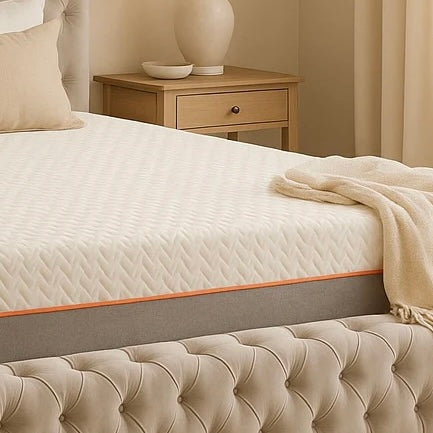
The mattresses here cover both pure memory foam and hybrid constructions, where a pocket spring base sits beneath a memory foam comfort layer. They're available in all standard UK sizes and sit within the full mattresses collection if you'd like to compare with other construction types. Everything is delivered across the UK in 7 to 14 days.


Finance is available on many mattresses, subject to status. Give us a call or come into the Manchester showroom if you'd like to talk through the options before you order.

What's in this collection

It's worth being clear about what "memory foam mattress" can mean, because the term covers two quite different constructions.

A full memory foam mattress is foam throughout: a dense support foam layer at the base with a memory foam comfort layer on top. There are no springs. The feel is a slow, enveloping compression that moulds to the body's shape and recovers gradually when the pressure is removed. This is the construction most people picture when they think of memory foam.

A hybrid mattress combines a pocket spring system at the base with a memory foam comfort layer above it. The foam provides the pressure relief and body-contouring at the surface; the springs underneath handle support, movement absorption, and airflow. Hybrids feel different from full foam: there's more response and less of the characteristic slow sink. Several of the mattresses here are built this way, and for many people, particularly those sharing a bed or those who tend to sleep warm, the hybrid construction is the more practical choice.

Both types are included in this collection. The right one depends on what you're trying to solve.

Who memory foam suits, and who it doesn't

Memory foam performs best for side sleepers. When you lie on your side, the shoulder and hip are the widest contact points. A firm surface holds the body at those points and puts the spine under sideways pressure for the hours you're asleep. Memory foam gives at those contact points rather than resisting them, which lets the spine rest in a more neutral position. People who have lived with morning shoulder or hip stiffness and switched to a memory foam mattress often notice the difference quickly.

It's less straightforward for back sleepers. Back sleeping is generally well-supported on a range of mattress types, but a very soft memory foam surface can allow the hips to sink too deeply, which arches the lower back rather than supporting it. Medium-firmness memory foam, or a hybrid where the spring base provides underlying support, often works better for back sleepers than full foam on the softer end.

Front sleepers tend to find memory foam less comfortable than other constructions. The face-down position puts the lower back into extension, and a surface that gives readily at the heaviest part of the body, the hips and pelvis, exaggerates that. This isn't unique to memory foam, but the slow-response nature of foam means it takes longer to redistribute when you shift position, which some front sleepers find frustrating.

If you're buying for a double or king size bed shared by two people with different sleep positions, a hybrid is often the more practical answer than full foam. The spring base handles movement and temperature better, while the foam layer still provides the pressure relief.

Memory foam and temperature

The most common concern about memory foam is that it sleeps warm. This is worth addressing honestly rather than brushing past it.

Standard memory foam is a dense material. It doesn't allow air to circulate through it the way a pocket spring structure does, and it retains heat rather than dissipating it. For people who already sleep warm, or who share a bed and find the combined heat builds up overnight, this is a genuine trade-off. If you're someone who regularly pushes the duvet off or wakes up too hot, it's worth factoring in.

Manufacturers address this in a few ways. Open-cell foam structures allow more airflow through the material than traditional foam. Gel-infused layers draw heat away from the surface more effectively. Hybrid constructions, with a spring base beneath the foam, stay considerably cooler than full foam mattresses because air can circulate through the spring layer underneath. If temperature is a real concern but you still want the pressure-relief benefits of memory foam, a hybrid is usually the better starting point.

Spreading the Cost

Finance is available on many of our memory foam and hybrid mattresses, subject to status. If you're replacing a mattress that has started to affect how you sleep, a better-specified mattress is worth the investment, and spreading the cost across monthly payments makes it easier to choose on quality rather than just on price. Details are shown on each product page.

Why buy from Shawcross

We're a Manchester-based retailer with a showroom and we deliver nationally across the UK. For a mattress, especially one where construction type genuinely affects who it suits, a conversation beforehand is useful. If you're not sure whether full foam or a hybrid makes more sense for how you sleep, we're happy to talk it through. Come into the showroom if you'd prefer to see and feel the options in person, or give us a call before you order.


Memory Foam Mattress FAQs

What's the difference between a memory foam mattress and a hybrid mattress?

A full memory foam mattress is built entirely from foam: a dense support layer at the base with memory foam above it. No springs. The feel is a slow, deep compression that moulds to your shape and recovers gradually when you get up or change position. It's the construction most people associate with the term "memory foam mattress."

A hybrid uses a pocket spring system as the base with a memory foam comfort layer on top. The foam still provides pressure relief and body contouring at the surface, but the pocket springs underneath change the character of the mattress in important ways. They allow air to circulate, which keeps the sleeping temperature lower. They absorb movement independently, which means a partner turning over has less impact on your side. And the spring support beneath the foam means the mattress responds more readily when you shift position rather than holding you in place. For many people, particularly those sharing a bed or those who sleep warm, the hybrid construction is the more useful choice even if what they wanted was the pressure relief of foam.

Is memory foam good for back pain?

It depends on the cause of the pain and how you sleep, and it's worth being straight about that rather than giving a simple yes.

For side sleepers whose back discomfort comes from pressure at the hip or shoulder overnight, memory foam often helps. Reducing the load at those contact points allows the spine to rest in a more neutral position, and people who make this switch sometimes notice an improvement within a few nights.

For back sleepers, or anyone whose pain is related to insufficient support rather than excess pressure, a very soft or deeply compressing memory foam surface can make things worse rather than better. If the hips sink too deeply, the lower back arches, and spending several hours in that position overnight doesn't help. Medium-firmness memory foam, or a hybrid where the pocket spring base provides firm underlying support, tends to work better in this situation.

If you have a specific back condition or are buying a mattress primarily to manage pain, it's worth getting guidance from your GP or physiotherapist as well as testing mattresses in person if you can. We're happy to talk through the options in the Manchester showroom.

Does memory foam sleep hot?

Standard memory foam does tend to sleep warmer than pocket spring, and it's worth being clear about this rather than glossing over it. The material is dense and doesn't allow air to circulate through it. It retains body heat rather than dispersing it, which some sleepers find perfectly comfortable and others find noticeably disruptive, particularly in summer or if you naturally run warm at night.

How much this matters in practice depends on the construction. Gel-infused memory foam draws heat away from the surface more actively than standard foam. Open-cell foam structures allow more airflow than traditional closed-cell foam. Hybrid mattresses, with a pocket spring base beneath the foam layer, are significantly cooler than full foam because air can circulate through the spring structure throughout the night. If temperature is a real concern, a hybrid is usually the more comfortable long-term choice over full foam.

If you're not sure where you sit on this, consider how you sleep now. Do you regularly push the duvet off? Do you or your partner open a window even in winter? If so, temperature is worth weighing before you decide.

Is memory foam a good choice for a shared bed?

It can be, but it depends on the construction. The main limitation of full memory foam for shared beds is movement transfer. Because foam is a solid material rather than a spring system, it can carry movement across the surface more readily, and the slow recovery means it takes longer to settle after someone shifts position. For couples where one partner moves around a lot, or one gets up early while the other sleeps on, this is worth thinking about.

A hybrid, with pocket springs beneath the foam layer, handles this much better. The independent springs absorb movement more effectively, so a partner turning over is less likely to register on your side. You still get the pressure-relief benefit of the foam comfort layer at the surface. For most couples who are drawn to memory foam for comfort reasons, a hybrid is the more practical starting point than full foam.

How long does a memory foam mattress take to settle?

Most memory foam mattresses take a few days to a couple of weeks to reach their full feel and comfort after delivery. This is normal and not a sign of a problem. The foam is compressed during packaging and transport, and it needs time to decompress and return to its intended shape once it's on the base. During this period, the mattress may feel firmer than it will once settled.

Room temperature affects how quickly this happens. Memory foam responds to heat, and a cooler room will slow the decompression slightly. If the mattress arrives in cold weather, bringing it to room temperature before sleeping on it for the first time helps. Most people find the mattress has fully settled within a week or two, though some notice a gradual softening over the first month of use as the foam adapts to their body shape and weight.

How does delivery work, and can I see memory foam mattresses in person first?

We deliver nationally across the UK. Once your order is placed you'll receive a confirmation, and we'll be in touch closer to the time to arrange a delivery date that suits you. Mattresses are delivered in 7 to 14 days. They arrive in protective packaging and the delivery team will bring them into your home. If there's anything about your property worth knowing in advance, such as a narrow staircase or restricted parking, let us know when you order so the delivery team can prepare.

If you'd prefer to try before you buy, our Manchester showroom carries a selection of mattresses and you're welcome to come in without any obligation. For a purchase that directly affects how well you sleep, it's often worth the trip. Give us a call beforehand to confirm what's currently on the showroom floor.