What's in this collection
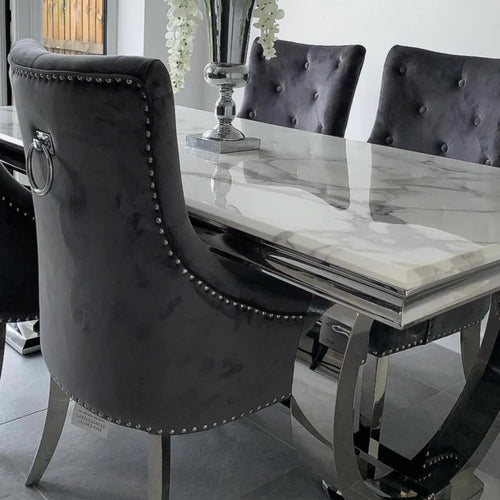
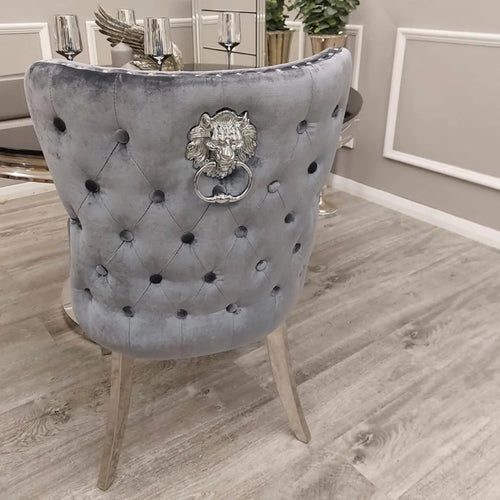
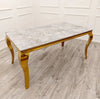
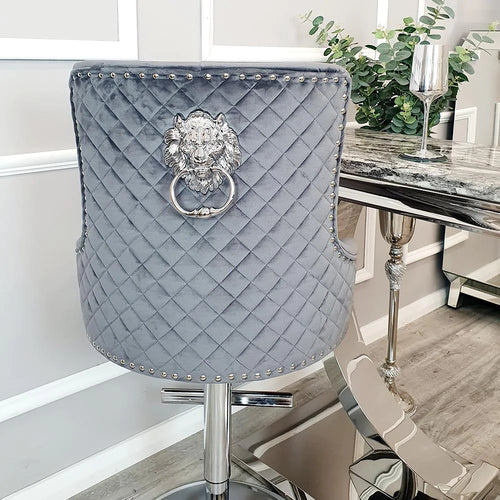
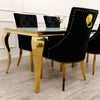
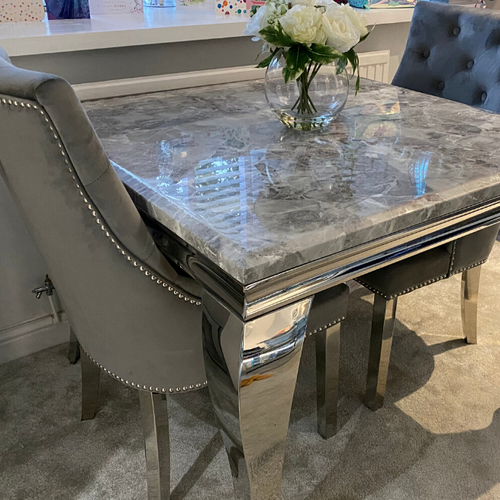
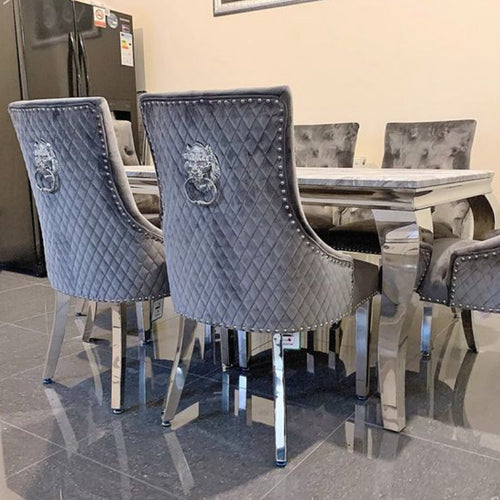
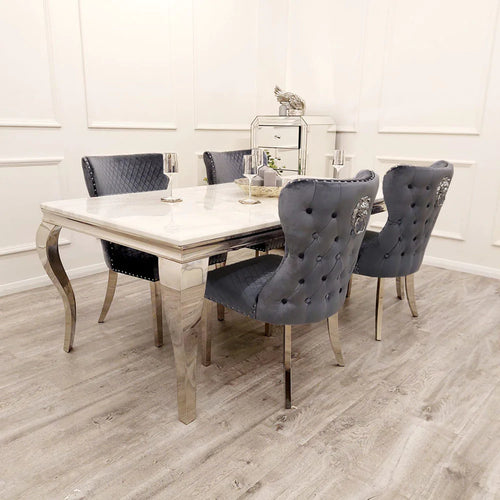
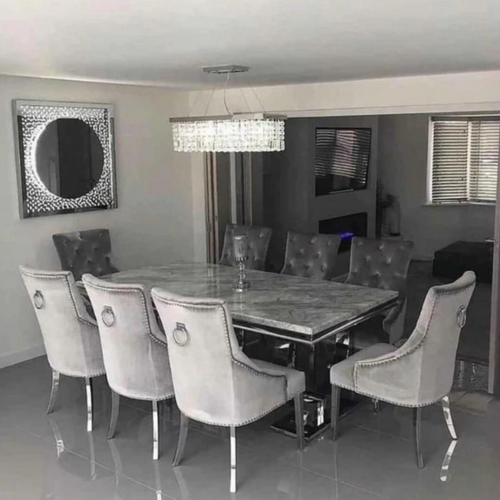
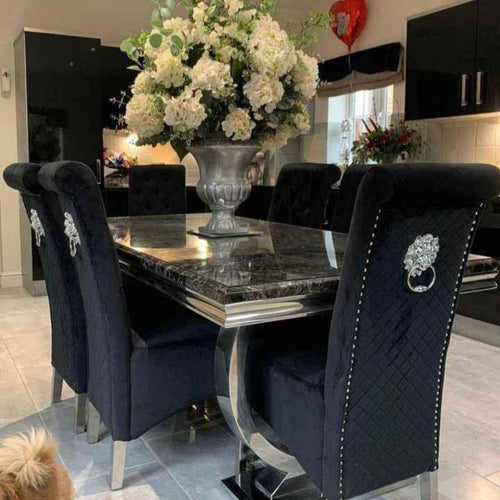
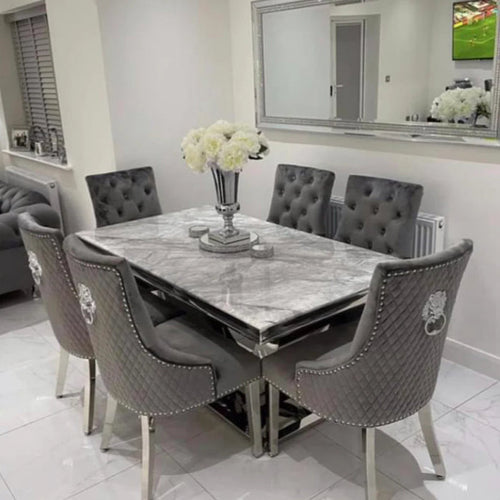
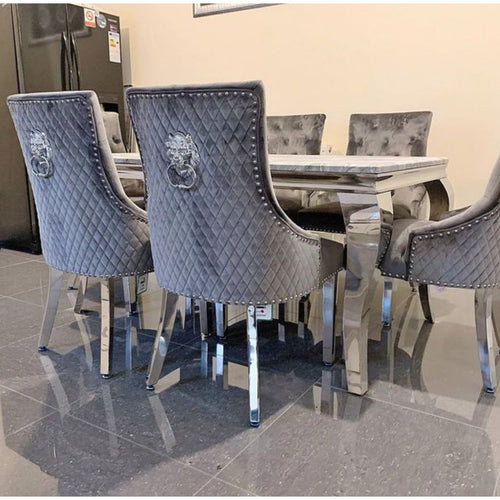
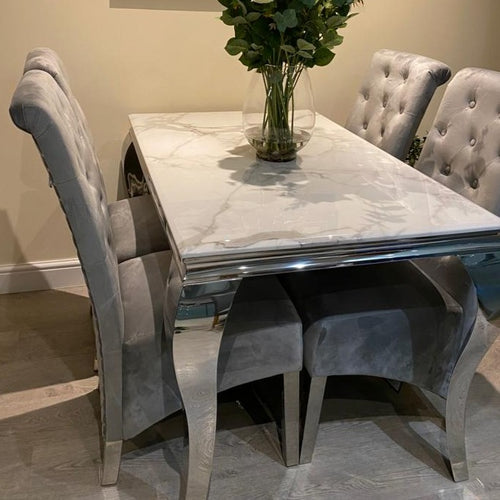
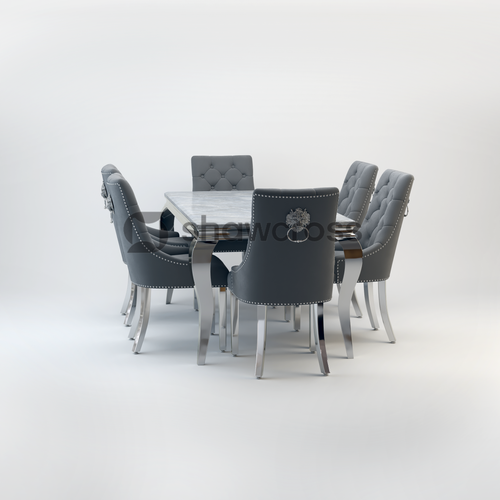
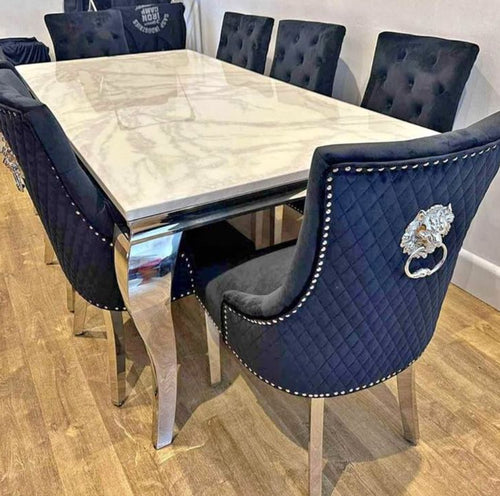
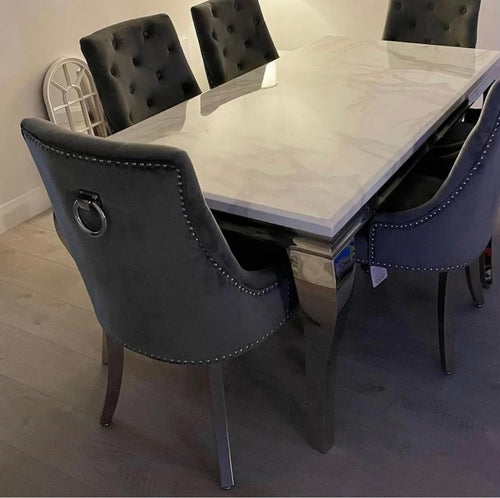
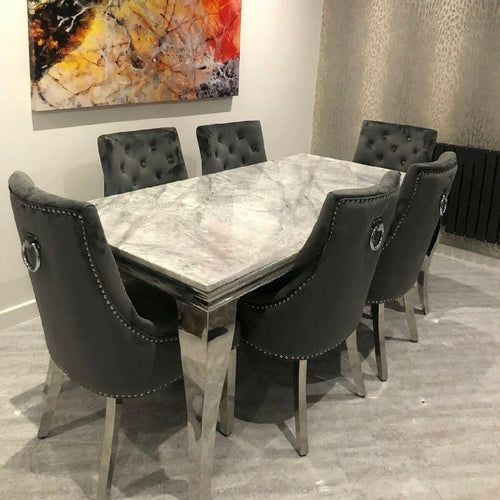
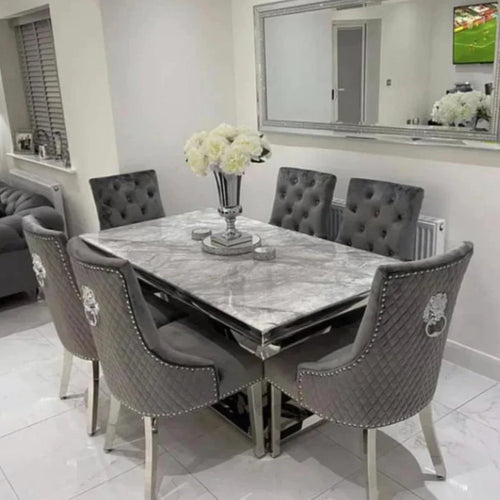
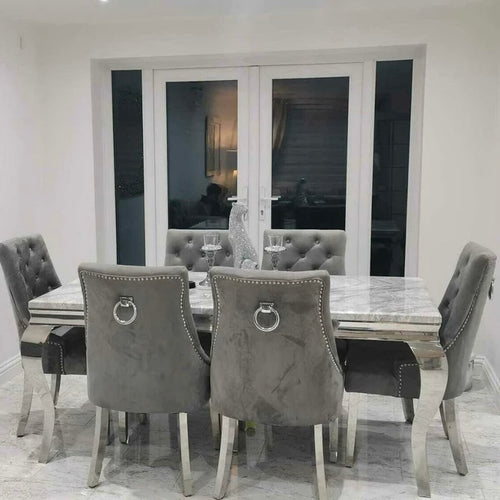
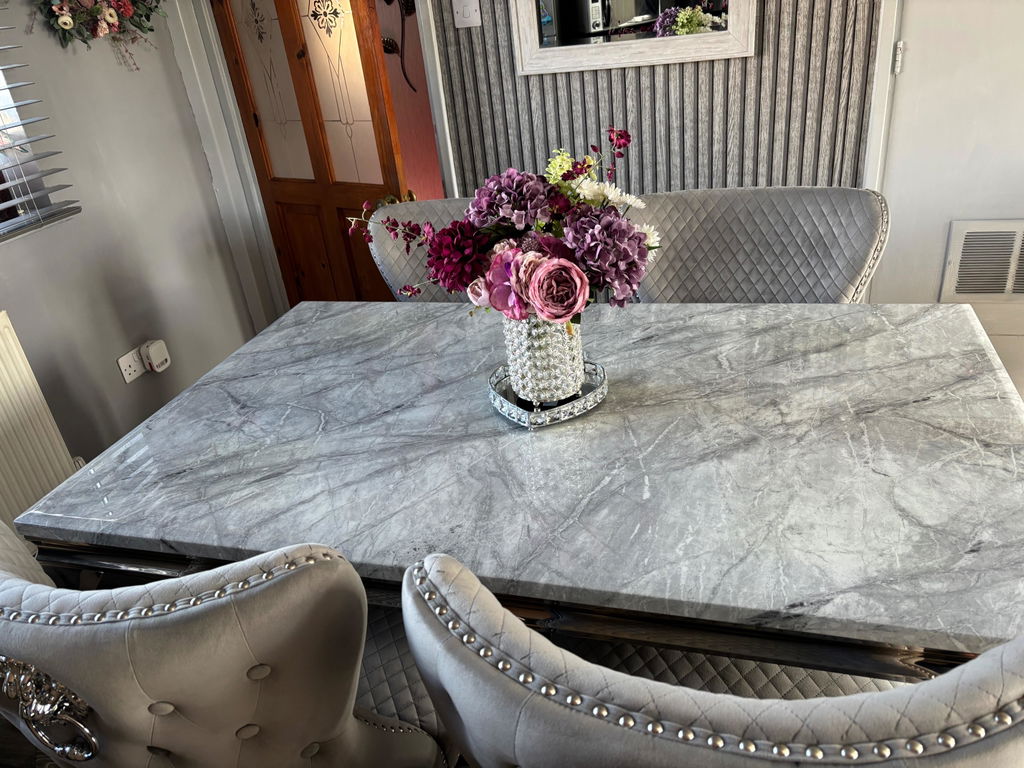
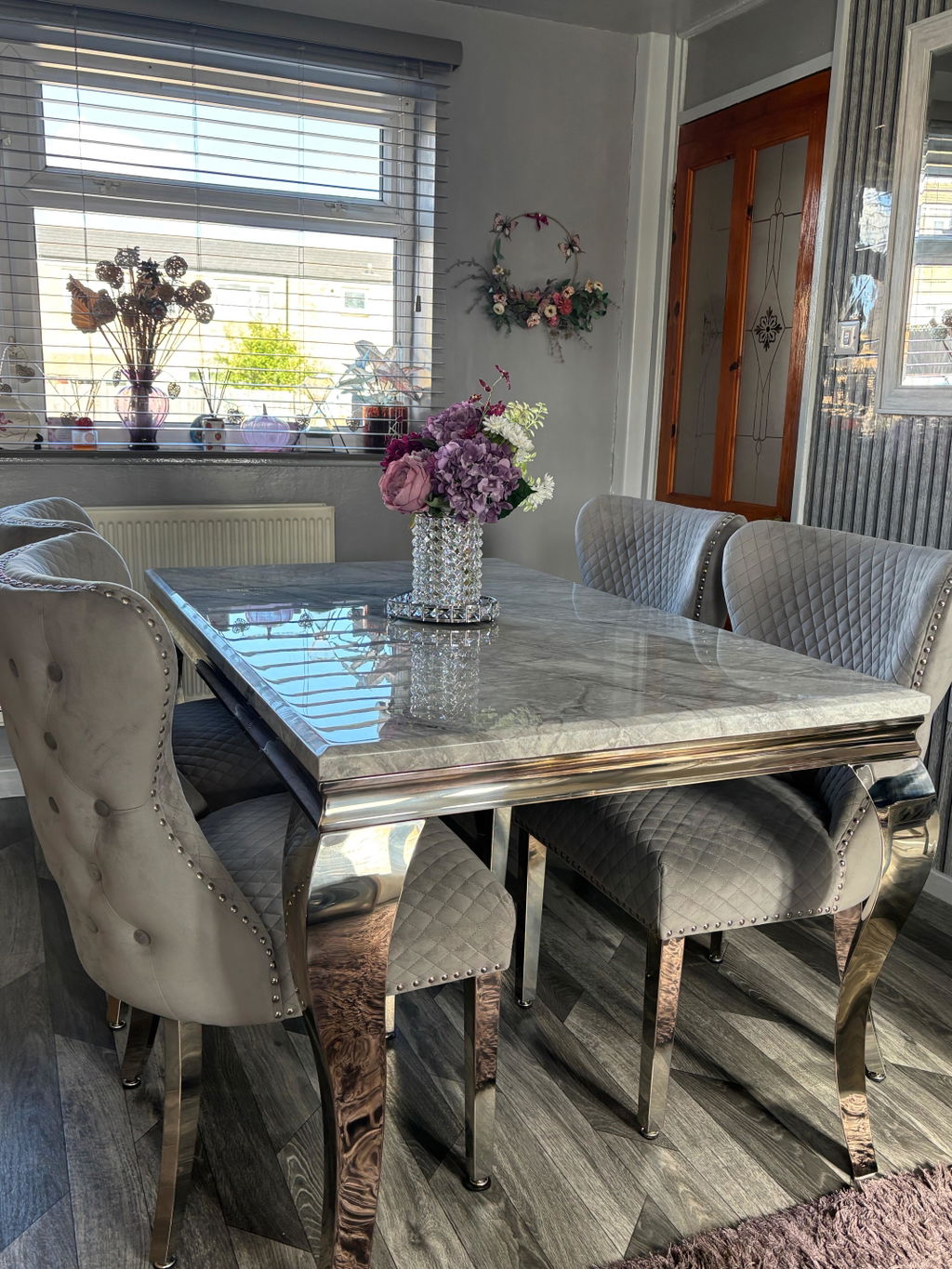
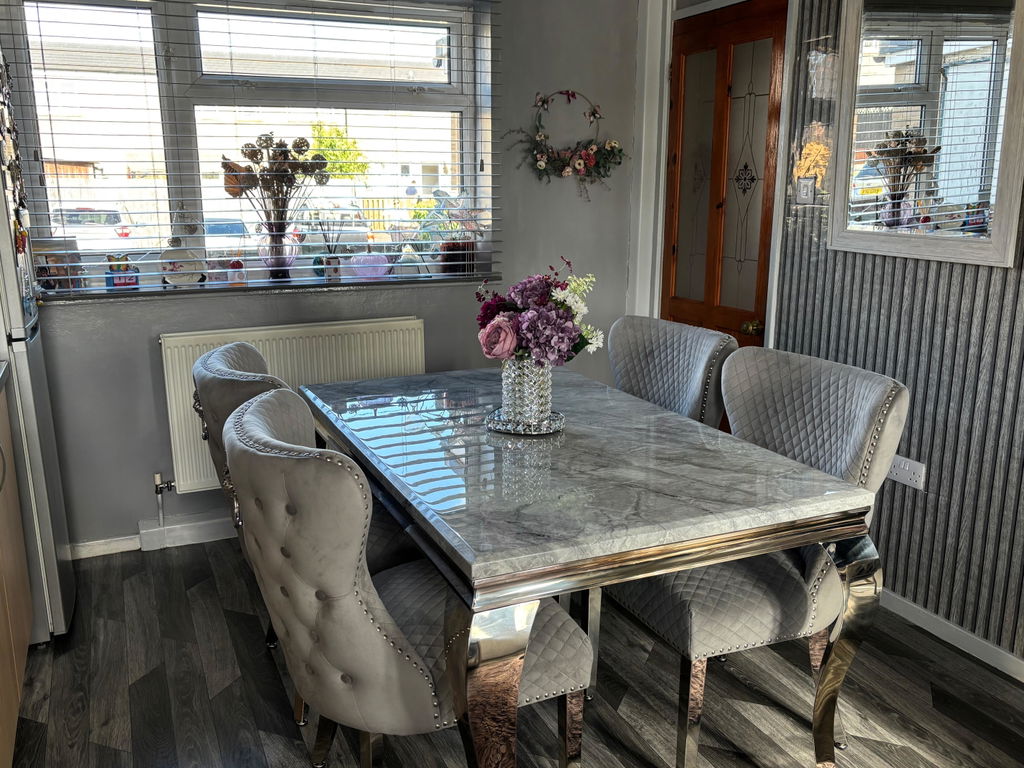
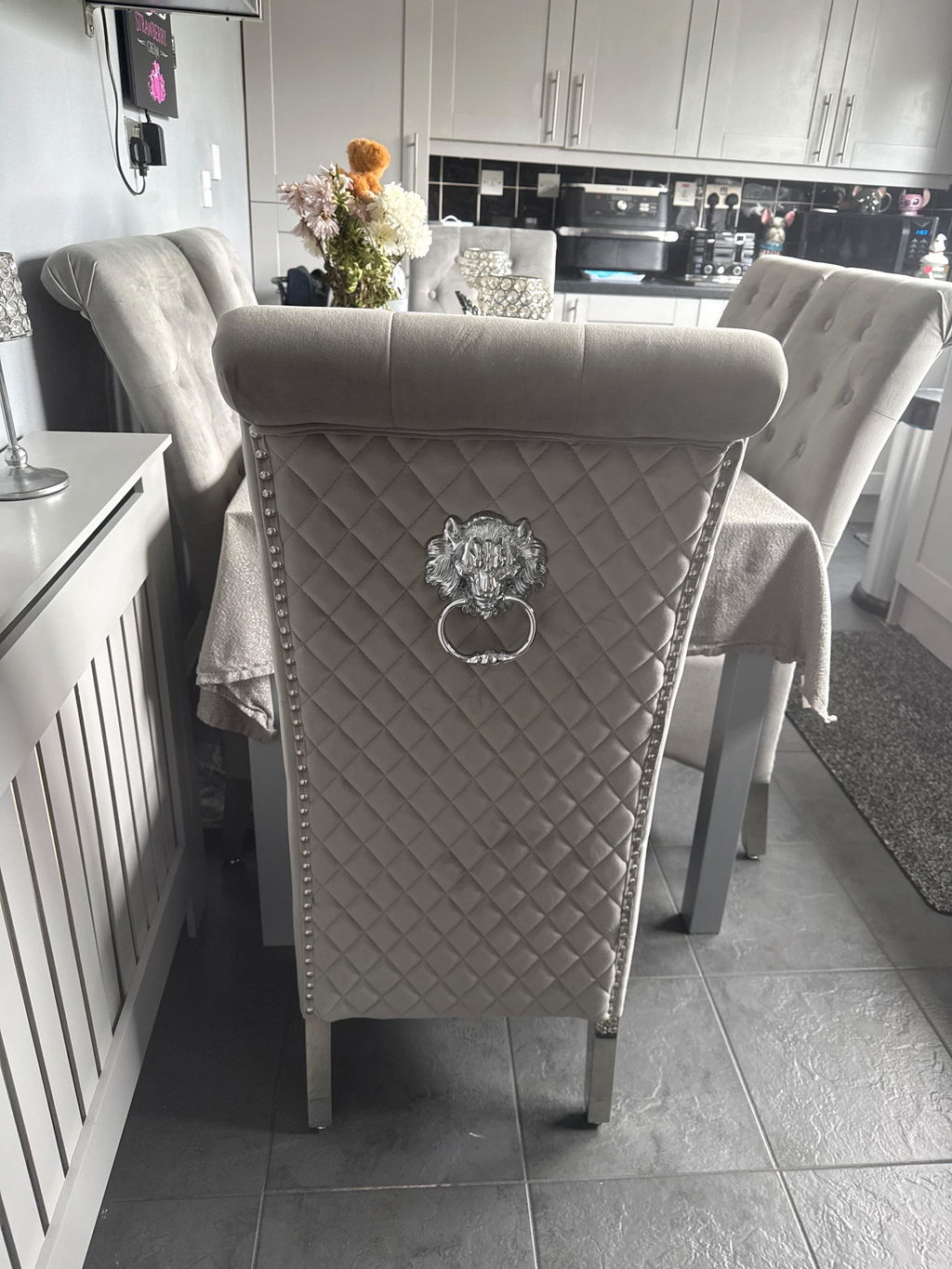
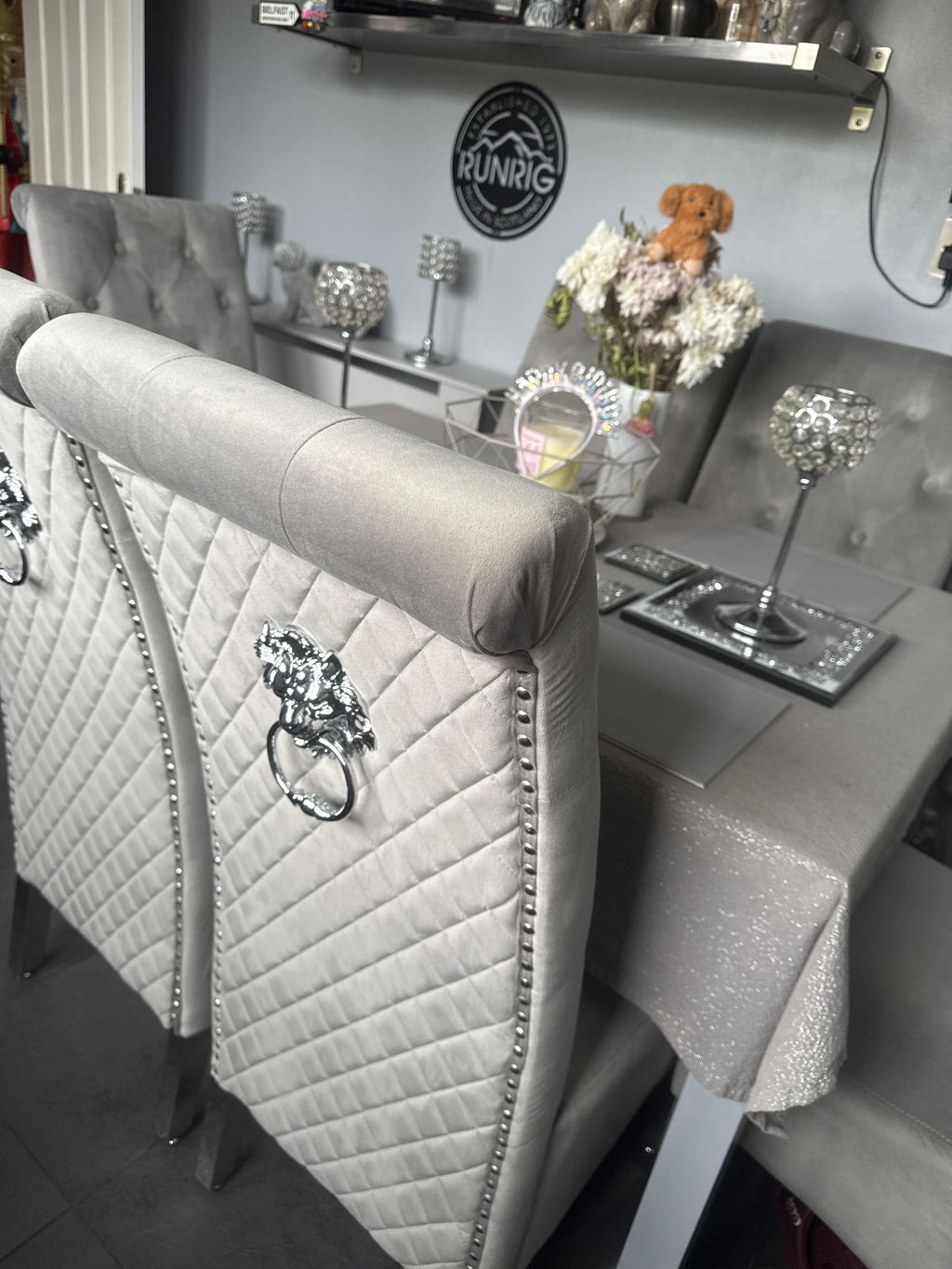
Our dining sets cover a wide range of materials, shapes and sizes, but our collection has a clear character: marble tables paired with velvet knocker-back or button-back chairs are the heart of it, and they're what most people arrive looking for. That combination, a natural stone top with a statement upholstered chair, has a particular quality that works well in a proper dining room and holds up to daily use better than it might look like it would. Our marble dining sets are the most popular choice by some distance, and most of them are paired with knocker dining chairs whose lion-knocker back detail suits the character of a marble surface well.
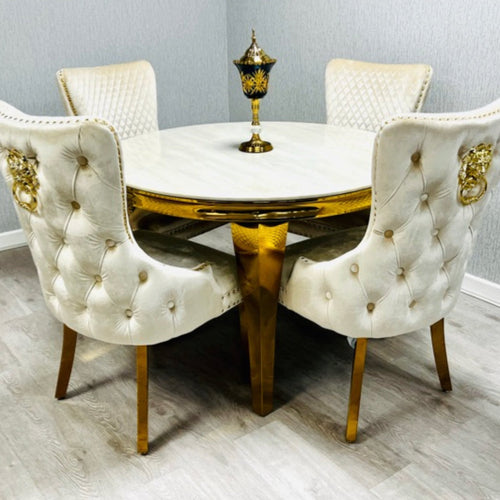
Beyond marble, we carry glass-topped sets for a lighter, more contemporary feel, ceramic sets which are among the most practical surfaces we stock for a busy household, and gold and mirrored sets for rooms where the dining area is meant to be a focal point rather than a functional afterthought. Our chrome sets sit at the more streamlined end of the scale. Rectangular tables make up the majority of our collection and suit most rooms, but we have round sets for smaller or squarer dining spaces, and square sets for compact rooms where a rectangular table would feel oversized.
Our seater count runs from two up to ten, covering everything from a kitchen-diner in a first home to a dedicated dining room that needs to handle a full family gathering.
Choosing the right size dining set
This is the question that catches most people out, and it's usually because they measure the table and forget about everything around it. The table is only part of the footprint. You also need room to pull a chair back, stand up, and move around behind someone who's still seated. The generally accepted clearance is around 90cm between the table edge and any wall or fixed furniture. It sounds generous until you're actually trying to navigate a narrow gap with a plate in each hand.
What that means in practice is that a 1.8m table needs a room that can give it roughly 3.6m of length along its main axis once both ends are accounted for, and comparable clearance on the sides. A 1.5m table needs around 3.3m. Smaller rooms often work better with a round table than a rectangular one, partly because round tables use corner space more efficiently, and partly because a round table for four takes up less effective floor area than a rectangular one of comparable capacity.
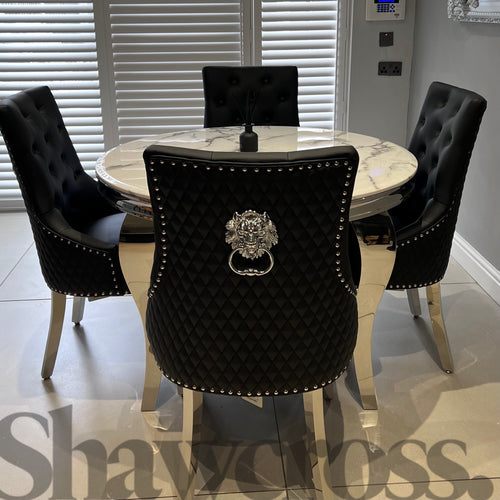
For most families of four who eat together daily and occasionally have guests, our 4 seater dining sets are the practical starting point. A table that seats four comfortably with room for an extra couple when needed suits the widest range of homes. If you regularly have six around the table or want the flexibility to host without it being a squeeze, a six-seater is worth the extra footprint if the room can carry it.
The other thing worth thinking about is how the room works day to day, not just at mealtimes. A dining table in an open-plan kitchen-diner often ends up being used for homework, working from home, or just as somewhere people gather. A table that's slightly smaller than the maximum the room can hold often makes the whole space work better than one that technically fits but starts to dominate. It's a common trade-off and one that's easier to get right before ordering than after. If you're unsure what size suits your room, give us a call or send us the dimensions and we can give you a straightforward answer.
Dining table materials: what suits your home
The material question is really two questions in one: what do you want the table to look like, and how much do you want to think about it day to day?
Marble looks the best of any surface we carry, and it's honest to say that's a big part of why people choose it. The natural veining means no two tables are identical, and in person the depth and texture of the stone is considerably more impressive than any photograph. The trade-off is that marble is a porous natural stone that can mark if it's not looked after: acidic spills left sitting on the surface, wine, citrus, fizzy drinks, can dull the finish over time. It's not difficult to manage, but it does ask you to be a bit more attentive than you would be with glass or ceramic. In a household with young children who are still at the age where drinks end up on their side regularly, that's worth factoring in.
Glass is the easy-going option. It doesn't react to food or drink, wipes clean without any effort, and the toughened glass we use in our dining tables is tougher than it looks. The transparency also keeps a room feeling open in a way that a solid surface doesn't, which makes a real difference in a smaller space. The honest downside is fingerprints, particularly on the underside where they're more effort to reach.
Ceramic is arguably the most practical surface in our collection. It handles heat, resists scratching, and doesn't react to spills. It tends to suit a contemporary interior and often comes in bolder tones and patterns. If a busy household and low maintenance are the priorities, ceramic is genuinely worth considering.
Gold and mirrored finishes are about presence and personality. They suit rooms with a more maximalist or decorative character, and they look particularly good with the right lighting. They do show marks and need wiping down regularly to stay looking their best, which is worth knowing before you decide rather than after.
Dining chairs: understanding your options
Chairs are half the purchase and they deserve as much thought as the table. The two most popular styles in our collection are knocker-back and button-back, both upholstered, and both well suited to the marble and glass tables they're most often paired with.
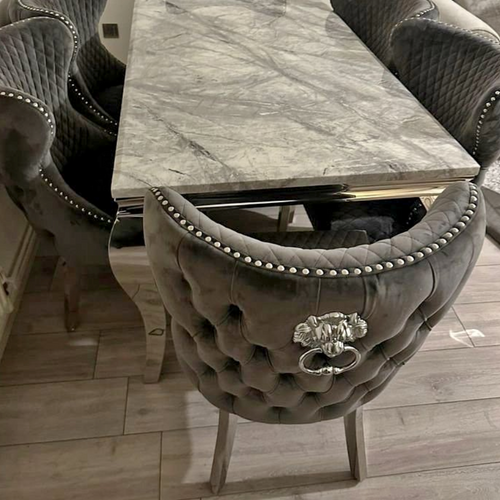
Knocker-back chairs take their name from the lion door-knocker hardware on the back panel. It's a distinctive, decorative detail that gives the chair a confident, statement quality: the kind of thing that makes the dining set feel like a deliberate choice rather than a functional one. They pair particularly naturally with marble tables, where both the table and the chair are leaning into the same instinct towards something classic and considered.
Button-back chairs have a quilted, tufted back panel that reads as softer and more structured. They're slightly more restrained than knocker-back but no less well-made, and they suit people who want the chair to feel considered without it being the loudest thing in the room.
Both styles are typically available in velvet upholstery, and velvet is a good choice for a dining chair that'll be used mostly by adults. It looks rich, it's comfortable, and it cleans up well enough with a soft brush and occasional spot treatment. It will flatten a little in the areas of heaviest contact over time, and it's more susceptible to marks than a plain weave fabric. If the chairs are going to be in daily use by young children, leather or a plain fabric might serve you better over the long run.
Chair colour matters more than people often expect. The upholstery colour and the leg finish both connect the chair back to other elements in the room, and getting that right makes the set feel like it belongs in the space rather than just sitting in it. If you're unsure what colour works with your room, it's one of the easier things to get a second opinion on before you order, and we're happy to help with that.
Spreading the Cost
Finance is available on many of our dining sets, subject to status. A dining table gets used every day and tends to stay in a home for a long time, so it's worth getting the right one rather than the nearest affordable one. Spreading the cost makes it easier to make that call, and the difference in longevity between a set you're genuinely happy with and one you're settling for tends to make it worthwhile. Finance options are shown on the individual product pages.
Why buy from Shawcross
We're based in Manchester with a showroom, and we deliver nationally across the UK. Our showroom is worth visiting for a purchase like this. Marble looks different in natural light to how it photographs, chairs feel different once you've sat in them, and the proportions of a set are much easier to judge when you're standing next to it. Come in without any obligation; plenty of people visit just to get a clearer sense of what they're choosing between, and that's a perfectly good reason to make the trip.
If you can't get in, we're happy to help over the phone or by email. Whether it's a question about room fit, the difference between two chair styles, or just working out which direction to go in, we'd rather you got the right thing than the wrong one.