Skip to content

Dining Tables

Choosing the table on its own terms is often the smarter starting point. Some households arrive here because they already have chairs they want t...


Choosing the table on its own terms is often the smarter starting point. Some households arrive here because they already have chairs they want to keep, or chairs they plan to choose once the table is in the room and they can see what it needs. Others have realised that every dining set they've looked at gets the table right and the chairs wrong, or vice versa, and separating the two decisions gives them more control over both. However you've arrived at this page, the logic is sound: the table is the piece that sets the proportions and character of the dining room, and it's worth giving it the attention it deserves independently of everything else.


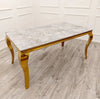
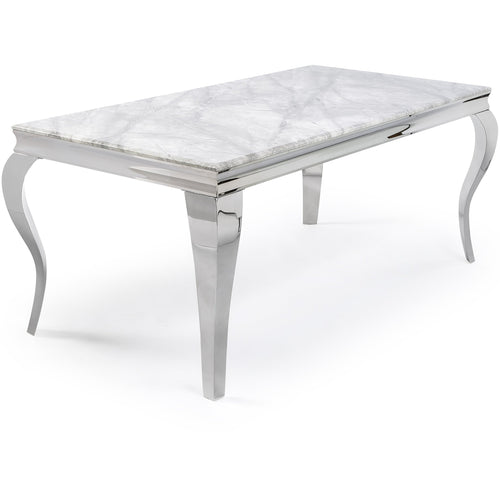
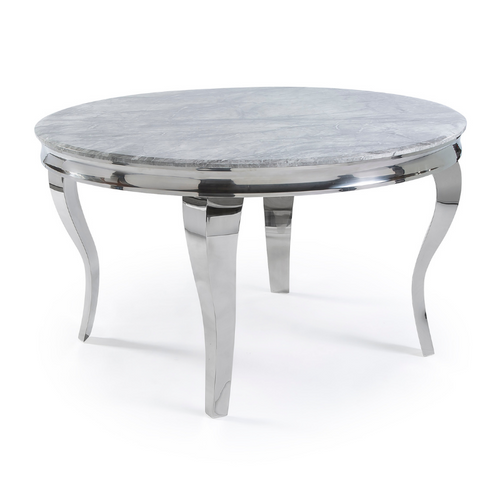
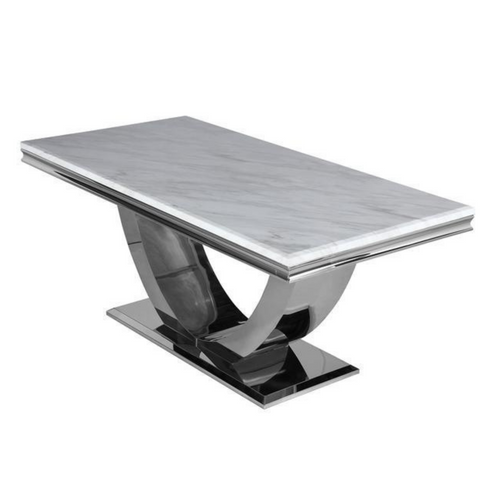
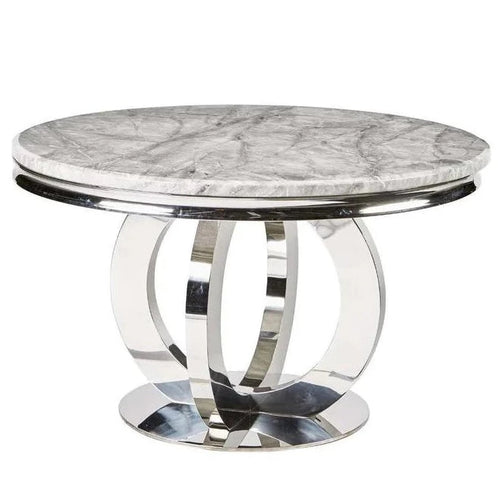
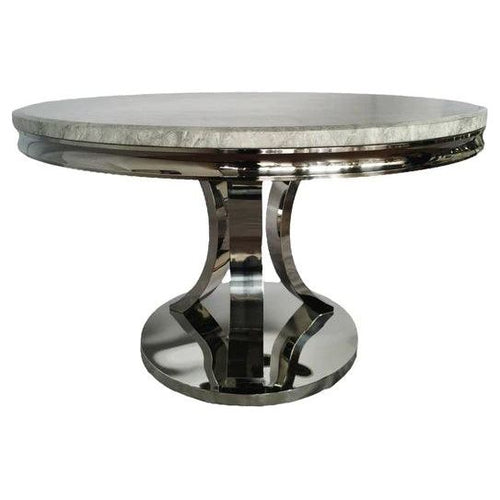
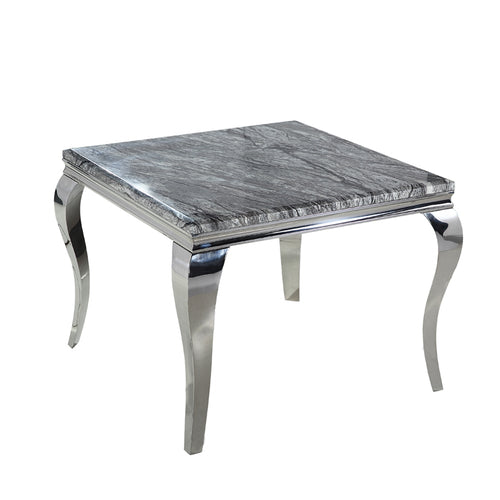
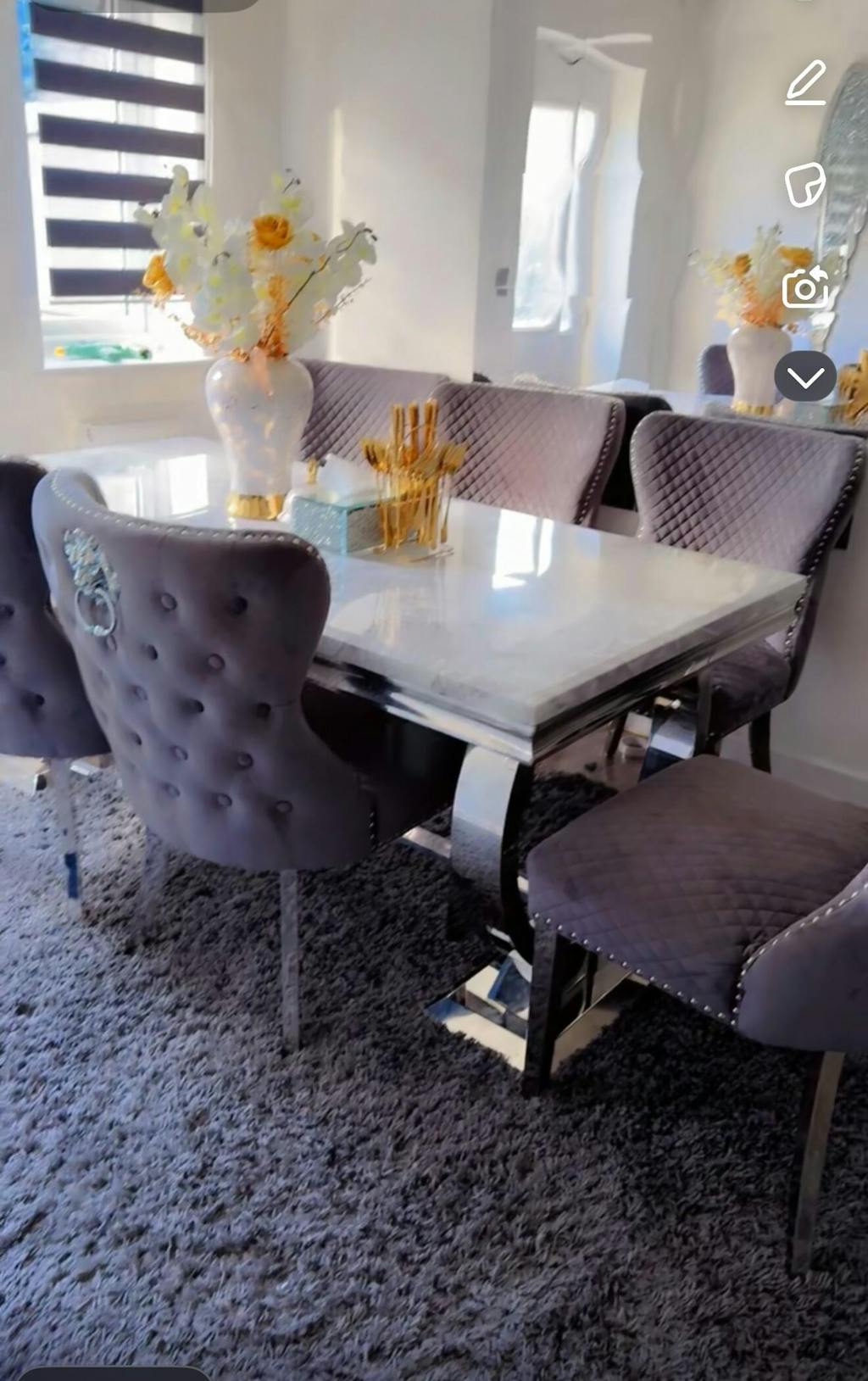
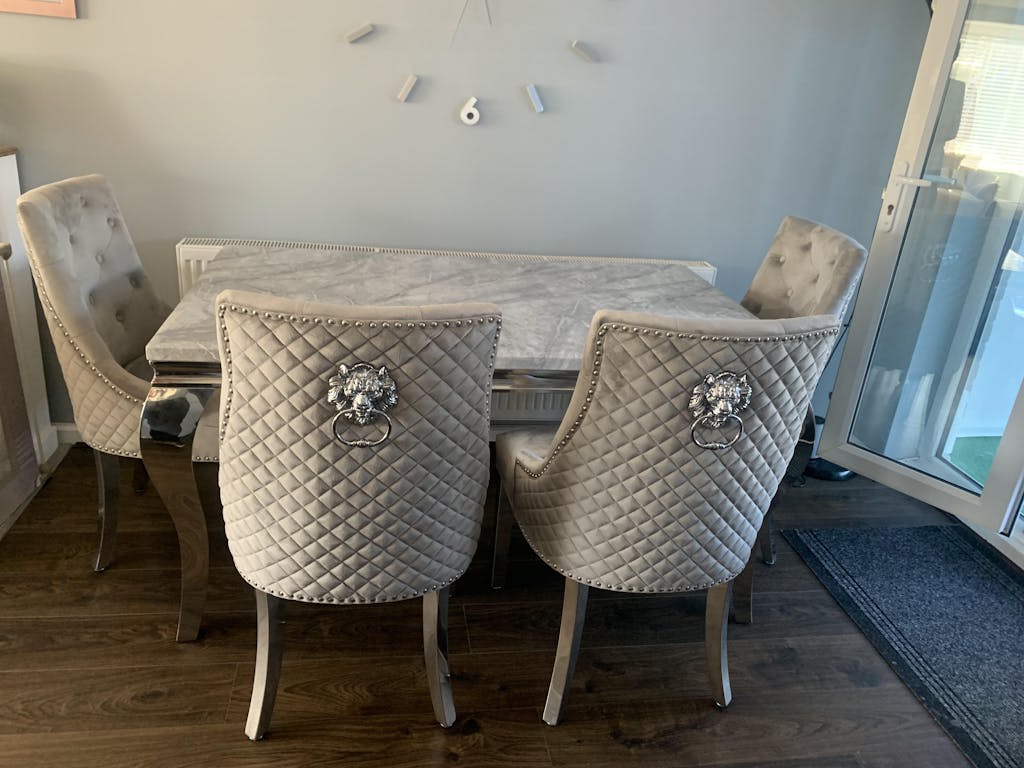
Our collection covers different sizes from compact through to large, surface materials spanning ceramic, marble, glass, chrome, gold and mirrored finishes, and a choice between fixed and extending configurations, in rectangular, round, and square shapes. If you'd prefer a table and chairs sold together as a matched combination, our dining sets collection covers that. If you're choosing a table to pair with dining chairs independently, you're in the right place.


Finance is available on many of our dining tables, subject to status. We deliver nationally across the UK, and our Manchester showroom is open if you'd like to see tables in person before ordering. For guidance on size, material, or room fit at any stage, just get in touch.

What's in this collection

The collection spans compact tables suited to a small kitchen-diner right through to substantial pieces for a large dedicated dining room. Surfaces include ceramic and stone-effect tops, real marble and marble-effect finishes, glass, chrome-framed designs, gold-framed options, and mirrored pieces. Both fixed and extending configurations are available across the range.

Tables here are sold without chairs, which gives you the freedom to pair the table with whatever chair suits the room and household. Every material, size, and shape has its own page with the detail you need to make that decision properly, and each one is linked from the relevant sections below.

Choosing the right size dining table

The size decision starts with the room. Measure the available floor space, subtract around 90cm of clearance on all four sides, and the maximum table length that fits follows from what's left. That clearance is what allows someone to pull a chair out, sit down, and stand up without catching a wall, a radiator, or another piece of furniture. Apply it before you settle on a size rather than after.

As a guide to how table length relates to seating and the room it needs:

  • 1.1m dining tables: two to four people, suited to a compact kitchen-diner where space is genuinely tight.
  • 1.2m dining tables: four with reasonable comfort, right for a room that doesn't have the floor space for a standard family table.
  • 1.3m dining tables: four comfortably, six in a pinch, suited to a household that wants a proper dining table without a large room to put it in.
  • 1.5m dining tables: the most common choice for a standard family dining room, four for everyday meals and six when guests come round.
  • 1.6m dining tables: six with proper elbow room, suited to a room with a little more space to work with.
  • 1.8m dining tables: six to eight people, requires a proper dining room with enough length to carry it with clearance on all sides.
  • 2m dining tables: for a large household or one that entertains seriously, in a room that genuinely has the space and proportions to hold it.

Each size page covers the specific room requirements in detail. If you'd prefer a direct answer on what will fit in your specific room, share your dimensions with us and we'll work through it before you commit to anything.

Materials and surfaces

The surface is the decision with the biggest effect on how the table looks in the room and how much it asks of you day to day.

Ceramic dining tables are the most practical choice for a family that uses the dining room regularly. The surface is non-porous, heat-resistant, and wipes clean after meals without any specialist products or periodic treatment. It's available in stone-effect, marble-look, and other finishes, which means you don't necessarily have to trade aesthetics for practicality.

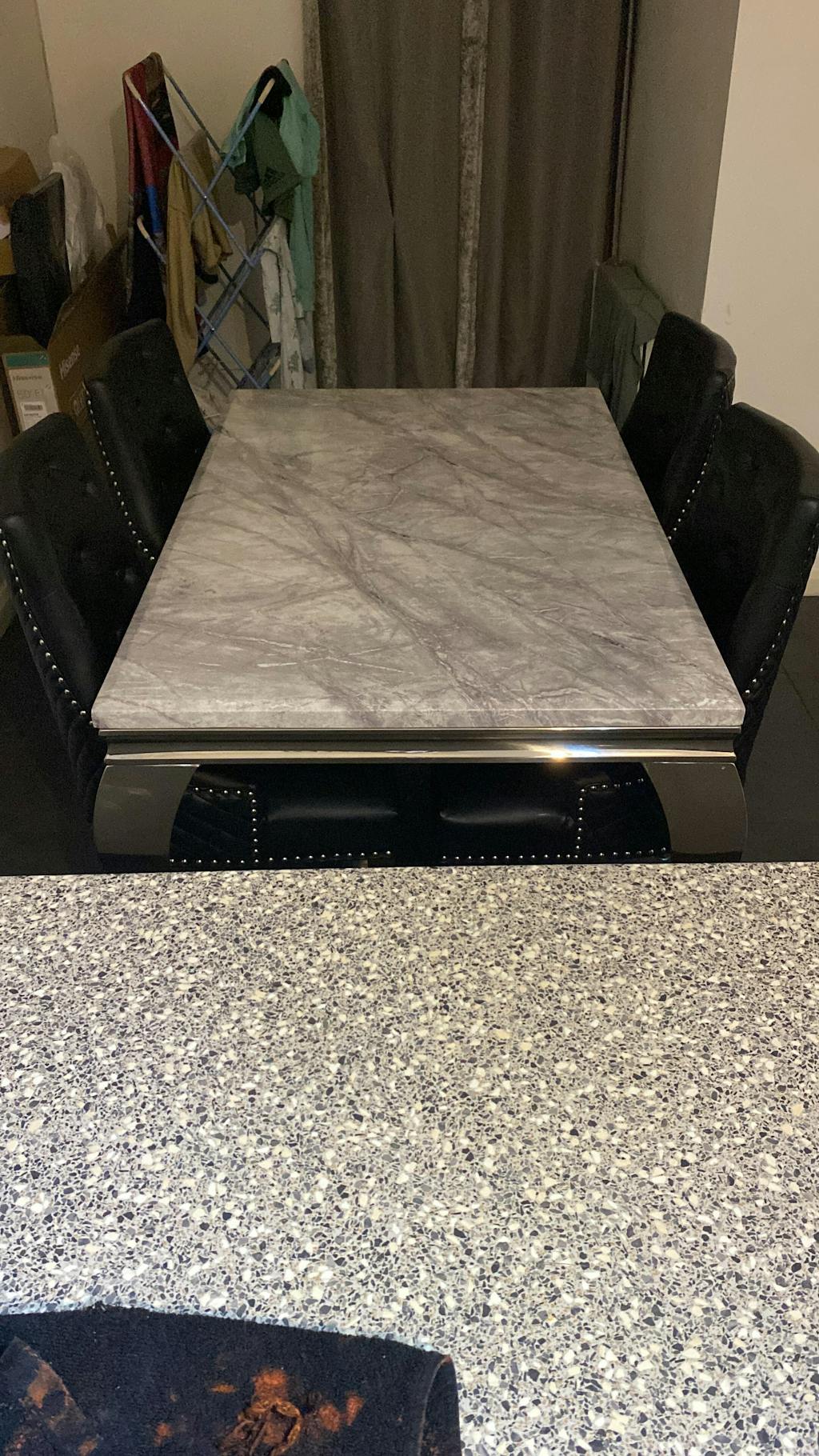
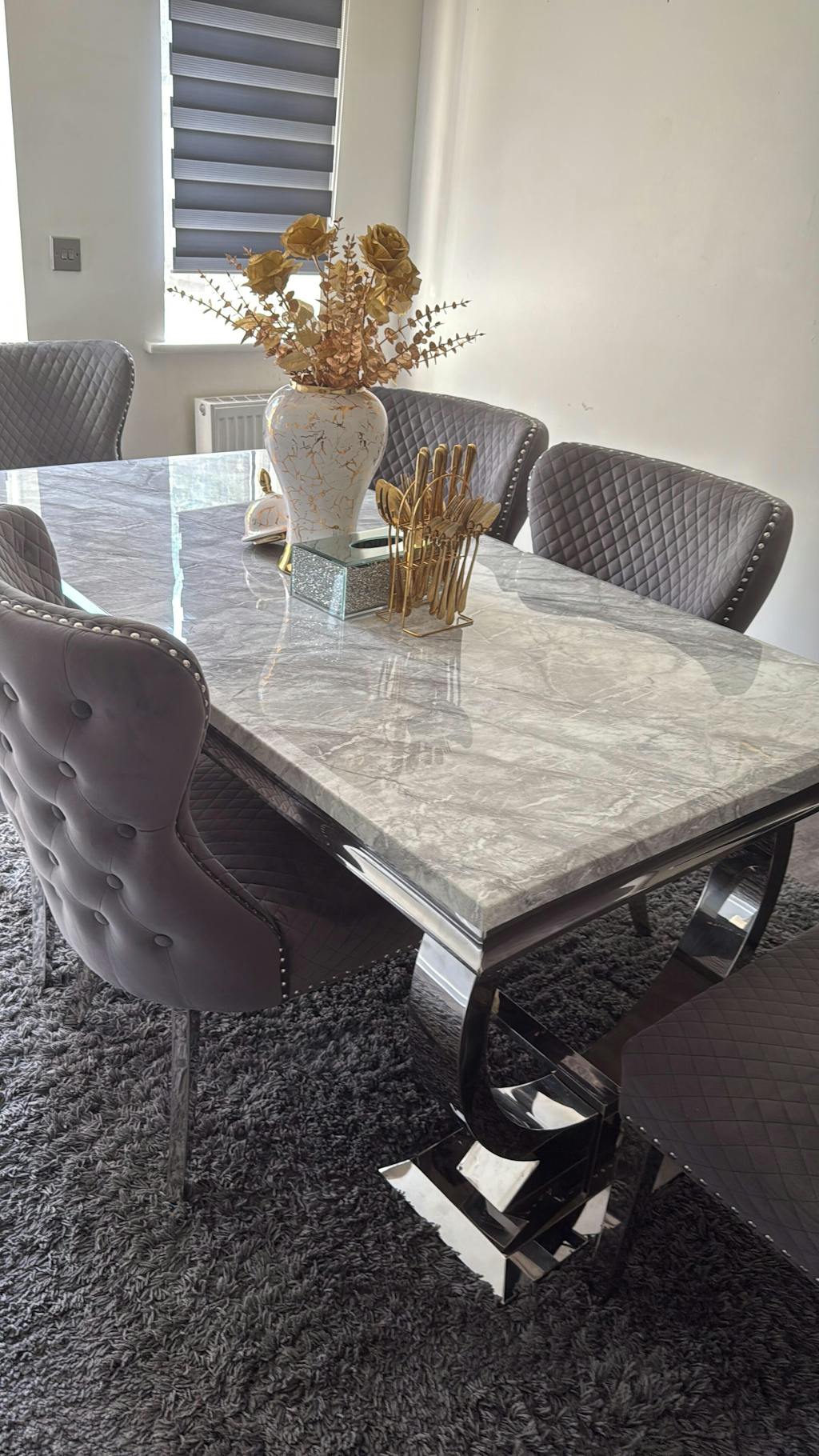
Marble dining tables are a different proposition. Real marble is porous, reacts to acids and heat, and requires sealing. The trade-off is a depth and quality that no engineered surface fully replicates. For households where the dining room is used mainly for adult meals and entertaining, real marble is manageable. For a table with young children eating at it every day, a marble-effect ceramic top is the more honest choice.

Glass dining tables earn their place in rooms where keeping the space feeling open is a priority. The toughened glass top is considerably stronger than it sounds, and in daily use it holds up without concern. The trade-off is that glass shows fingerprints and smears more readily than almost any other surface, and the table will need wiping down properly after most meals.

Chrome dining tables suit a contemporary room that has already committed to a clean, modern look. The chrome is typically the base and legs rather than the top surface, paired with glass or ceramic. Durable under normal use, though the frame shows marks and needs regular wiping.

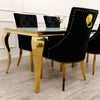
Gold dining tables are a room anchor rather than just a piece of furniture. The frame sets the tone for everything in the dining room around it, and the table works best when the room has been thought through to complement it. Gold pairs naturally with stone-effect and ceramic tops, and suits rooms with depth of colour and warmth in the palette.

Mirrored dining tables reflect light and create the impression of more space, which is useful in a darker or more compact room. They demand the most maintenance of any surface in the collection: fingerprints and marks are highly visible, and keeping a mirrored table looking its best is a daily commitment. Each material page covers care requirements and family suitability in detail for that specific surface.

Fixed or extending

A fixed table has one set of dimensions. It seats the same number every time, and the floor space is permanently accounted for. For most households, that's the right answer: a table sized for how the room is used most of the time, and a more substantial piece than an extending equivalent tends to be at the same price point.

An extending dining table opens out to add length, typically by inserting a leaf or drawing the two ends apart. In its closed position it suits everyday use; extended, it seats more people for occasions. This suits households that need extra seats periodically without permanently dedicating the floor space of a larger table.

The trade-offs are worth understanding before you decide. The mechanism adds complexity to the design; the extended dimensions need to fit the room with the same clearance as a fixed table of that length; and the leaf needs somewhere sensible to store when it's not in use. The extending page covers how different mechanisms work and what to check before you buy.

Spreading the Cost

Finance is available on many of our dining tables, subject to status. A dining table is one of the longer-term investments a home makes, and spreading the cost can make the right table more accessible without compromising on what you actually want.

If you're unsure whether finance is available on a specific table you're considering, or you'd like to understand the options before you decide, get in touch and we can talk you through it.

Why buy from Shawcross

We're based in Manchester and our showroom is open if you'd like to see dining tables in person before buying. Surface quality, proportions, and the way a table reads in real light are all things that product photographs approximate rather than show accurately, and for a purchase you'll live with for years, a visit tends to be worth making.

We deliver nationally across the UK, and you can contact us at any stage for guidance on size, material, room fit, or chair compatibility before you order. If you've seen something you like but you're not sure it's right for your room, get in touch before you commit and we'll give you an honest view.


Dining Table FAQs

Should I buy a dining table and chairs together or separately?

There's no single right answer, and it depends on what you're trying to achieve.

Buying as a matched set means the proportions and finishes are already worked out. Table height and chair seat height are designed to work together, frame finishes complement each other, and you don't have to make a separate decision about which chair pairs well with which table. For most people furnishing a dining room from scratch, this is the more straightforward route.

Buying the table separately makes sense when you already have chairs you want to keep, when you want to choose the chairs once the table is in the room, or when a set gets the table right but not the chairs. It also gives you the freedom to pair a table from one part of the range with a chair from elsewhere in the collection.

The practical thing to confirm if you're going the separate route is compatibility. Table height and chair seat height need to work together for the arrangement to be comfortable to sit at, and the frame finishes need to feel coherent rather than at odds. We're happy to advise on any specific combination before you order.

What size dining table do I need for my room?

Start with the room dimensions and work backwards. Measure the floor space where the table will go, subtract around 90cm of clearance on all four sides, and the maximum table length that fits in both directions follows from what's left. The clearance is not arbitrary: it's the space that allows someone to pull a chair back, stand up, and move away from the table without turning sideways or catching a wall.

For the seating count: around 60cm per person along the length of the table is a comfortable working allowance. A 1.5m table seats four along the two long sides with reasonable elbow room. A 1.6m table gives those same four people noticeably more space, or fits six more comfortably than a 1.5m would. The size section above maps each length to a typical seating count and the room required to hold it.

If you'd like to share your room measurements with us, we can tell you which sizes will work and what your options look like within that constraint.

Which surface material is most practical for a family dining table?

Ceramic is the honest answer for most families. It's non-porous, heat-resistant, and wipes clean easily after everyday meals without any specialist products. It's also available in designs that closely replicate the look of marble or natural stone, which means you don't have to choose between the aesthetic you want and the practicality your household needs.

Real marble is a more demanding surface. It requires sealing, reacts to acidic spills, and can mark from heat if you're not careful. None of these are insurmountable, but in a household where young children are eating at the table every day, marble-effect ceramic is the more honest recommendation.

Glass and mirrored surfaces are the most maintenance-intensive for keeping them looking clean, because both show marks clearly. The toughened glass on a dining table is strong enough for daily family use, but the cleaning commitment after a family meal is real. Chrome and gold apply to the frame and legs rather than the top, and both hold up well in normal indoor use while showing fingerprints on the structural elements.

What's the difference between a fixed and an extending dining table?

A fixed table has one set of dimensions that don't change. The floor space it takes up is permanent, and it seats the same number of people every time.

An extending table can be opened out to add length, seating more people than the closed configuration allows. In its everyday position it functions as a smaller table; extended for guests, it provides the capacity of a larger one without permanently occupying that floor space. The trade-offs are real: the mechanism adds complexity, the leaf needs somewhere to live, and the extended dimensions need to fit the room with full clearance. The extending dining tables page covers how different mechanisms work and what to think through before you buy.

What shape dining table suits my room?

The room shape is the most reliable guide. A rectangular room suits a rectangular table because the proportions align naturally and the clearance falls on all four sides without wasted space at the ends. Most dining rooms are rectangular, which is why most dining tables are too.

A round dining table suits a squarish room or an open-plan area where a rectangular table would sit awkwardly and leave dead space at the ends. Round tables also have a social quality that rectangular ones don't: no corners means no head-of-table position, and at four to six seats everyone faces each other naturally.

A square dining table suits a square room for the same proportional logic that makes rectangular work in a rectangular room. It also suits open-plan spaces where the dining area needs to feel anchored and self-contained rather than pointing along the room's longest axis. Square tables can also be pushed against a wall when not in use, which frees up meaningful floor space in a compact kitchen-diner.

How does delivery work, and can I see dining tables in person first?

We deliver nationally across the UK. Once your order is placed you'll receive a confirmation, and we'll be in touch closer to the time to arrange a delivery date that suits you. Delivery for dining tables is typically within 28 days. If there's anything about your property worth knowing in advance, such as a narrow hallway, a tight corner on the route to the dining room, or restricted parking, let us know when you order so the delivery team can prepare.

If you'd prefer to see dining tables in person before you commit, our Manchester showroom is open and you're welcome to come in without any obligation. Surface quality, proportion, and how a table reads in real light are things that product pages find hard to convey accurately, and a visit tends to make the decision considerably more confident. If you'd like to confirm whether a specific piece is currently on the showroom floor before travelling, just give us a call.