What's in this collection
Traditional sofas cover a design family rather than a single look, and the sofas in this collection reflect that range. The common thread is a more formal, upright silhouette with decorative detail that would look at home in a period property or a room furnished with classic pieces.
Configurations include 2-seaters and 3-seaters suited to reception rooms and more formal living spaces, as well as larger formats for households with more floor area. Upholstery leans toward fabric and velvet, both of which suit the warmth and richness that a traditional aesthetic calls for. Where the Chesterfield design is your primary interest, that style has its own dedicated page in the Chesterfield sofas collection, which covers button-tufted high-back designs in velvet, fabric and leather.
What makes a sofa "traditional" in practice
The word traditional gets used loosely in furniture, so it is worth being specific about what it actually means when applied to a sofa design, and how you decide whether it suits your room.
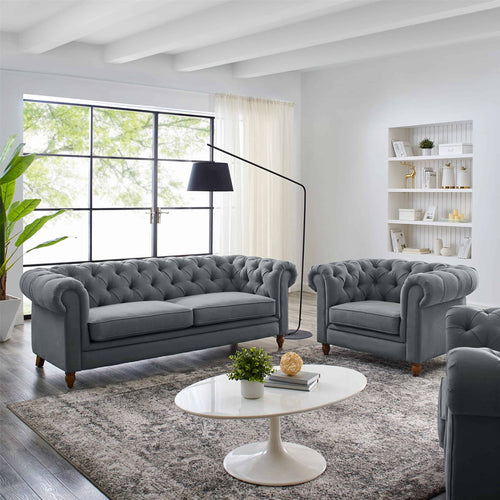
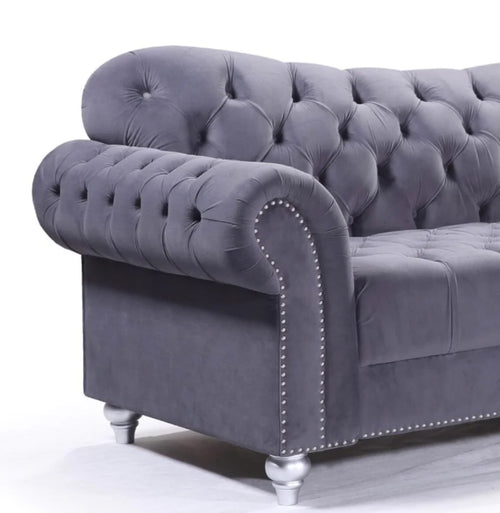
The most visible characteristic is arm height. A traditional sofa typically has arms that sit at or near the height of the back, rather than dropping away from it as they do on a lower, more modern design. The arm is usually rounded or scrolled at the end rather than cut straight across. This gives the sofa a more enclosed, embracing shape that reads as formal and considered.
Back height matters too. Traditional sofas tend to sit taller than their modern equivalents, with a back that provides more support to the shoulders and head. The seat position is also typically more upright, which suits a sofa used for sitting rather than sprawling, and makes it easier to get in and out of than a very deep, low design.
Decorative details are where the range opens up considerably. A fully ornamented traditional sofa might have button tufting across the back and seat, nailhead trim along the arms and base, turned wooden feet with a dark finish, and upholstery in a deep jewel colour. A more restrained traditional sofa might simply have the arm shape and back profile of the style, in a plain neutral fabric, with clean feet and no surface ornamentation at all. Both are genuinely traditional in design. The right choice depends on the room and how much visual weight you want the sofa to carry.
When a traditional sofa is the right choice
A traditional sofa tends to work best when the room has features that share its design language. High ceilings, large windows with deep sills, original cornicing, a fireplace with a period surround, decorative floor tiles in the hallway: all of these create an environment where a traditional sofa feels natural rather than placed.
In a period terraced house with original features, a traditional sofa is often simply the right choice. It reads correctly in the room without effort. In an older property that has been heavily modernised throughout, the same sofa can look incongruous depending on how far the modernisation has gone, and a more contemporary design might actually sit better.
That said, a traditional sofa used deliberately as a contrast piece in a contemporary room can work very well, and this is a popular approach. A well-made sofa in a classic velvet with button tufting can ground a very minimal, modern room and give it a warmth and character it would otherwise lack. The key is that it needs to be a deliberate choice, where the sofa is clearly a considered statement rather than a leftover from a different decorating era. If you are considering this approach, visiting our Manchester showroom to see traditional and modern styles together in person is the most useful way to test whether the contrast works the way you have it in mind.
Choosing the right fabric for a traditional sofa
The material choice matters considerably more on a traditional sofa than it does on a modern design, because traditional styles tend to amplify whatever upholstery they are dressed in.
Velvet is the natural partner for a traditional sofa and it is the most common choice for a reason. The richness of velvet suits the formal, decorative quality of a rolled arm and tufted back in a way that a flat fabric weave simply does not. The honest trade-off is maintenance: velvet shows marks, flattens with regular use in high-contact areas, and needs more consistent attention to keep looking its best. In a household where the sofa is used heavily, that is worth knowing before choosing it. The velvet sofas page covers that material in full detail including the care considerations.
A plain woven fabric in a deep, warm tone, charcoal, warm grey, forest green, navy, can carry a traditional design just as well and is considerably easier to maintain. It will not have the visual richness of velvet but it will age more gracefully in a busy household. Plain fabric is also a safer choice if you are uncertain about redecorating: a strongly coloured velvet sofa can become difficult to work around if the room's colour scheme changes, where a neutral fabric remains adaptable.
Spreading the cost
Finance is available on many of the sofas in this collection, subject to status. A well-chosen traditional sofa, bought at the right quality level, will serve a room for a very long time: the design does not date in the way a trend-led piece might, and a classic upholstered style tends to wear better the longer it settles in. Spreading the cost over an agreed period means you can invest in the quality that makes that longevity possible. Ask us for details when you get in touch or check the finance options before placing your order.
Why buy from Shawcross
We are based in Manchester with a showroom where you can see sofas in person before buying. For a traditional sofa in particular, a visit is worthwhile. The scale of a high-backed, fully upholstered sofa is genuinely difficult to judge from photographs, and the quality of the upholstery, whether velvet or fabric, looks and feels considerably different in natural light than on a screen. If you have questions about which style suits your room or want guidance on fabric versus velvet for your household, we know the stock well and are happy to help.
We deliver nationally across the UK and are available to talk through sizing, room fit and access before you order.