What's in this collection
A 1.1m dining table measures 1.1 metres in its primary dimension, sitting at the compact end of the dining table range. At this size the table is designed for two to three people in its everyday use, with four manageable for an occasional meal in a household where the dining area genuinely can't accommodate anything larger with proper clearance.
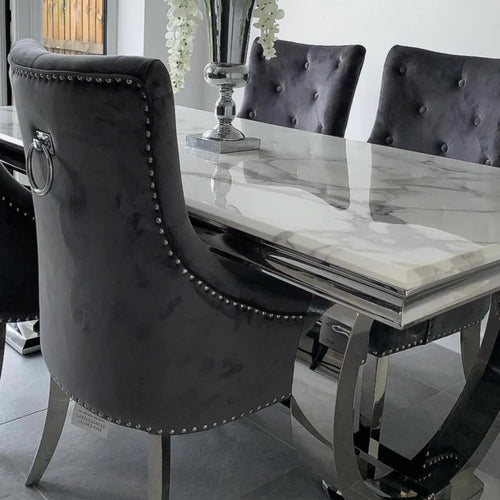
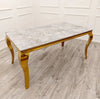
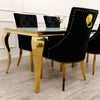
Surface materials across the collection include ceramic and stone-effect tops, real marble and marble-effect finishes, and glass, with base and frame options in contemporary metal designs including chrome and gold. Round and square configurations are particularly common at this size and worth considering before defaulting to rectangular: both shapes suit the compact rooms and kitchen-diners where a 1.1m table most often lives, and the specific advantages of each are covered below. Fixed configurations are the most common at this size, though some extending options exist for households that want a smaller everyday footprint with occasional additional capacity.
What a 1.1m dining table needs from the room
Apply 90cm of clearance on all four sides as the working minimum. A 1.1m table is typically around 70 to 75cm wide in rectangular form. With full clearance applied, the minimum room required is approximately 2.9m in length and 2.5m in width. These figures are achievable in rooms and kitchen-diners that are genuinely compact without being impractical as dining spaces, and they represent the size bracket where a 1.1m table starts to make clear sense rather than a larger table being a stretch.
The comparison with a 1.2m dining table is the most immediately relevant. The 10cm difference between the two sizes matters at this end of the range for the same reason it matters between 1.2m and 1.3m: proportionally, 10cm is a more significant gain at compact sizes than at larger ones. Four people at 1.1m have around 50cm per person on the long sides of a rectangular table, which is snug for adults eating a full meal. Four people at 1.2m have around 55 to 60cm each, which is the difference between manageable and comfortable. If the room can hold 1.2m with proper clearance, and four seats are a realistic regular requirement rather than a once-a-year occurrence, it's worth the extra 10cm.
The honest case for 1.1m over 1.2m is that the room genuinely can't hold 1.2m with 90cm clearance applied, or that the household's regular count is two rather than four. A couple in a flat with a compact kitchen-diner, or a single occupant who wants a proper dining table rather than eating at a desk, will find 1.1m correctly proportioned for the way the table is actually used. Buying 1.2m in that situation isn't better: it uses the clearance that would otherwise allow the room to function as a room rather than just as a furniture arrangement.
For a round table at 1.1m diameter, the clearance applies equally in every direction, requiring a room of approximately 2.9m in both length and width. In a squarish room or kitchen-diner that sits around 3m in both directions, a round table at this diameter can work very naturally, and the shape brings practical advantages in a compact space that the rectangular equivalent doesn't.
Delivery access at 1.1m is the most straightforward in the collection. Most properties handle a table of this size without difficulty on delivery, though it's still worth noting a narrow hallway or restricted parking when you order rather than leaving it to the delivery team to manage without warning.
Materials at 1.1m
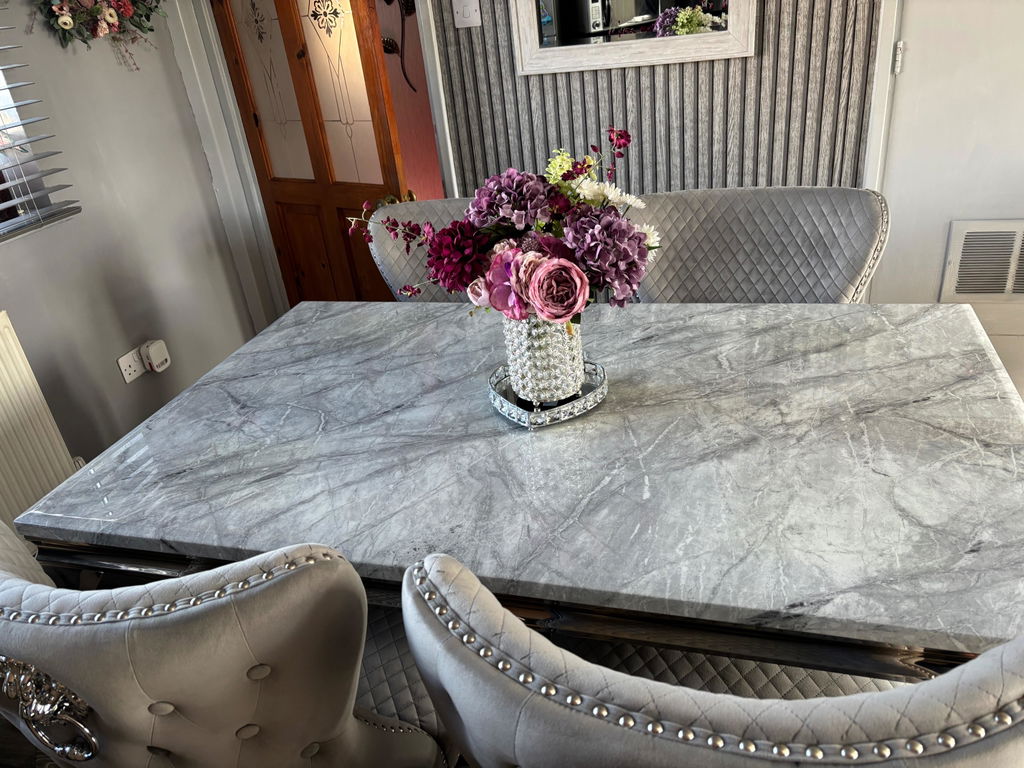
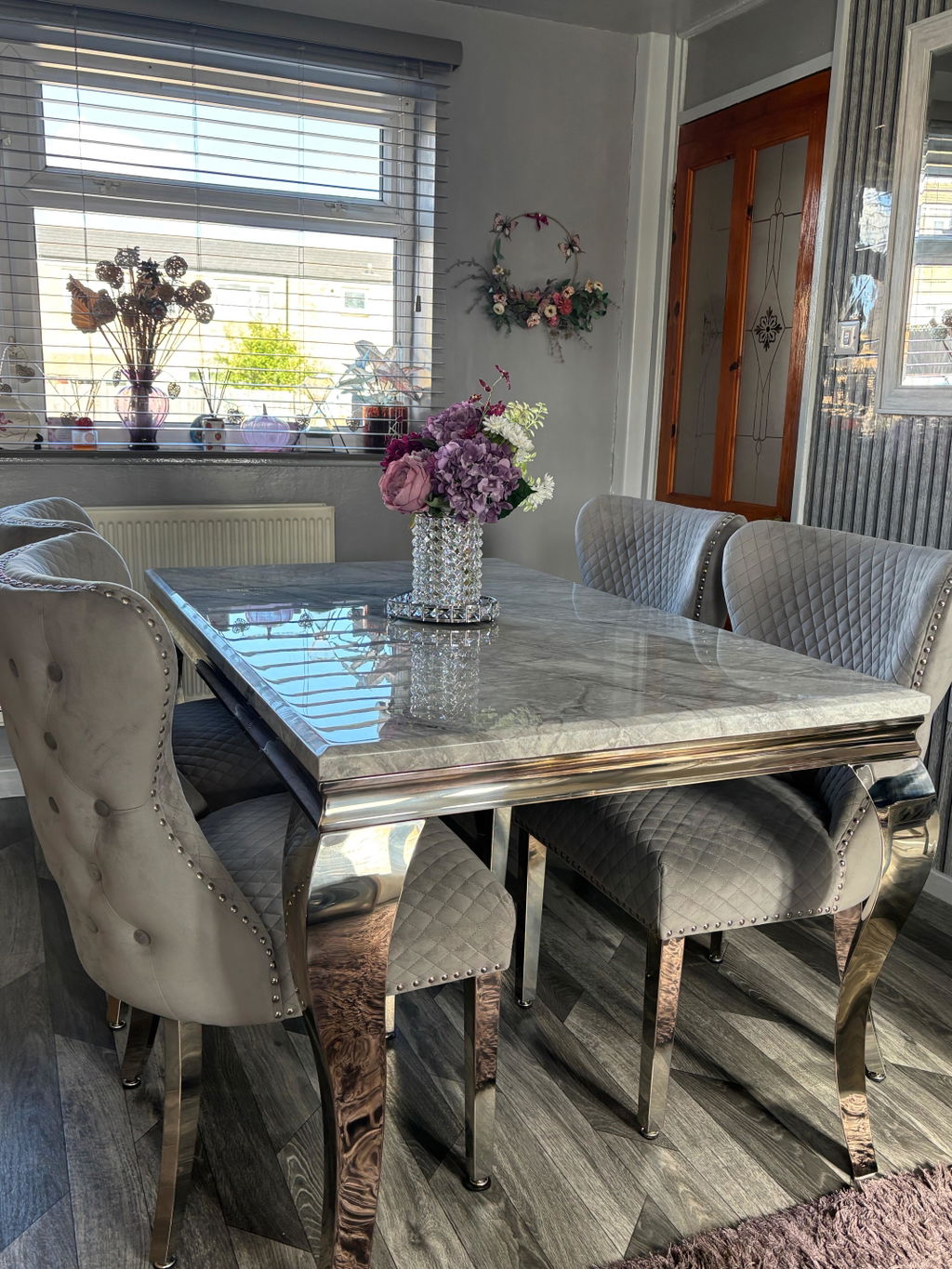
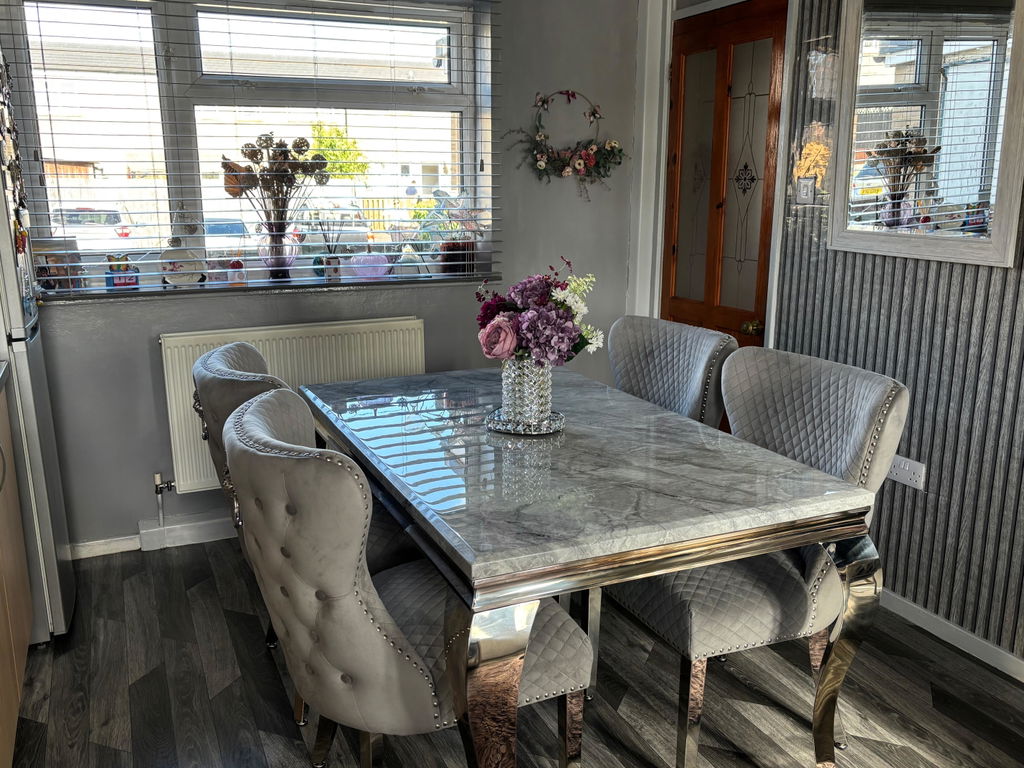
Ceramic dining tables at 1.1m are the most practical choice for a compact table in daily use, and particularly for a table sitting in a kitchen-diner where the proximity to cooking means the surface encounters more heat, steam, and accidental splashes than a table in a separate dining room does. Non-porous and heat-resistant, ceramic handles all of that without any specialist care. Stone-effect and marble-look finishes look considered and complete even at this compact size, and in a small space a surface with some visual character tends to give the dining area more of a sense of being properly furnished rather than an afterthought.
Marble dining tables at 1.1m suit a compact space that has been furnished deliberately. A small dining area can look as well-considered as a large one when the pieces within it have been chosen carefully, and a marble or marble-effect surface contributes to that. The care requirements for real marble apply at 1.1m as at any other size: sealing, heat protection, prompt attention to acidic spills. In a kitchen-diner where the table is in close proximity to cooking, those requirements are worth thinking about honestly. Marble-effect ceramic gives you the visual character of marble with none of those vulnerabilities, and at 1.1m the difference between real marble and a good ceramic equivalent is not the first thing most people notice when they walk into the room.
Glass dining tables at 1.1m are the strongest choice for a room where visual lightness is the priority. In a very compact kitchen-diner, a glass top at this size keeps the room feeling open in a way that a solid surface simply doesn't achieve: the floor, the base, and the space beyond the table are all visible through it, and the room reads as a continuous space rather than one sectioned off by a piece of furniture. This effect is proportionally more valuable at 1.1m than at larger sizes, because at this scale every visual element in the room counts for more. The cleaning commitment is consistent at any size, and a glass top at 1.1m needs the same proper wipe-down after meals as one at 1.8m.
Chrome dining tables and gold dining tables refer to the base and frame finish. At 1.1m the base design is proportionally very present because the surface is compact, and the frame and legs make up a significant part of what you see when you look at the table. A slender-legged or pedestal base is almost always the better choice at this size for keeping the overall look light and uncluttered. A heavy or architecturally complex base can make a 1.1m table look like it's working hard to justify itself in the room. Chrome suits a contemporary kitchen-diner or compact modern interior. Gold suits a more considered or warmer space and pairs well with stone-effect or marble-look ceramic in a compact dining area that has been furnished with intention.
For round and square tables at 1.1m, the same material range applies. A round dining table at this diameter in glass is one of the most effective combinations for a compact squarish kitchen-diner: the transparency and the absence of corners both work in the room's favour simultaneously. A square dining table at this size can be pushed against a wall when not in use, which in a compact kitchen-diner frees floor space for the rest of the day in a way that a round table doesn't allow quite as cleanly.
Spreading the Cost
Finance is available on many of our dining tables, subject to status. If the table you want sits above your immediate budget, spreading the cost is worth exploring. We're happy to talk through the options at any point.
Why buy from Shawcross
We're based in Manchester and our showroom is open if you'd like to see dining tables in person before buying. At the compact end of the size range, seeing 1.1m, 1.2m, and 1.3m alongside each other in a real space with chairs around them is more useful than any amount of time spent comparing dimensions on a page. The differences between these sizes are more apparent in person than on paper, and a showroom visit tends to settle the size question quickly. Surface quality, and particularly how a glass or ceramic finish reads in natural light in a real space, is also worth assessing in person before you commit to a specific material.
We deliver nationally across the UK, and you can contact us at any stage for guidance on room fit, material, or which size suits your specific household before you order.